
Gibberish or jibberish is a common spelling question that confuses many English learners and native speakers. Both words look similar, and many people use them interchangeably. However, only one spelling is considered standard in modern English.
If you have ever wondered whether to write gibberish or jibberish, you are not alone. This mistake appears in emails, social media posts, school assignments, and even business communication.
In this guide, you will learn the correct spelling, meaning, pronunciation, and usage. You will also see real-life examples, common mistakes, and easy memory tricks. By the end, you will know exactly when to use the correct word and avoid spelling errors with confidence.
Quick Summary Box
Featured Snippet Answer
- Gibberish is the correct and standard English spelling.
- Jibberish is a common misspelling of gibberish.
- Gibberish means meaningless, unclear, or nonsensical speech or writing.
- Most dictionaries recognize gibberish as the accepted form.
- Use gibberish in formal and informal writing.
What Does Gibberish Mean?
Gibberish refers to speech or writing that has no clear meaning.
People often use the word when someone says something confusing or impossible to understand.
Simple Definition
Gibberish means words or sounds that make little or no sense.
Example
- The baby spoke complete gibberish.
- His explanation sounded like gibberish to me.
is It Gibberish or Jibberish?
The correct spelling is gibberish.
Many people write jibberish because it sounds similar when spoken. However, major dictionaries list gibberish as the standard spelling.
Correct
✅ Gibberish
Incorrect
❌ Jibberish
When writing professionally, always choose gibberish.
Gibberish vs Jibberish Comparison Table
| Feature | Gibberish | Jibberish |
|---|---|---|
| Standard spelling | Yes | No |
| Found in dictionaries | Yes | Rarely |
| Accepted in formal writing | Yes | No |
| Meaning | Meaningless speech or writing | Misspelling of gibberish |
| Recommended usage | Always | Avoid |
Why Do People Spell Gibberish as Jibberish?
Several factors cause this mistake.
Pronunciation Confusion
The soft “g” sound often sounds like “j.”
Habit
People may see others write “jibberish” online and assume it is correct.
Lack of Exposure
Some writers hear the word more often than they see it written.
Because of these reasons, the misspelling continues to appear frequently.
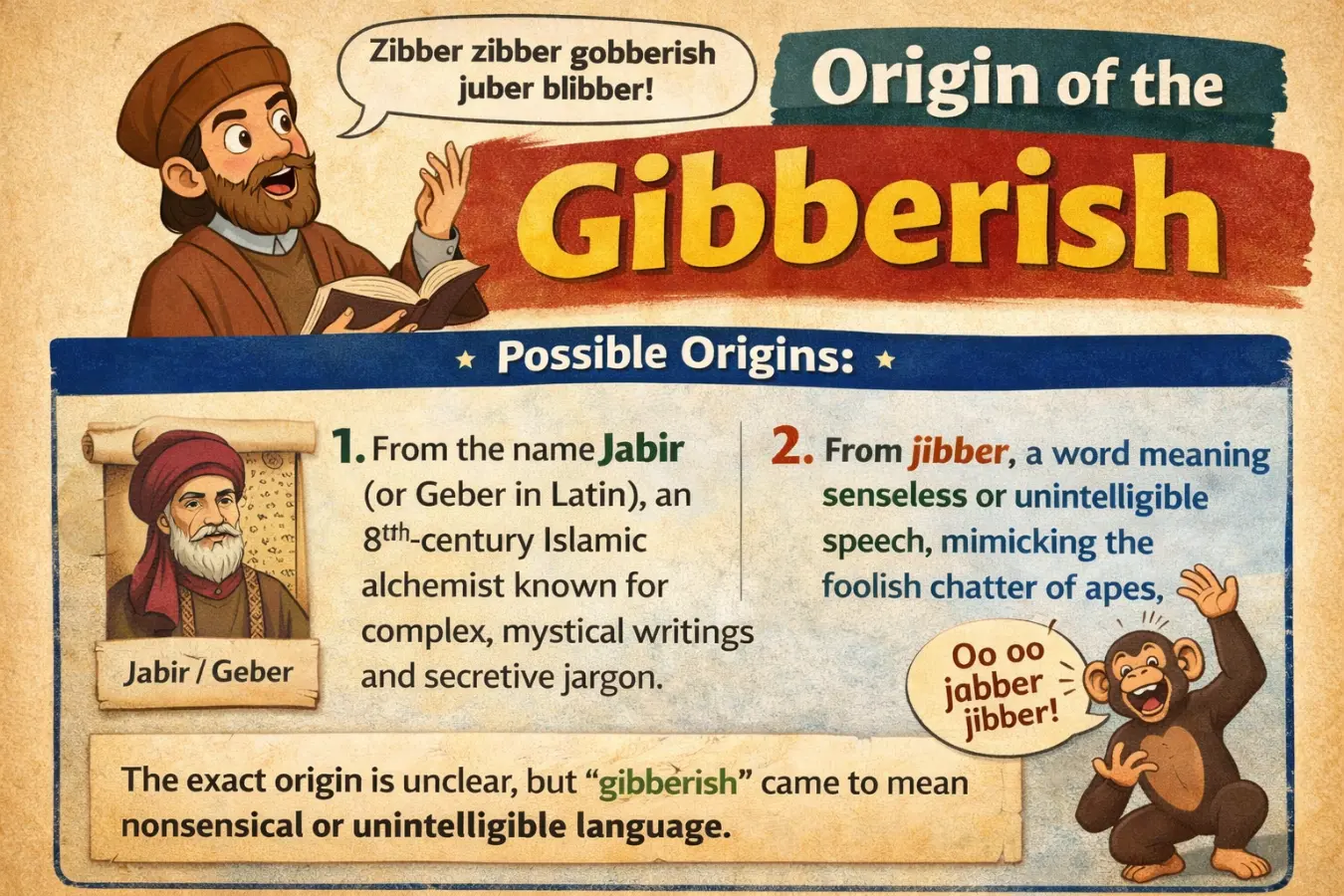
Origin of the Word Gibberish
The exact origin remains uncertain.
Language experts believe the word developed during the 1500s. It likely came from words that described rapid, meaningless chatter.
Over time, gibberish became the accepted term for speech that cannot be understood.
Today, it appears in everyday English around the world.
How to Use Gibberish in a Sentence
Here are some simple examples.
Everyday Conversations
- That instruction manual looks like gibberish.
- I could not understand the gibberish in the message.
School
- The student filled the page with gibberish.
- The answer contained random gibberish.
Workplace
- The report included technical terms that sounded like gibberish.
- The presentation became confusing and felt like gibberish.
Real-Life Examples of Gibberish
Example 1: Text Messages
Someone accidentally presses random keys:
“dkfjweoipxzmn”
That is gibberish.
Example 2: Baby Talk
Babies often produce sounds without meaning.
Parents may call these sounds gibberish.
Example 3: Unknown Language
A person hearing a language they do not understand may mistakenly describe it as gibberish.
Example 4: Technical Jargon
Complex terminology sometimes sounds like gibberish to beginners.
Common Mistakes People Make
Mistake #1: Writing Jibberish
❌ The email contained jibberish.
✅ The email contained gibberish.
Mistake #2: Using It as a Formal Description
Avoid calling someone’s language gibberish in professional settings. It may sound disrespectful.
Mistake #3: Confusing It with Slang
Gibberish refers specifically to meaningless language, not casual slang.
Easy Trick to Remember the Correct Spelling
Use this simple memory tip:
Think of “Gibber”
The word gibberish starts with gibber.
Since both words begin with G, remember:
Gibber → Gibberish
This trick helps you avoid writing jibberish.
Gibberish in Daily Life
You may encounter gibberish more often than you realize.
Social Media
Spam comments often contain gibberish.
Technology
Corrupted files may display gibberish text.
Education
Teachers may use gibberish examples during language lessons.
Entertainment
Comedy shows sometimes include funny gibberish dialogue.
Synonyms of Gibberish
Using related words can improve your writing.
Common Synonyms
- Nonsense
- Babble
- Rubbish
- Mumbo jumbo
- Gobbledygook
- Balderdash
- Drivel
- Jargon
- Claptrap
Related Keywords
- Meaningless words
- Nonsensical speech
- Unclear language
- Confusing text
- Random words
Gibberish in Digital Communication
Modern technology creates many examples of gibberish.
Encoding Errors
Broken character encoding may display strange symbols.
Spam Bots
Automated accounts often post gibberish messages.
AI Output Errors
Poorly generated text can sometimes appear as gibberish.
Recognizing gibberish helps users identify low-quality content online.
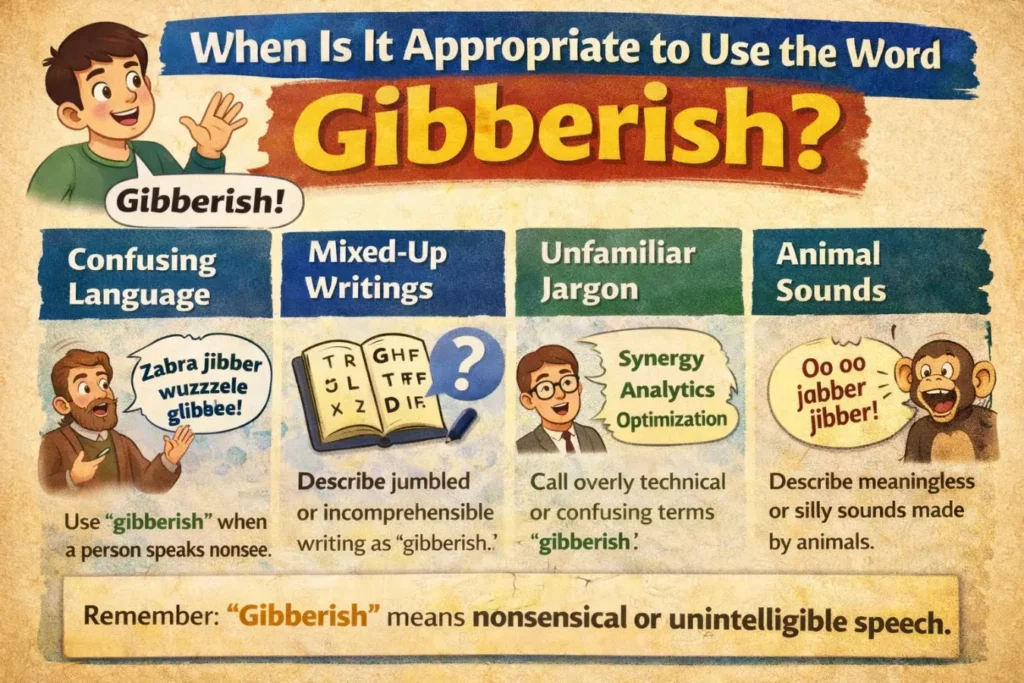
When Is It Appropriate to Use the Word Gibberish?
Use the word when:
- Words have no clear meaning.
- Speech cannot be understood.
- Text appears random.
- Communication lacks structure.
Avoid using it to insult people or cultures.
Respectful communication always matters.
Expert Insight: Why Correct Spelling Matters
Correct spelling improves credibility.
Search engines and readers trust content that uses standard language. Writing gibberish instead of jibberish demonstrates attention to detail.
Accurate spelling also improves:
- Professional image
- Academic writing
- SEO performance
- Reader trust
- Content quality
Small spelling choices can make a big difference.
FAQs
Is jibberish a real word?
Jibberish appears as a common misspelling, but gibberish is the accepted standard spelling.
Which is correct, gibberish or jibberish?
Gibberish is correct.
What does gibberish mean?
It means meaningless or difficult-to-understand speech or writing.
Why do people say jibberish?
The pronunciation of gibberish sounds similar to a word beginning with “j.”
Can I use jibberish in formal writing?
No. Use gibberish instead.
Is gibberish found in dictionaries?
Yes. Major dictionaries include gibberish.
What is an example of gibberish?
Random letters such as “xkqrmvptz” are examples of gibberish.
Is gibberish offensive?
Usually not. However, using it to describe someone’s language or culture may seem disrespectful.
Internal Linking Suggestions
Consider linking this article to:
- Commonly confused English words
- Grammar and spelling guides
- Homophones and spelling mistakes
- English vocabulary improvement tips
- Writing and proofreading resources
Conclusion
The debate over gibberish or jibberish has a simple answer. Gibberish is the correct and accepted spelling in English. While many people write jibberish, dictionaries and style guides recommend using gibberish in all situations.
The word describes speech or writing that lacks clear meaning. You may encounter it in everyday conversations, online messages, technical errors, and humorous content. Understanding the difference helps you write more accurately and professionally.
Whenever you feel unsure, remember the simple rule: gibberish is correct, jibberish is not. Using the right spelling improves clarity, credibility, and confidence in your writing.

James Carter is a comparison writer and research specialist with over 10 years of experience in digital publishing. With a background in business communication and consumer research, he creates detailed comparison articles, buying guides, and reviews that help readers make informed decisions with confidence. “Every comparison should help readers make better decisions. My goal is to turn complex information into clear, practical guidance that people can trust.” — James Carter