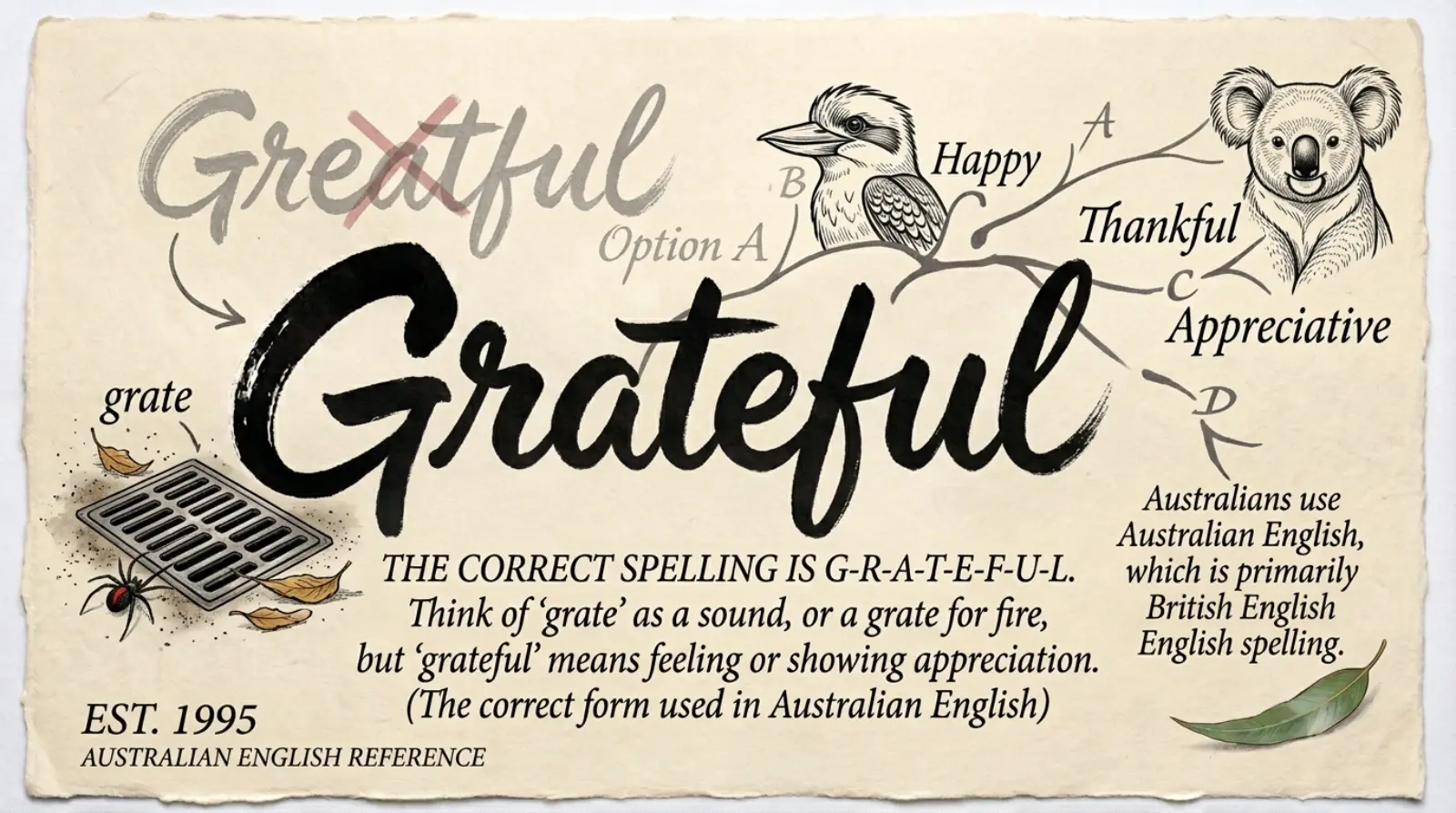
Greatful or grateful Australia is a common spelling question. Many people in Australia wonder which word is correct. The good news is that the answer is simple. Grateful is the correct spelling in Australian English. Greatful is a spelling mistake.
Even fluent English speakers make this error because the words great and grateful sound similar. However, they have different origins and meanings. Knowing the correct spelling helps you write better emails, school work, business documents, and social media posts.
This guide explains the difference in simple English. You will also find examples, grammar tips, a comparison table, common mistakes, and FAQs. By the end, you will know exactly when to use grateful and why greatful should be avoided.
Quick Summary Box
- Correct spelling in Australia: Grateful ✅
- Incorrect spelling: Greatful ❌
- Meaning of grateful: Feeling thankful or appreciative.
- Meaning of greatful: Not a real English word.
- Used in: Australian English, British English, American English, and Canadian English.
- Easy tip: If you feel gratitude, you are grateful.
What Does “Grateful” Mean?
Grateful means feeling thankful for someone’s kindness, help, or support.
Simple definition
Grateful means appreciating something good that someone has done for you.
Examples
- I am grateful for your support.
- She felt grateful after receiving help.
- We are grateful to our teachers.
- They were grateful for the opportunity.
The word expresses appreciation and thankfulness.
Is “Greatful” a Real Word?
No.
Greatful is not a correct English word.
Many people accidentally write it because it looks like it comes from the word great. However, the correct spelling comes from gratitude, not great.
Incorrect Examples
❌ I am greatful for your help.
❌ We are greatful today.
Correct Examples
✅ I am grateful for your help.
✅ We are grateful today.
Greatful or Grateful Australia: Which Is Correct?
In Australia, the correct spelling is always grateful.
Australian English follows British spelling rules for many words. However, this word stays the same in nearly every English-speaking country.
| Word | Correct in Australia? | Meaning |
|---|---|---|
| Grateful | ✅ Yes | Feeling thankful |
| Greatful | ❌ No | Incorrect spelling |

Whether you write for school, work, university, or business, always use grateful.
Why Do People Spell It as “Greatful”?
This mistake happens for several reasons.
1. It sounds similar
People hear “great” inside the pronunciation.
2. The word “great” is common
Our brains naturally connect familiar words.
3. Fast typing
Typing quickly often creates spelling errors.
4. Autocorrect issues
Sometimes people ignore spelling suggestions.
Grateful Comes from Gratitude
The easiest way to remember the correct spelling is to think about gratitude.
Notice the spelling:
- Gratitude
- Grateful
Both begin with grat-.
They do not begin with great-.
Memory Trick
If you have gratitude, you are grateful.
This simple trick helps many learners remember the correct spelling.
Comparison Table: Greatful vs Grateful
| Feature | Greatful | Grateful |
|---|---|---|
| Correct spelling | ❌ No | ✅ Yes |
| Dictionary word | ❌ No | ✅ Yes |
| Used in Australia | ❌ Never | ✅ Always |
| Used in schools | ❌ No | ✅ Yes |
| Used in business writing | ❌ No | ✅ Yes |
| Means thankful | ❌ No | ✅ Yes |
| Professional writing | ❌ Avoid | ✅ Recommended |
Real-Life Examples of Grateful
Here are common situations where Australians use grateful.
At Work
“I am grateful for your guidance.”
At School
“The students were grateful for extra lessons.”
In Emails
“We are grateful for your quick response.”
In Daily Conversation
“I’m grateful that you came.”
On Social Media
“Feeling grateful for another beautiful day.”
In Thank You Cards
“We are grateful for your kindness.”
Common Mistakes People Make
Many writers confuse these spellings.
Mistake 1
❌ I am greatful.
✅ I am grateful.
Mistake 2
❌ She feels greatful today.
✅ She feels grateful today.
Mistake 3
❌ We are very greatful.
✅ We are very grateful.
Mistake 4
❌ Greatful for your support.
✅ Grateful for your support.
How to Remember the Correct Spelling
These tips make the spelling easy.
Think of Gratitude
Gratitude → Grateful
Ignore the Word “Great”
Although it sounds similar, great is unrelated.
Read More
Reading books improves spelling naturally.
Use Spell Check
Modern writing tools catch this mistake.
Practice Writing
Write the word several times.
- Grateful
- Grateful
- Grateful
Practice helps your memory.
Using “Grateful” in Daily Life
You can use grateful almost every day.
Thanking Friends
“I’m grateful for your friendship.”
Family
“We are grateful for our parents.”
Business
“Our company is grateful for your support.”
Healthcare
“The patient was grateful to the nurses.”
Education
“The teacher was grateful for the students’ effort.”
Community
“We are grateful for our volunteers.”
Synonyms of Grateful
Here are words with similar meanings.
- Thankful
- Appreciative
- Obliged
- Indebted
- Blessed
- Pleased
- Acknowledging
- Respectful
- Recognising kindness
- Full of gratitude
Related LSI Keywords
- grateful meaning
- grateful spelling
- greatful or grateful
- grateful Australia
- gratitude
- thankful meaning
- thankful vs grateful
- correct spelling of grateful
- Australian English spelling
- grammar mistakes
Expert Insight
Correct spelling builds trust.
Readers notice spelling mistakes quickly. One small error can reduce your credibility.
Australian schools, universities, employers, and publishers expect standard English spelling.
Using grateful instead of greatful shows attention to detail and strong communication skills.
Good spelling also helps websites perform better in search results because readers stay longer and trust the content more.
Featured Snippet
Is it “greatful” or “grateful” in Australia?
Grateful is the correct spelling in Australian English. It means feeling thankful or appreciative. Greatful is a spelling mistake and should not be used in formal or informal writing.
Common Situations Where Australians Use “Grateful”
| Situation | Example |
|---|---|
| Thank you. I am grateful for your help. | |
| Workplace | We are grateful for your contribution. |
| School | Students are grateful for the support. |
| Family | I’m grateful to my parents. |
| Friends | She is grateful for their kindness. |
| Social media | Feeling grateful today. |
Frequently Asked Questions
Is greatful correct in Australia?
No. Grateful is the only correct spelling.
Why do people write greatful?
People confuse it with the word great because of the pronunciation.
Does Australia use grateful or greatful?
Australia uses grateful.
Is grateful British or American English?
It is correct in both British and American English. Australia also uses grateful.
What is the easiest way to remember grateful?
Think of gratitude. If you have gratitude, you are grateful.
Can I use greatful in formal writing?
No. It is considered a spelling mistake.
Is grateful an adjective?
Yes. It describes someone who feels thankful.
What noun is related to grateful?
The related noun is gratitude.
Internal Linking Suggestions
Consider linking this article to related grammar guides such as:
- Thankful vs Grateful
- Judgement or Judgment
- Grey or Gray
- Favourite or Favorite
- Stationery or Stationary
- Principal vs Principle
- Ensure vs Insure vs Assure
Conclusion
If you have ever searched for greatful or grateful Australia, the answer is clear. Grateful is the correct spelling in Australian English and across other major English varieties. It means feeling thankful or appreciative. Greatful is not a recognised English word and should be avoided in every type of writing.
The easiest way to remember the correct spelling is to connect grateful with gratitude. This simple memory trick works every time. Whether you are writing an email, completing school work, creating business documents, or posting on social media, using grateful helps you communicate clearly and professionally. Mastering small spelling differences like this strengthens your writing and leaves a better impression on every reader.

James Carter is a comparison writer and research specialist with over 10 years of experience in digital publishing. With a background in business communication and consumer research, he creates detailed comparison articles, buying guides, and reviews that help readers make informed decisions with confidence. “Every comparison should help readers make better decisions. My goal is to turn complex information into clear, practical guidance that people can trust.” — James Carter