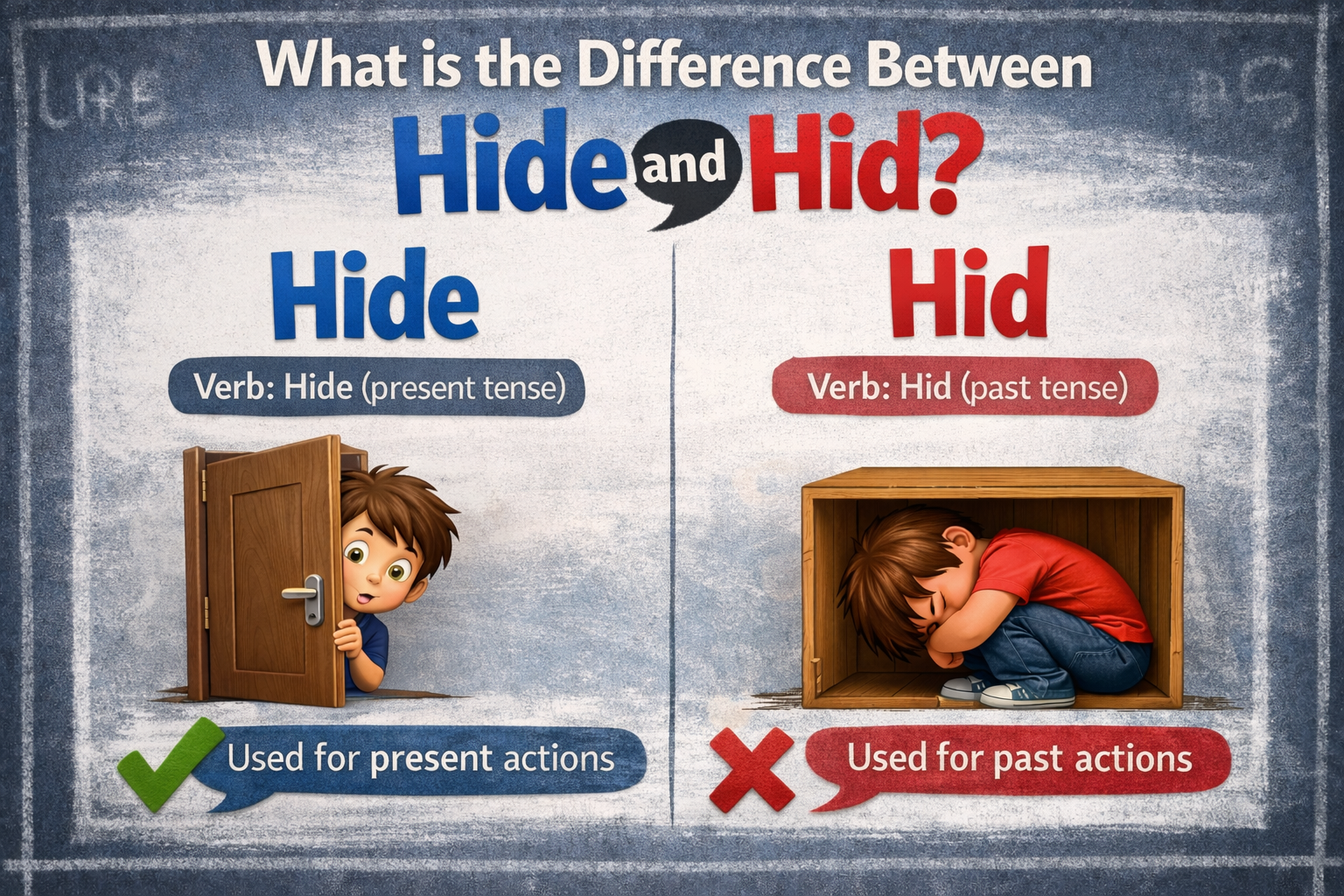
Hide or hid is a common grammar question that confuses many English learners. These two words come from the same verb, but they are not used in the same way. Understanding the difference between hide and hid can improve your writing and speaking skills.
Many people use these words incorrectly in sentences. As a result, their grammar may sound awkward or unclear. The good news is that the rule is simple. Once you learn when to use each word, you will avoid common mistakes.
In this guide, you will learn the meaning of hide and hid, see real-life examples, compare their usage, and discover helpful grammar tips. By the end, you will know exactly which word to use in any situation.
Quick Summary Box
- Hide is the base form of the verb.
- Hid is the simple past tense of hide.
- Use hide for present and future actions.
- Use hid for actions that already happened.
- Example: “I hide my keys.” / “I hid my keys yesterday.”
- Both words come from the same verb family.
- Knowing the difference helps improve grammar accuracy.
What Does Hide Mean?
The word hide means to put something in a place where it cannot be easily seen or found.
Examples
- I hide my diary in a drawer.
- They hide behind the wall.
- She wants to hide the surprise gift.
In these examples, the action is happening now or may happen later.
What Does Hid Mean?
Hid is the simple past tense of hide. It describes an action that happened in the past.
Examples
- I hid my wallet yesterday.
- The cat hid under the bed.
- They hid the evidence before anyone arrived.
These actions already happened and are complete.
Hide vs Hid: Quick Comparison Table
| Feature | Hide | Hid |
|---|---|---|
| Part of Speech | Verb (base form) | Verb (past tense) |
| Time | Present/Future | Past |
| Example | I hide my keys. | I hid my keys. |
| Grammar Role | Base verb | Past tense form |
| Usage | Current or future actions | Completed actions |
When Should You Use Hide?
Use hide when talking about:
- Present actions
- Habits and routines
- Future actions
- After modal verbs
Examples
- I hide my phone every night.
- We hide gifts before birthdays.
- She will hide the package.
- You should hide your password.
When Should You Use Hid?
Use hid when the action happened in the past.
Examples
- He hid the letter last week.
- They hid from the storm.
- We hid the presents before the guests arrived.
Hide, Hid, and Hidden
Many learners also confuse hidden with hide and hid.
| Form | Usage |
|---|---|
| Hide | Base verb |
| Hid | Past tense |
| Hidden | Past participle |
Examples
- I hide my notes.
- I hid my notes yesterday.
- I have hidden my notes.
Real-Life Examples of Hide and Hid
Home
- I hide snacks from my brother.
- I hid the snacks yesterday.
School
- Students hide their phones.
- One student hid his phone during class.
Work
- Employees should not hide important information.
- Someone hid the report last week.
Common Mistakes People Make
Incorrect:
I hid my keys every day.
Correct:
I hide my keys every day.
Incorrect:
Yesterday, I hide my wallet.
Correct:
Yesterday, I hid my wallet.
Incorrect:
I have hid my notebook.
Correct:
I have hidden my notebook.
Grammar Rule to Remember
Think about time.
- Present = Hide
- Past = Hid
- Present Perfect = Hidden
This simple rule works in almost every situation.
Daily Life Usage
You may use these words often:
- Hide a gift
- Hide a secret
- Hide money
- Hide emotions
- Hide from danger
Past examples:
- Hid a gift
- Hid a secret
- Hid money
- Hid emotions
- Hid from danger
Synonyms of Hide
Related words include:
- Conceal
- Cover
- Camouflage
- Mask
- Shelter
- Disguise
- Keep secret
These synonyms may fit different situations.
Why Learning the Difference Matters
Using the correct verb tense makes your writing clearer. It also helps readers understand when an action happened. Small grammar mistakes can affect communication, especially in academic and professional writing.
Expert Insight
Grammar experts recommend learning verb forms together rather than separately. Instead of memorizing only hide, remember:
- Hide
- Hid
- Hidden
This method improves recall and reduces mistakes.
Frequently Asked Questions
Is hid a real word?
Yes. Hid is the simple past tense of hide.
Which is correct: hide or hid?
Both are correct. The right choice depends on the time of the action.
What is the past tense of hide?
The past tense of hide is hid.
What is the past participle of hide?
The past participle is hidden.
Can I say “I have hid”?
No. The correct phrase is “I have hidden.”
Is hide present tense?
Yes. Hide is the base and present-tense form.
How do I remember hide vs hid?
Use hide for present actions and hid for past actions.
Conclusion
Understanding the difference between hide or hid is easier than many people think. Hide is the base form used for present and future actions, while hid is the simple past tense used for actions that already happened. Learning this rule helps you write more clearly and speak more confidently. Whenever you are unsure, ask yourself when the action happened. If it is happening now, use hide. If it happened before, use hid. With regular practice and real-life examples, choosing the correct word will soon become natural.

James Carter is a comparison writer and research specialist with over 10 years of experience in digital publishing. With a background in business communication and consumer research, he creates detailed comparison articles, buying guides, and reviews that help readers make informed decisions with confidence. “Every comparison should help readers make better decisions. My goal is to turn complex information into clear, practical guidance that people can trust.” — James Carter