
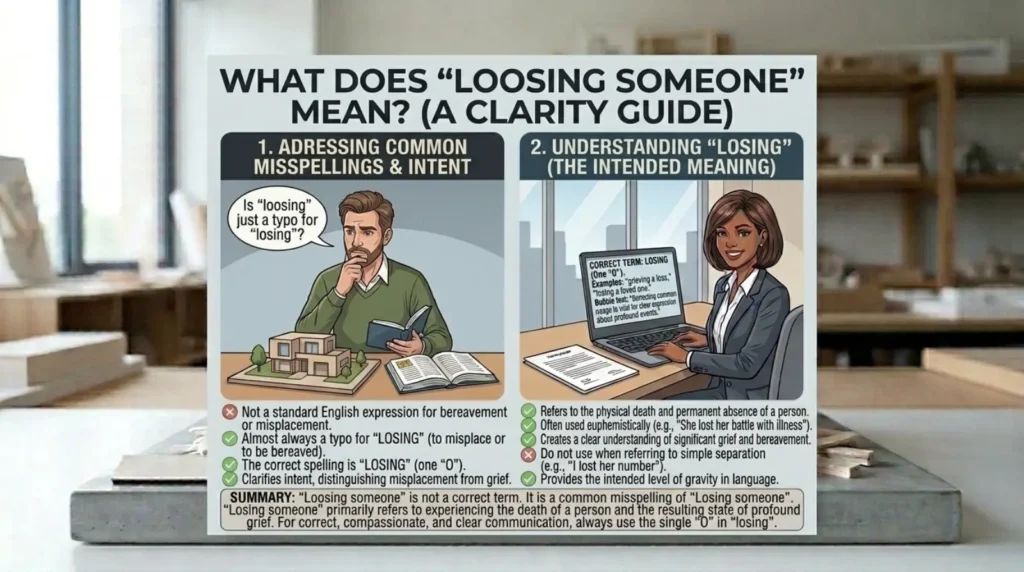
Losing or loosing someone is a common grammar question that confuses many English learners and native speakers. These two words look almost the same. However, they have very different meanings. Using the wrong one can change the meaning of your sentence. That is why it helps to know when to use each word. If you are writing about grief, relationships, or everyday events, choosing the correct spelling matters. In this guide, you will learn the difference between losing and loosing someone in simple words. You will also see real-life examples, common mistakes, and easy memory tips. By the end, you will feel confident using the correct word in conversations, emails, schoolwork, and professional writing.
Quick Summary Box
- Losing someone is the correct phrase in most situations.
- Losing means no longer having someone or experiencing their death or absence.
- Loosing means releasing or setting something free.
- People often confuse these words because they look alike.
- Remember: If you mean grief or separation, use losing.
Featured Snippet Answer
Is it losing or loosing someone?
The correct phrase is losing someone. The word losing means no longer having someone because of death, separation, or distance. Loosing someone is usually incorrect unless you mean releasing or setting someone free.
What Does “Losing Someone” Mean?
Losing someone means that a person is no longer part of your life.
This may happen because:
- They passed away.
- They moved far away.
- A relationship ended.
- You lost contact with them.
Examples
- I am afraid of losing someone I love.
- She is still healing after losing her father.
- They felt sad after losing their best friend.
What Does “Loosing Someone” Mean?
Loosing comes from the verb loose, which means to release or untie something.
It is much less common in everyday English.
Examples
- The soldier was loosing the horses from the fence.
- The sailor was loosing the ropes.
Notice that these examples involve releasing or freeing something.
You normally do not say loosing someone when talking about death or relationships.
Losing vs Loosing Someone: Comparison Table
| Feature | Losing Someone | Loosing Someone |
|---|---|---|
| Correct in grief? | ✅ Yes | ❌ No |
| Means | No longer having someone | Releasing someone |
| Common in English | Very common | Very rare |
| Used in emotional writing | Yes | No |
| Correct sentence | Losing my friend was painful. | Loosing my friend was painful. ❌ |
Why People Confuse Losing and Loosing
These words look almost identical.
Here are the main reasons people mix them up:
- Only one extra o separates them.
- Both come from similar-looking base words.
- Spell check may not catch the mistake.
- Fast typing often causes errors.
Learning their meanings makes the difference easy.
When Should You Use “Losing Someone”?
Use losing someone whenever you mean:
- Death
- Separation
- Ending a relationship
- Losing contact
- Emotional absence
Examples
- She cried after losing her grandmother.
- I fear losing my best friend.
- Nobody wants to experience losing a loved one.
- He struggled after losing his wife.
- We never expected losing our teacher so suddenly.
When Is “Loosing Someone” Correct?
This phrase is only correct if loosing means releasing.
This situation is rare.
Examples
- The guard was loosing the prisoners.
- They were loosing the dogs into the field.
Most people actually mean losing someone, not loosing someone.
Real-Life Examples of Losing Someone
Here are common situations.
Family
- Losing a parent changes many lives.
- Losing a sibling can feel overwhelming.
Friendships
- Losing a close friend hurts deeply.
- Moving away sometimes means losing old friendships.
Relationships
- She feared losing her partner.
- Losing trust can end a relationship.
Work
- Losing a valued coworker affects the whole team.
Common Grammar Mistakes
Incorrect
- I am scared of loosing someone I love.
Correct
- I am scared of losing someone I love.
Incorrect
- She is loosing her father.
Correct
- She is losing her father.
Incorrect
- We are loosing our friends.
Correct
- We are losing our friends.
Easy Trick to Remember the Difference
Use this simple memory trick.
Losing = Loss
Both words relate to something disappearing.
- Losing
- Loss
They share the same meaning.
Loosing = Loose
Loose means not tight.
Loosing means making something loose.
Think about:
- Loose rope
- Loose knot
- Loose horse
This makes remembering much easier.
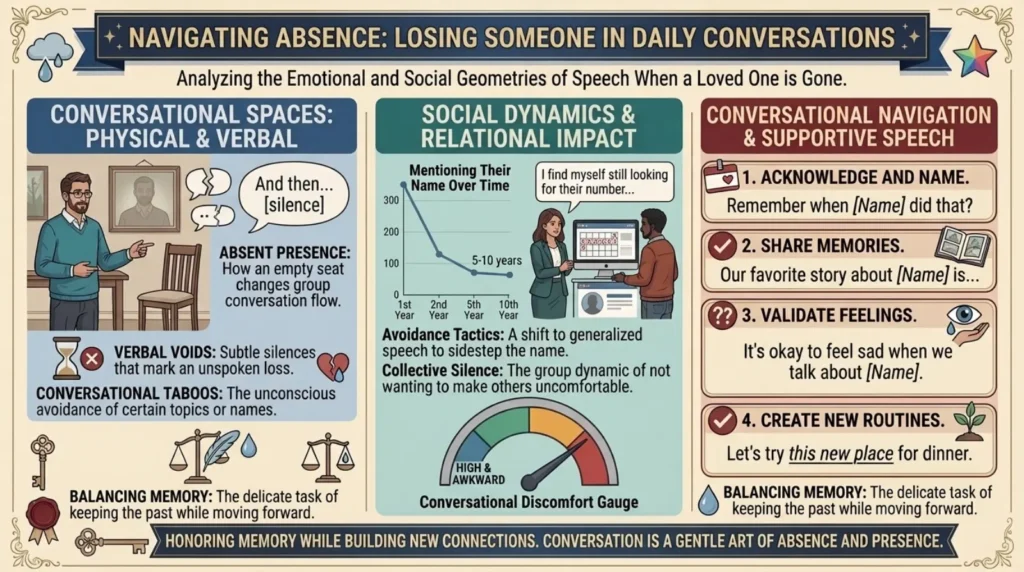
Losing Someone in Daily Conversations
People use this phrase every day.
Examples include:
- I cannot imagine losing my mom.
- She fears losing her job and her friends.
- Losing someone changes your life forever.
- He talked about losing his childhood friend.
- Many people struggle after losing someone they love.
Synonyms and Related Keywords
Synonyms for Losing Someone
- suffering a loss
- experiencing grief
- saying goodbye
- losing a loved one
- becoming separated
- parting ways
- mourning someone
- missing someone
Related LSI Keywords
- losing a loved one
- coping with grief
- grief after losing someone
- losing family member
- emotional loss
- bereavement
- death of a loved one
- relationship loss
- grief support
- healing after loss
Expert Insight
Professional writers and editors always choose losing someone when discussing grief or relationships.
Using loosing someone creates confusion because it changes the meaning completely.
Search engines also recognize the correct phrase more often because it matches natural English usage.
Choosing accurate grammar improves readability, trust, and user experience. These are important signals for strong SEO and better engagement.
Common Examples in Sentences
Correct
- Losing someone is never easy.
- She is afraid of losing her parents.
- Losing a pet can be heartbreaking.
- They discussed losing loved ones during therapy.
- Losing someone teaches us to value relationships.
Incorrect
- Loosing someone is painful.
- I fear loosing my family.
- She keeps loosing people she loves.
Internal Linking Suggestions
To improve topical authority, link this article to related grammar guides such as:
- Lose vs Loose: What’s the Difference?
- Loss vs Lost Explained
- Passed Away vs Died
- Affect vs Effect
- Than vs Then
- Their vs There vs They’re
Frequently Asked Questions
Is it losing or loosing someone?
Losing someone is correct. It means no longer having someone because of death, separation, or distance.
Is loosing someone ever correct?
Yes, but only if you mean releasing or freeing someone. This usage is rare.
Why do people spell losing as loosing?
The words look similar, and typing errors are common.
What does losing someone mean emotionally?
It means experiencing grief, separation, or emotional pain after someone is gone.
Does loosing mean the same as losing?
No. Loosing means releasing something. Losing means no longer having something.
Is losing someone grammatically correct?
Yes. It is the standard English phrase.
How can I remember the difference?
Remember:
- Losing = Loss
- Loosing = Loose
This simple trick helps avoid mistakes.
Conclusion
Understanding losing or loosing someone is easier once you know the meanings behind each word. Losing someone is the correct phrase when talking about grief, separation, or no longer having someone in your life. Loosing someone has a completely different meaning. It refers to releasing or setting someone or something free. Although the spellings look similar, choosing the right word makes your writing clear and professional. Whether you are writing a personal message, school assignment, or blog post, using losing someone correctly helps readers understand your meaning immediately. Keep the simple memory trick in mind: losing relates to loss, while loosing relates to loose. With regular practice, this common grammar mistake becomes easy to avoid.

Michael Reed is a language content writer and word comparison researcher based in the United States. He studied English Language and Communication and focuses on grammar, spelling differences, and word usage. His work helps readers understand confusing English words through clear comparisons and practical explanations. Michael creates simple, reader-friendly content designed to improve everyday language skills.