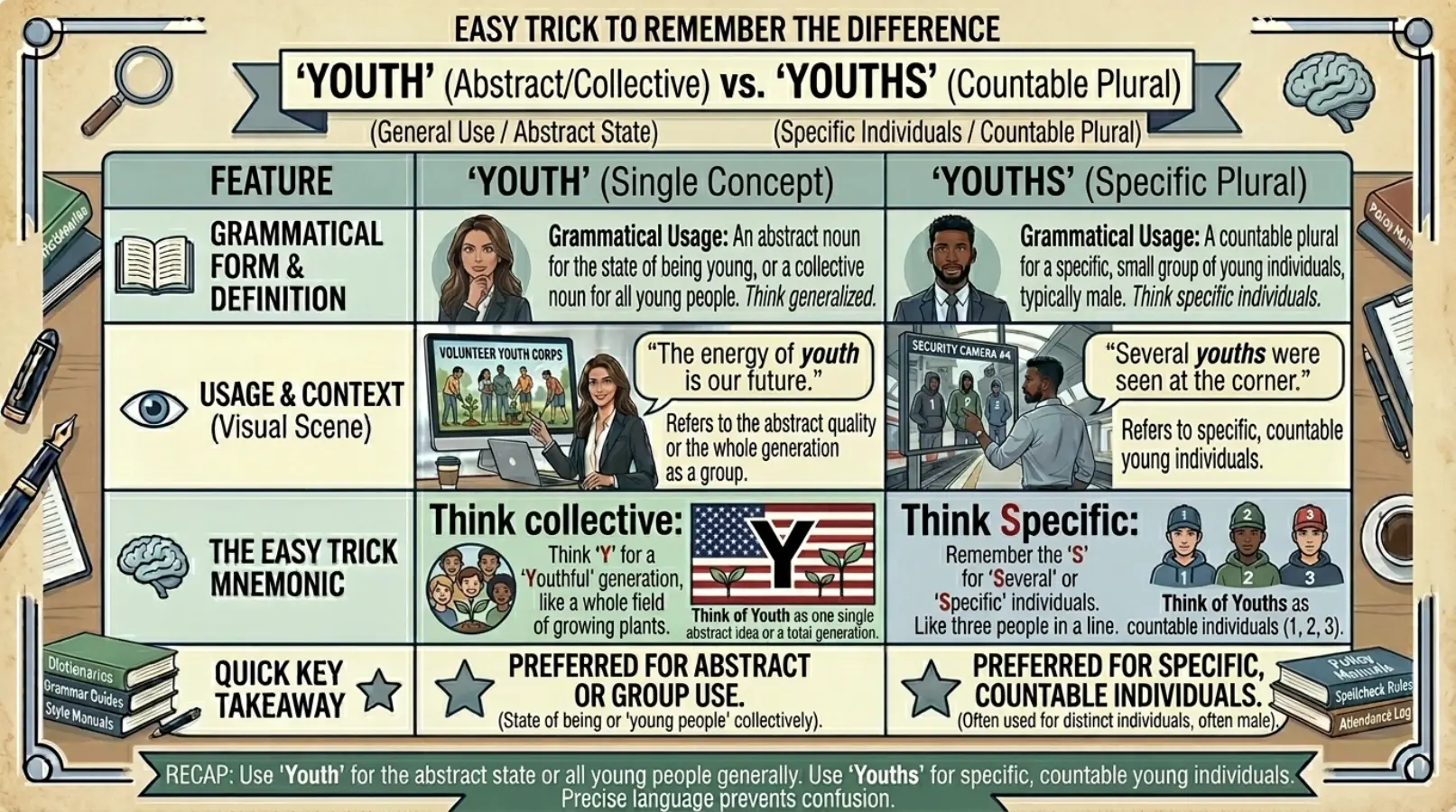
Youths or youth is a common grammar question that confuses many English learners and writers. Both words are correct, but they have different uses. Knowing the difference can improve your writing and help you avoid mistakes.
Many people use these terms when talking about young people. However, the right choice depends on the meaning of the sentence. Sometimes “youth” refers to a stage of life. Other times, “youths” refers to several young individuals.
In this guide, you will learn the meaning of each word, see real-life examples, and discover simple tricks to remember the difference. By the end, you will know exactly when to use “youth” and when to use “youths.”
Quick Summary Box
Featured Snippet: Youths or Youth
- Youth can mean a young person or the period of being young.
- Youths is the plural form of youth when referring to multiple young people.
- Use youth for age, adolescence, or a collective group.
- Use youths when talking about several individual young people.
- Both words are correct in the right context.
- Understanding the difference improves grammar and writing clarity.
What Does Youth Mean?
The word youth has several meanings in English.
It can refer to:
- A young person.
- The period between childhood and adulthood.
- Young people as a group.
Examples
- My grandfather often talks about his youth.
- She enjoyed sports during her youth.
- The community supports local youth programs.
- A polite youth helped me carry my bags.
In many cases, “youth” acts as a collective noun.
What Does Youths Mean?
Youths is the plural form of youth when referring to more than one young person.
Examples
- Several youths participated in the competition.
- The police spoke with a group of youths.
- The camp welcomed hundreds of youths.
While correct, “youths” appears less often in everyday conversation.
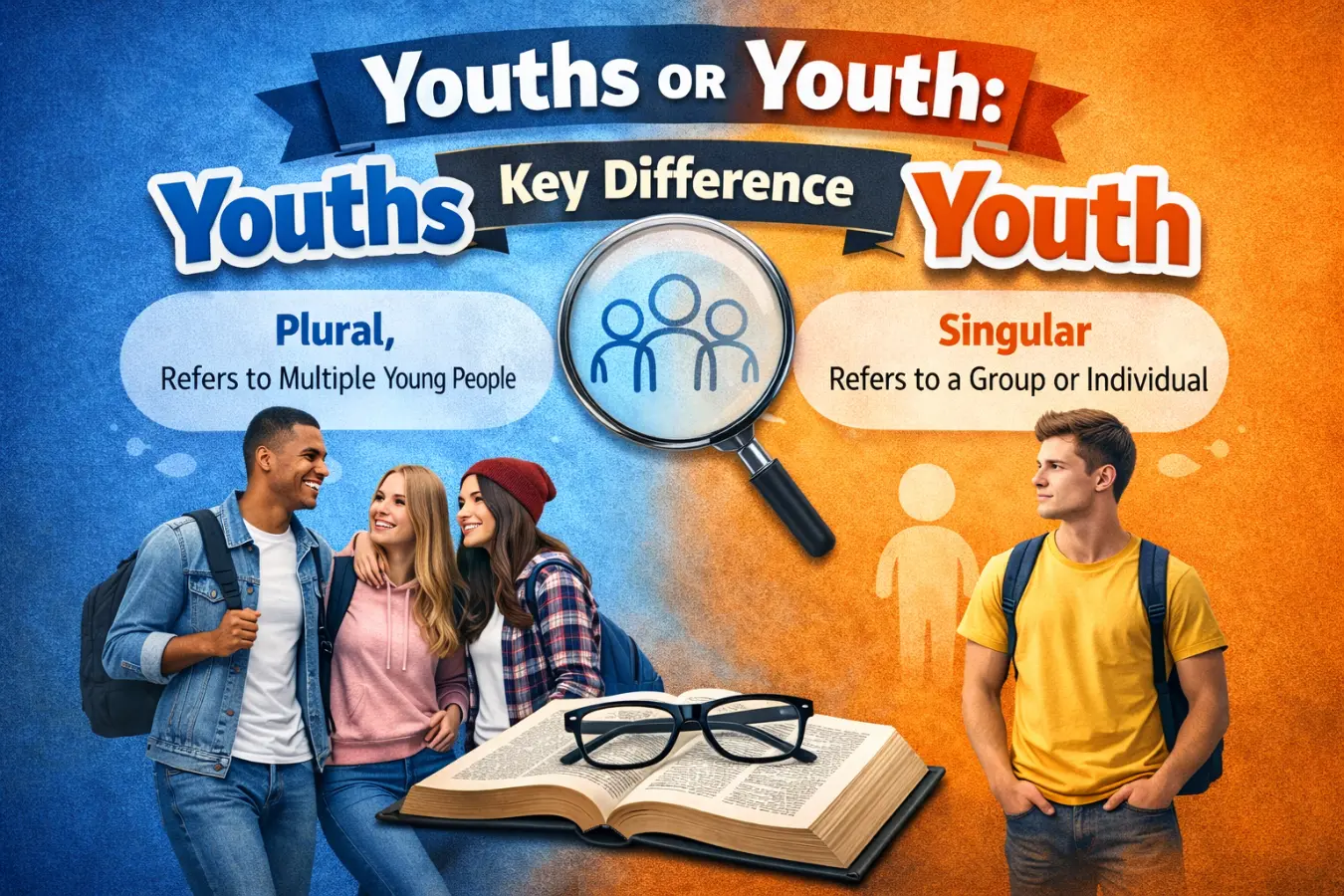
Youths or Youth: Key Difference
The main difference is simple.
- Youth often refers to a stage of life or a collective group.
- Youths refers to multiple individual young people.
Comparison Table
| Feature | Youth | Youths |
|---|---|---|
| Meaning | Young person, young age, or young people collectively | More than one young person |
| Singular or Plural | Usually singular or collective | Plural |
| Common Usage | Very common | Less common |
| Refers to Age Period | Yes | No |
| Refers to Individuals | Sometimes | Yes |
| Example | Youth is a wonderful time of life. | Several youths joined the event. |
Why Do People Get Confused?
Many English words change meaning based on context.
The confusion happens because youth can already describe a group of young people.
For example:
- Youth today face many challenges.
In this sentence, “youth” already represents a collective group.
Because of this, writers often wonder whether they need “youths.”
When Should You Use Youth?
Use youth in these situations.
1. When Talking About Young Age
- He traveled widely during his youth.
- Her youth was full of adventure.
2. When Referring to Young People Collectively
- Youth need positive role models.
- Youth programs benefit communities.
3. When Referring to One Young Person
- A youth approached the information desk.
When Should You Use Youths?
Use youths when emphasizing several separate young people.
Examples
- The coach trained twenty talented youths.
- The youths gathered at the community center.
- Several youths received awards.
This form is common in formal reports, news articles, and legal writing.
Real-Life Examples of Youth and Youths
Understanding real situations makes the difference easier.
Example 1: Talking About Age
✅ During her youth, she lived in a small village.
❌ During her youths, she lived in a small village.
Example 2: Talking About a Group
✅ Youth today use technology daily.
✅ The youths at the event enjoyed the activities.
Both are correct because they have different meanings.
Example 3: Community Programs
✅ The city offers youth programs.
❌ The city offers youths programs.
“Youth” works as an adjective here.
Youth as a Collective Noun
A collective noun refers to a group as a whole.
In many contexts, youth works this way.
Examples
- Youth are shaping the future.
- Youth face many social challenges.
- The organization supports youth development.
Because “youth” already represents many people, adding an “s” is not always necessary.
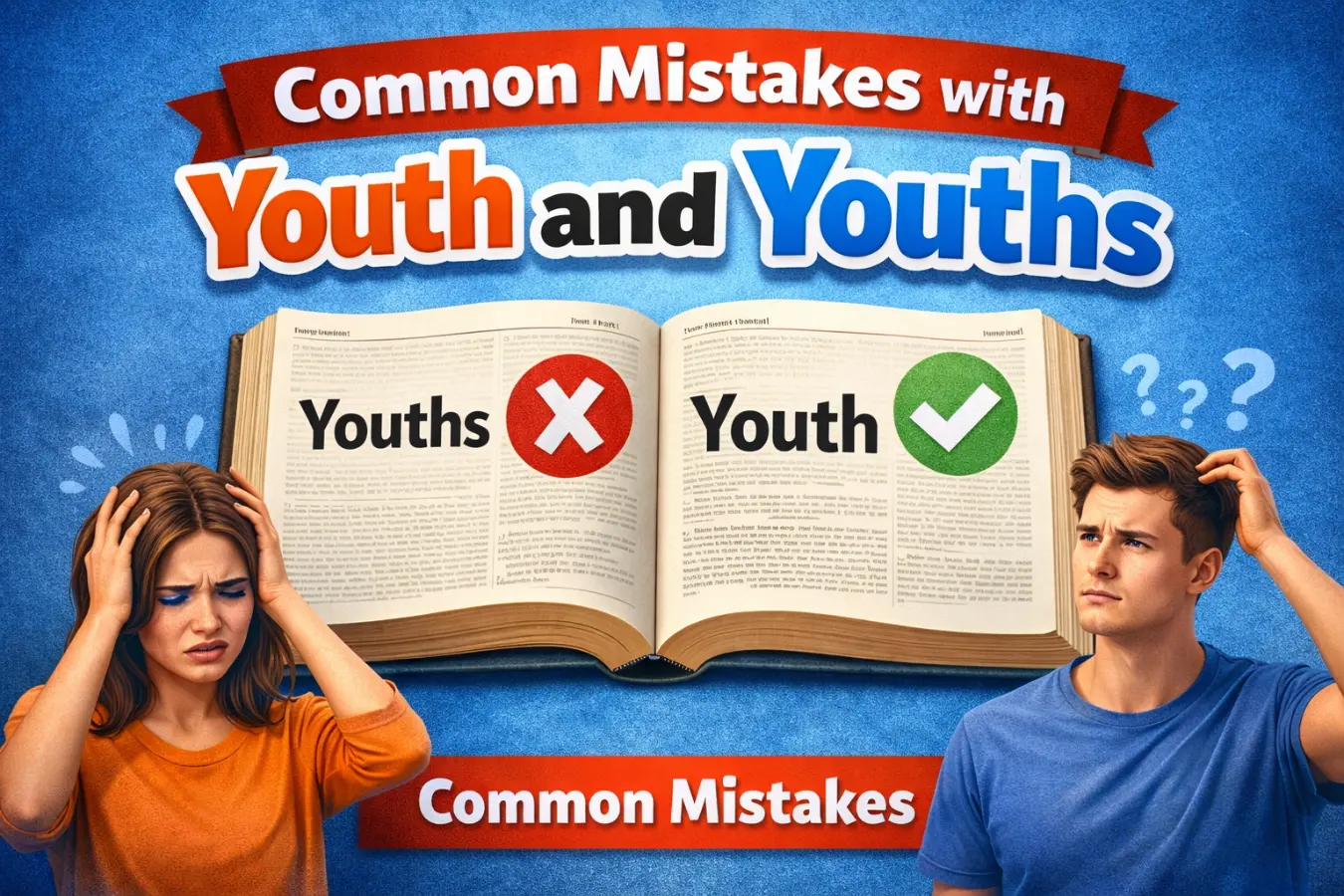
Common Mistakes With Youth and Youths
Many writers make these errors.
Mistake 1: Using Youths for Age
❌ She spent her youths in Canada.
✅ She spent her youth in Canada.
Mistake 2: Adding an Unnecessary Plural
❌ Youths today love social media.
✅ Youth today love social media.
Mistake 3: Using Youth for Multiple Individuals
❌ Three youth were standing outside.
✅ Three youths were standing outside.
Simple Trick to Remember the Difference
Try this easy memory tip.
Think About the Meaning
If you mean:
- A period of life → Use youth
- Young people as a group → Use youth
- Several individual young people → Use youths
This simple rule works most of the time.
Usage in Daily Life
You will often see “youth” in everyday situations.
Common Examples
- Youth clubs
- Youth centers
- Youth sports
- Youth education
- Youth leadership programs
You may see “youths” in:
- News reports
- Police reports
- Government documents
- Legal writing
Synonyms and Related Words
Using related terms can improve writing variety.
Synonyms for Youth
- Young person
- Teenager
- Adolescent
- Juvenile
- Minor
- Young adult
Related Terms
- Adolescence
- Childhood
- Teen years
- Young generation
- Youth culture
- Youth development
These semantic keywords help search engines understand the topic.
Expert Insight: Why This Difference Matters
Good grammar builds trust.
Readers notice correct word choice. Search engines also favor clear and accurate content.
Writers, students, and professionals benefit from understanding the difference between “youth” and “youths.”
Using the correct term makes your message easier to understand.
It also shows strong language skills and attention to detail.
FAQS
Is youth singular or plural?
Youth is usually singular, but it can also refer collectively to young people.
Is youths a real word?
Yes. Youths is the correct plural form when referring to multiple young individuals.
Which is more common, youth or youths?
Youth is much more common in everyday English.
Can youth mean a group of young people?
Yes. It often functions as a collective noun.
Can I say “the youths”?
Yes. This phrase refers to a specific group of young people.
Is it correct to say “during my youths”?
No. The correct phrase is “during my youth.”
Why do news articles use youths?
News writers often use youths when discussing several individual young people.
What is the easiest way to remember the difference?
Use youth for age or a group. Use youths for multiple individual young people.
Internal Linking Suggestions
Consider linking this article to:
- Singular vs plural nouns
- Common English grammar mistakes
- Teenager vs adolescent
- Collective nouns explained
- English vocabulary guide
These related topics can improve user engagement and SEO performance.
Conclusion
Understanding youths or youth is easier than many people think. The word youth usually refers to a young person, the stage of being young, or young people as a group. Meanwhile, youths refers to several individual young people.
The key is to focus on the meaning of your sentence. If you are discussing adolescence or young people collectively, use youth. If you are talking about multiple separate individuals, use youths.
Learning this difference helps you write more clearly and confidently. The next time you see youths or youth, you will know exactly which word fits your sentence.

James Carter is a comparison writer and research specialist with over 10 years of experience in digital publishing. With a background in business communication and consumer research, he creates detailed comparison articles, buying guides, and reviews that help readers make informed decisions with confidence. “Every comparison should help readers make better decisions. My goal is to turn complex information into clear, practical guidance that people can trust.” — James Carter