
Sunflowers are mostly annuals, but some varieties grow as perennials. The difference depends on the sunflower species you choose. Annual sunflowers grow, bloom, produce seeds, and die within one growing season. Perennial sunflowers return each year from their roots. Both types produce bright flowers and attract bees, butterflies, and birds.
If you love growing sunflowers, knowing their life cycle can help you choose the right variety. Some gardeners prefer annual sunflowers for their large blooms and easy growth. Others choose perennial types for long-lasting garden color. In this guide, you will learn how both types grow and differ. We will also explore popular varieties, planting tips, and common gardening mistakes. By the end, you will know which sunflowers suit your garden best.
- Annual sunflowers
- Perennial sunflowers
- Sunflower varieties
- Sunflower growing season
- Do sunflowers grow back every year?
Quick Summary:
- Most common sunflowers are annual plants.
- Annual sunflowers complete their life cycle in one growing season.
- Perennial sunflowers return every year from their roots.
- Helianthus annuus is the common annual sunflower.
- Some perennial varieties include Maximilian sunflower and Jerusalem artichoke.
- Both types need plenty of sunlight and well-drained soil.
- Choose annuals for large seasonal blooms and perennials for lasting garden growth.
What Does Annual or Perennial Mean?
Before choosing a sunflower, it helps to understand these two plant types.
What Is an Annual Sunflower?
An annual sunflower completes its entire life cycle in one growing season. It starts from a seed, grows leaves, and develops flowers. Then, it produces seeds and dies.
Gardeners must plant new seeds each year for fresh flowers. However, fallen seeds may grow new plants naturally.
The common sunflower (Helianthus annuus) is a well-known annual. It is popular for gardens, farms, cut flowers, and sunflower seeds.
What Is a Perennial Sunflower?
A perennial sunflower lives for several years. Its flowers and stems may die back during winter. However, its roots survive underground.
When spring arrives, new shoots grow from the roots. The plant can bloom again during the growing season.
Perennial sunflowers often spread through underground roots. Some also grow new plants from seeds. They are useful for wildlife gardens and natural landscapes.
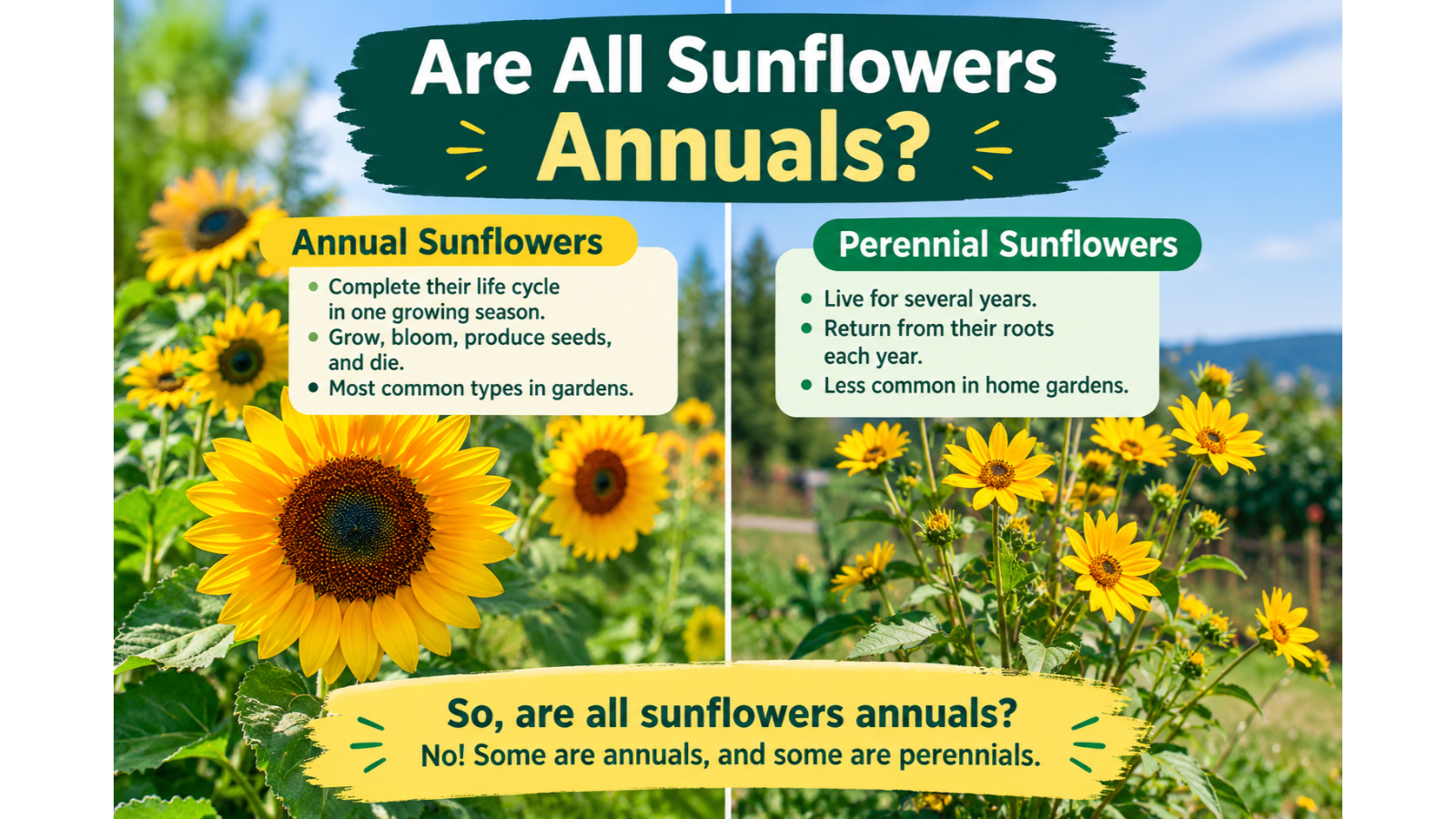
Are All Sunflowrs Annuals?
No, not all sunflowers are annuals. The sunflower family includes both annual and perennial species.
However, most sunflowers sold for home gardens belong to annual varieties. These plants grow quickly and produce large, colorful flower heads.
Perennial varieties are less common in ordinary seed packets. You can often find them through specialist plant nurseries.
According to Oregon State University Extension, most garden sunflowers belong to Helianthus annuus. Other sunflower species can return every spring.
This means you should always check the plant name before buying seeds or young plants. The scientific name helps you identify its growth cycle.
Popular Types of Annual Sunflowers
Annual sunflowers come in many sizes, shapes, and colors. Some grow very tall, while others stay small.
Here are several popular choices for home gardens.
| Annual variety | Main features | Best use |
|---|---|---|
| Mammoth Sunflower | Very tall with large flower heads | Garden displays |
| Teddy Bear | Small, fluffy, double flowers | Pots and borders |
| Autumn Beauty | Multiple flowers in warm colors | Decorative gardens |
| Sunrich | Large, bright flowers | Cut flower arrangements |
| Lemon Queen | Branching stems and pale yellow flowers | Pollinator gardens |
Annual sunflowers are excellent choices if you want quick results. Most grow from seeds and bloom within one growing season.
Popular Types of Perennial Sunflowers
Perennial sunflowers can make your garden beautiful for several years. They grow back from their roots after winter.
Here are some popular perennial varieties.
1. Maximilian Sunflower
Maximilian sunflower (Helianthus maximiliani) is a tall perennial plant. It produces many small, bright yellow flowers along its stems.
It usually blooms in late summer and fall. Bees and butterflies also visit its flowers.
2. Jerusalem Artichoke
Jerusalem artichoke (Helianthus tuberosus) is another perennial sunflower. It grows underground tubers that people can eat.
Its yellow flowers look similar to common sunflowers. However, gardeners mainly grow it for its edible roots.
This plant spreads easily through underground tubers. Therefore, give it enough space to grow.
3. Ashy Sunflower
Ashy sunflower (Helianthus mollis) is a perennial species with soft, gray-green leaves. It produces golden-yellow flowers during the growing season.
It grows well in sunny locations. This can also tolerate drier soil conditions.
4. Giant Sunflower
Giant sunflower (Helianthus giganteus) is a tall perennial species. It produces yellow flowers and can grow in moist garden areas.
Its height makes it suitable for larger outdoor spaces. It can also attract pollinators.
These examples show that perennial sunflowers offer different heights and growing habits. Iowa State University Extension lists several perennial species and their garden characteristics.
Annual vs. Perennial Sunflowers: Key Differences
Both types belong to the Helianthus genus. However, their life cycles and growing habits are different.
Here is a simple comparison to help you understand them.
| Feature | Annual Sunflowers | Perennial Sunflowers |
|---|---|---|
| Life cycle | One growing season | Several years |
| Root system | Usually dies with the plant | Survives underground |
| Flowering | Usually during the first season | Often flowers after establishment |
| Replanting | Usually needed each year | Usually not needed |
| Growth | Often grows quickly | May take time to establish |
| Maintenance | Seasonal planting and removal | Occasional pruning and spreading control |
| Examples | Mammoth, Teddy Bear | Maximilian, Ashy |
| Best for | Seasonal displays | Long-term gardens |
Real-Life Examples
Imagine you want bright flowers for your summer garden. You can plant annual sunflowers in spring. They will grow, bloom, and produce seeds during the season.
Now imagine you want flowers that return every year. A perennial sunflower may suit your garden better. Its roots can survive winter and produce new growth.
Another example is a vegetable garden. You can grow Jerusalem artichokes for their edible underground tubers. They also provide attractive yellow flowers.
How Long Do Sunflowers Live? Lifespan of Annual and Perennial Sunflower?
The lifespan of a sunflower depends on its species.
Annual sunflowers usually live for several months. They grow during one season and die after producing seeds.
Perennial sunflowers can live for many years. Their stems may die back during cold weather. However, their underground roots remain alive.
Here is a simple lifespan guide:
- Are sunflowers annuals or perennials? Most sunflowers are annual plants that complete their life cycle in one growing season.
- Annual sunflowers grow from seeds, bloom, produce seeds, and die within a year.
- Some sunflower varieties, such as Maximilian sunflowers, are perennials that return every year.
- Annual sunflowers are popular for their large, bright yellow flowers and fast growth.
- Perennial sunflowers usually produce smaller flowers and spread through underground roots.
- Most common garden sunflowers, including giant sunflowers, are annuals.
- Sunflowers need plenty of sunlight, well-drained soil, and regular watering to grow successfully.
- Annual sunflowers must be replanted each year, while perennial varieties can grow back each spring.
- Choosing between annual and perennial sunflowers depends on your garden space and growing preferences.
- So, are sunflowers annuals or perennials? The answer is that most are annuals, but some varieties are perennials.
- Annual sunflowers are easy to grow and are an excellent choice for beginners and home gardeners.
- Perennial sunflowers can live for several years and bloom again during the growing season.
- Annual sunflower varieties usually grow faster than perennial types.
- Perennial sunflowers often spread naturally and can form large groups in garden spaces.
- Sunflower seeds from annual plants can be collected and planted the following spring.
- Some perennial sunflowers attract bees, butterflies, and other helpful pollinators.
- Annual sunflowers are available in different heights, colors, and flower sizes.
- Perennial sunflowers generally require less replanting and can provide long-term garden beauty.
- Both annual and perennial sunflowers grow best in sunny locations with enough space.
- Understanding whether sunflowers are annuals or perennials helps gardeners choose the right varieties for their gardens.
- Sunflowers are mostly annuals, but some varieties grow as perennials.
Why Do Sunflowers Come Back Every Year?
Some sunflowers return because they have perennial root systems. These roots store energy and survive unfavorable seasons.
When temperatures become suitable, new shoots emerge. The plant then develops fresh leaves and flowers.
Annual sunflowers follow a different process. Their roots and stems complete their life cycle and die.
However, their seeds may fall into the soil. These seeds can grow into new plants when conditions are right.
This explains why a sunflower patch may appear every year. It may contain new seedlings rather than returning plants.
- Knowing whether sunflowers are annuals or perennials helps gardeners make better planting decisions.
- Understanding sunflower varieties makes it easier to choose plants that suit different garden styles.
- Learning the difference between annual and perennial sunflowers helps create a beautiful garden.
- Choosing the right sunflower type can save time and effort during future growing seasons.
- Knowing how sunflowers grow allows gardeners to provide better care throughout the year.
- Understanding their life cycle helps gardeners decide when to plant sunflower seeds.
- Selecting suitable sunflower varieties can improve garden beauty and attract beneficial pollinators.
- Learning about sunflower growth habits helps gardeners plan their outdoor spaces more effectively.
- Knowing which sunflowers return every year makes long-term garden planning easier.
- Understanding the growing needs of sunflowers helps gardeners enjoy healthy plants and beautiful blooms.
How to Grow Annual and Perennial Sunflowers
Both types need suitable growing conditions. However, their planting methods can differ.
Follow these simple gardening tips for healthy plants.
1. Choose a Sunny Location
Sunflowers grow best in full sunlight. Choose a place that receives around six to eight hours of direct sunlight daily.
Avoid heavily shaded areas. Too little sunlight can lead to weak stems and poor flowering.
2. Prepare Well-Drained Soil
Sunflowers prefer soil that drains well. Waterlogged soil can damage their roots.
Mix compost into the soil before planting. This can improve soil structure and provide useful nutrients.
3. Plant Seeds at the Right Time
Plant annual sunflower seeds after the danger of frost has passed. Warm soil helps seeds germinate.
Perennial sunflowers can also grow from seeds. However, some varieties are easier to establish from young plants or root divisions.
4. Give Plants Enough Space
Large sunflower varieties need plenty of room. Crowded plants may compete for sunlight, water, and nutrients.
Check the recommended spacing on your seed packet. Also, consider the mature height and spread of your chosen variety.
5. Water Regularly
Young sunflowers need regular watering while their roots develop. Keep the soil slightly moist, but avoid soaking it.
Established plants can handle short dry periods. However, flowering plants still benefit from consistent moisture.
6. Control Weeds and Pests
Remove weeds around your sunflowers. Weeds compete with plants for nutrients and water.
Watch for aphids, caterpillars, and leaf-feeding insects. Check the leaves regularly for signs of damage.
7. Support Tall Plants
Some sunflower varieties grow very tall. Strong winds can bend or break their stems.
Use garden stakes when necessary. Planting near a suitable fence can also provide protection.
The Royal Horticultural Society recommends sunny positions and well-drained soil for sunflowers. It also highlights the need to manage vigorous perennial varieties.
Common Mistakes When Growing Sunflowers
Even easy-to-grow plants need proper care. Avoid these common sunflower gardening mistakes.
1. Assuming Every Sunflower Is Annual
Not every sunflower has the same life cycle. Some varieties return from their roots each year.
Always check the scientific name before planting.
2. Giving Plants Too Little Sunlight
Sunflowers need plenty of sunlight. Planting them in deep shade can reduce healthy growth.
Choose an open, sunny location.
3. Overwatering the Soil
Too much water can cause root problems. Make sure excess water can drain away.
4. Planting Seeds Too Close Together
Crowded plants compete for resources. Give each plant enough space to develop.
5. Ignoring Perennial Root Growth
Some perennial sunflowers spread through underground roots. They can take over nearby garden space.
Choose a suitable planting location and control their spread when needed.
6. Removing Every Seed Head Too Early
Birds enjoy sunflower seeds. If you want to feed wildlife or collect seeds, allow some flower heads to mature.
Tips for Choosing the Right Sunflower
Choosing the correct sunflower depends on your gardening goals.
Here are some helpful tips:
- Choose annual sunflowers for quick summer flowers.
- Select perennial sunflowers for long-term garden displays.
- Grow dwarf varieties in pots and small spaces.
- Choose branching varieties for more flowers on one plant.
- Select tall varieties for fences and garden backgrounds.
- Grow pollen-producing flowers to support visiting pollinators.
- Check the mature size before buying seeds or plants.
If you have limited garden space, dwarf annual varieties are often a practical choice. For larger gardens, perennial varieties can create attractive flowering groups.
Are Sunflowers Useful in Everyday Life?
Sunflowers offer more than beautiful garden displays. They also provide several practical benefits.
1. Food Production: Sunflower seeds are eaten as snacks and used in cooking. Sunflower oil is also widely used in food preparation.
2. Wildlife Support: Sunflower flowers provide pollen and nectar for visiting insects. Their mature seeds can feed birds.
3. Garden Decoration: Their bright flowers add color to garden beds, borders, and outdoor spaces.
4. Cut Flowers: Many annual varieties work well in bouquets. They can brighten homes, offices, and special events.
5. Natural Garden Design: Perennial sunflowers can fill large spaces. They also work well in wildlife-friendly gardens.
6. Soil and Habitat Benefits: Some perennial species help maintain long-lasting plant cover. They can also provide habitat for beneficial insects.
Expert Gardening Insights: What Should You Know?
Understanding the sunflower’s scientific name is one of the easiest ways to avoid confusion.
The genus Helianthus contains many species. Some are annuals, while others are perennials.
For example, Helianthus annuus is the familiar common sunflower. It completes its life cycle within one growing season.
In contrast, Helianthus maximiliani grows as a perennial. Its roots survive and produce new growth in following seasons.
Another important point concerns self-seeding. Annual sunflowers can produce seeds that grow into new plants. This can make them appear to return every year.
However, new seedlings are not the same plant returning from perennial roots.
Professional gardening tip: Always check the botanical name, mature size, and growth habit before purchasing sunflowers. This simple step helps you choose plants that match your garden.
For reliable plant information, consult university extension guides and established horticultural organizations.
Sunflowers are mostly annuals, but some varieties grow as perennials.
Related Sunflower Keywords and Synonyms
If you are researching sunflower varieties, these related terms can help you explore the topic further.
Primary keyword:
– Are sunflowers annuals or perennials?
Secondary keywords:
- Annual sunflower varieties
- Perennial sunflower varieties
- Common sunflower plant
- Sunflower life cycle
- Types of sunflowers
- Perennial flowering plants
- Annual flowering plants
- Sunflower growing conditions
Long-tail keywords:
- Do sunflowers come back every year?
- How long do sunflower plants live?
- Which sunflowers are perennial?
- Are common sunflowers annual plants?
- How to grow perennial sunflowers
- What is the difference between annual and perennial sunflowers?
Related botanical terms:
- Helianthus annuus
- Helianthus maximiliani
- Helianthus tuberosus
- Sunflower seeds
- Sunflower roots
- Flowering season
FAQs
1 . The best varieties for their gardens.
Sunflowers can be annuals or perennials. Most common garden sunflowers are annuals. However, some species return every year from their roots.
2. Do sunflowers come back every year?
Some sunflowers return every year because they are perennials. Annual sunflowers do not return from their original roots. However, fallen seeds can produce new plants.
3. Are common sunflowers annual or perennial?
Common sunflowers (Helianthus annuus) are annual plants. They grow, flower, produce seeds, and die within one growing season.
4. What sunflowers grow back every year?
Maximilian sunflower and Jerusalem artichoke are examples of perennial sunflowers. Their underground roots survive and produce new shoots.
5. Can annual sunflowers reseed themselves?
Yes. Annual sunflowers can drop seeds after flowering. These seeds may germinate naturally and produce new plants the following season.
6. How long do perennial sunflowers live?
Perennial sunflowers can live for several years. Their roots survive seasonal changes and produce fresh growth during suitable weather.
7. Should I cut down sunflowers after flowering?
You can remove dead annual sunflower stalks after seed collection. Leave selected seed heads if you want to feed birds. For perennials, remove dead stems when needed and follow the variety’s care requirements.
8. Which sunflower is best for a home garden?
Mammoth and Teddy Bear are popular annual choices. Maximilian sunflower is a good perennial option. Your best choice depends on your available space and gardening goals.
Conclusion
So, are sunflowers annuals or perennials? The answer depends on the species. Most common garden sunflowers are annuals. They grow, bloom, produce seeds, and die within one growing season. However, some varieties are perennials and return from their roots every year.
Common sunflowers (Helianthus annuus) are excellent for seasonal displays. Maximilian sunflowers and Jerusalem artichokes offer longer-lasting growth. Both types can bring beauty and wildlife benefits to your garden.
Before planting, always check the sunflower variety and its growing requirements. This helps you avoid confusion and choose the right plant. If you want flowers every summer, select a perennial variety. If you enjoy growing fresh flowers each year, annual sunflowers are a wonderful choice.

James Carter is a comparison writer and research specialist with over 10 years of experience in digital publishing. With a background in business communication and consumer research, he creates detailed comparison articles, buying guides, and reviews that help readers make informed decisions with confidence. “Every comparison should help readers make better decisions. My goal is to turn complex information into clear, practical guidance that people can trust.” — James Carter