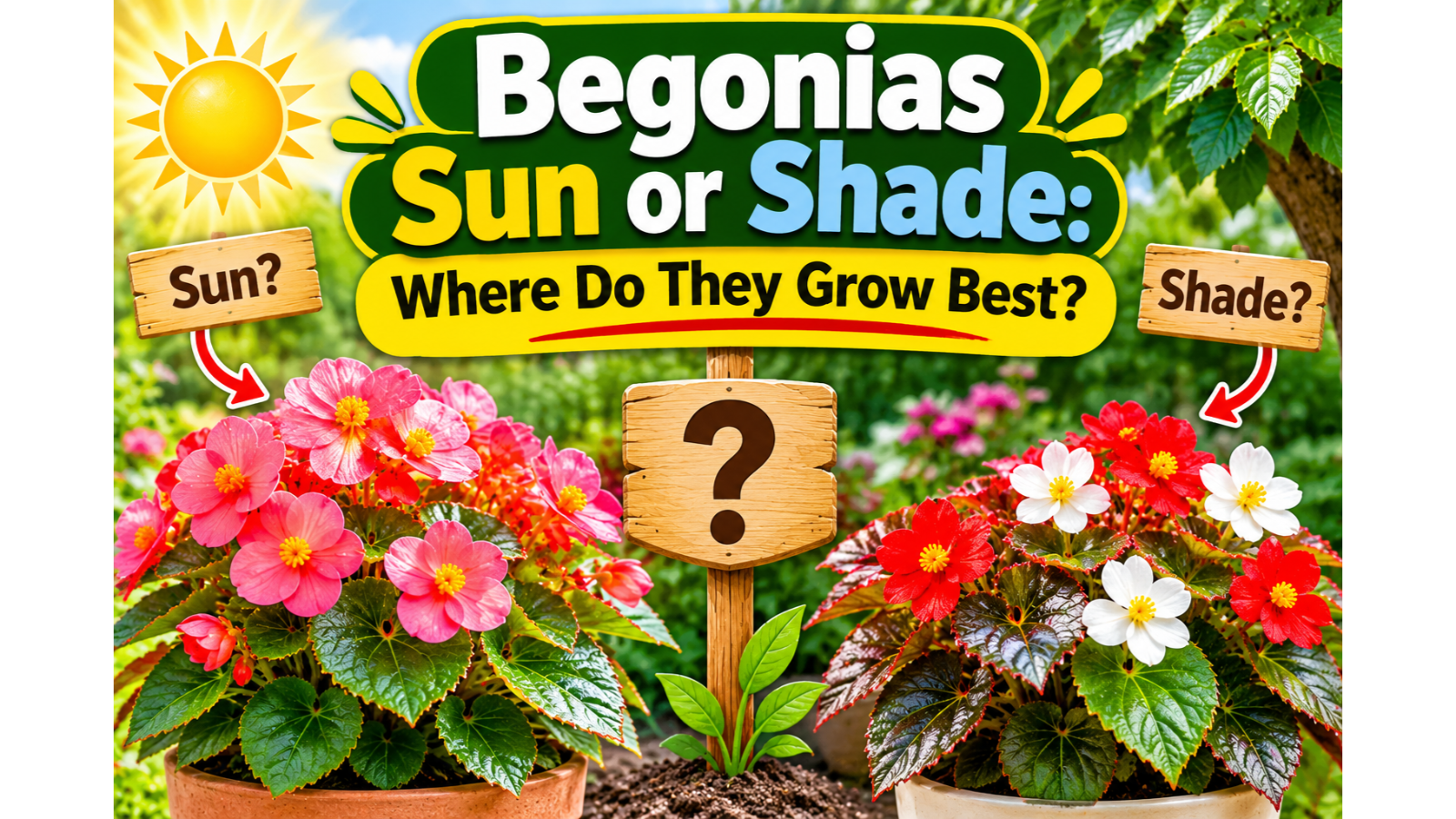
Begonias sun or shade is a common question among gardeners who want healthy plants and beautiful flowers. The good news is that most begonias grow best in partial shade. However, some varieties can handle more sunlight than others. Too much direct sun can burn their leaves and damage delicate flowers. On the other hand, too much shade can reduce blooms and slow plant growth. Therefore, choosing the right spot is important for healthy begonias. Whether you grow begonias indoors, outdoors, in pots, or in garden beds, light makes a big difference. In this guide, you will learn how much sunlight begonias need. You will also discover the best growing spots, common mistakes, and simple care tips. Let’s find the perfect place for your begonias.
Quick Summary: Do Begonias Prefer Sun or Shade?
- Most begonias prefer partial shade or bright, indirect light.
- Morning sunlight is usually safer than strong afternoon sunlight.
- Tuberous begonias grow best in filtered light or partial shade.
- Wax begonias can tolerate more sun when they receive enough water.
- Too much direct sunlight can cause leaf burn.
- Too much shade can reduce flowering.
- Indoor begonias need bright light without harsh direct rays.
- Well-drained soil and regular watering support healthy growth.
Simple answer: Most begonias grow best in partial shade with bright, indirect light. Their exact sunlight needs depend on the variety.
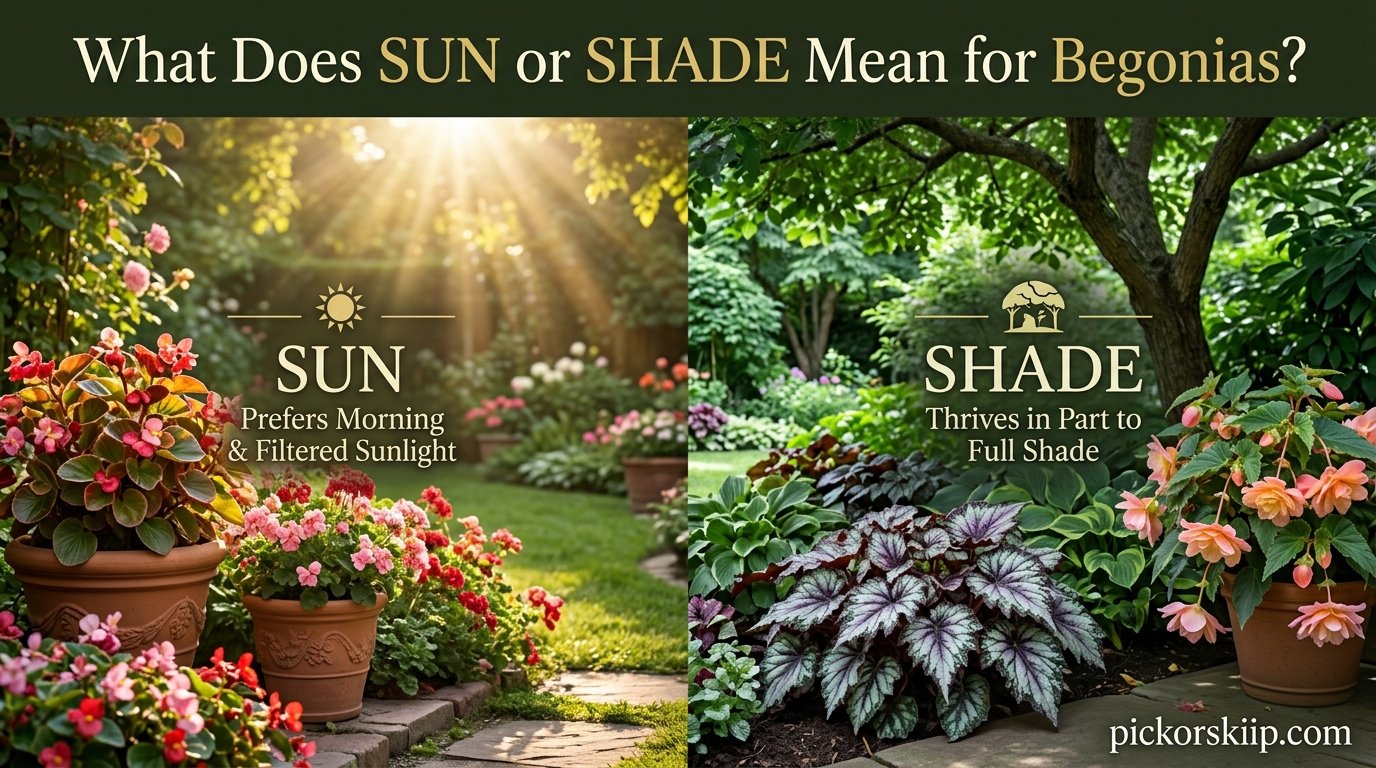
What Does Sun or Shade Mean for Begonias?
Before choosing a growing spot, understand the difference between sunlight and shade.
Begonias need light to make food and grow strong. However, different types need different amounts of light.
Here is what these terms mean:
- Full sun: Six or more hours of direct sunlight each day.
- Partial sun: Around four to six hours of sunlight.
- Partial shade: Two to four hours of sunlight, often during morning hours.
- Full shade: Little direct sunlight but some natural daylight.
- Bright indirect light: Bright daylight without direct sun touching the leaves.
Most begonias prefer partial shade or bright indirect light. However, some flowering varieties can handle more sunlight.
The best choice depends on your begonia type, local weather, and growing conditions. UMN Extension+2
Do Begonias Prefer Sun or Shade?
Most begonias prefer shade over strong direct sunlight. They naturally grow in warm, sheltered environments.
However, shade does not mean complete darkness. These plants still need enough light for healthy leaves and flowers.
A spot with morning sunlight and afternoon shade often works well.
For example, place your begonia near an east-facing wall. It can enjoy gentle morning rays without harsh afternoon heat.
In warmer climates, protect begonias from strong midday sunlight. This is especially important during hot summer months.
Best light conditions for most begonias:
- Bright, filtered daylight.
- Gentle morning sunlight.
- Protection from strong afternoon rays.
- Good airflow around the leaves.
- Enough light to support flowering.
The Royal Horticultural Society also recommends partial shade for outdoor begonias. RHS Advice+1
How Much Sunlight Do Different Begonia Types Need?
Not every begonia has the same light needs. Some varieties tolerate more sunlight, while others prefer deeper shade.
Here are the main types and their preferred conditions.
Wax Begonias
Wax begonias are popular garden plants. They have thick leaves and small, colorful flowers.
They can tolerate more sunlight than many other types. Bronze-leaved varieties usually handle brighter conditions better than green-leaved varieties.
Best conditions:
- Partial shade to sunnier positions, depending on variety.
- Morning sunlight.
- Regular watering.
- Moist but well-drained soil.
Avoid exposing green-leaved varieties to intense afternoon sunlight. Home & Garden
Tuberous begonias are famous for their large, beautiful flowers. They grow especially well in containers and hanging baskets.
These begonias prefer shady locations with bright indirect light.
They can handle gentle morning sunlight. However, strong afternoon sunlight and heat can harm them.
Best conditions:
- Partial shade.
- Filtered sunlight.
- Sheltered growing areas.
- Moist, well-drained soil.
A protected patio or covered balcony makes a good growing spot. UMN Extension+1
Rex Begonias
Rex begonias are popular for their colorful and patterned leaves. Their foliage can display silver, purple, pink, and green shades.
They prefer bright, indirect light. Direct sunlight can damage their delicate leaves.
You can grow them indoors near a bright window. Use a light curtain if the sun reaches the leaves directly.
Best conditions:
- Bright indirect light.
- Partial or full shade outdoors.
- Protection from hot sunlight.
- Good humidity and airflow.
Rex begonias are excellent choices for indoor plant lovers. University of Connecticut+1
Cane Begonias
Cane begonias include popular angel wing varieties. They have upright stems and attractive leaves.
These plants need good light to grow strong and produce flowers. However, harsh direct sunlight can scorch their leaves.
Place them near a bright window with filtered sunlight.
Best conditions:
- Bright indirect light.
- Gentle morning sun.
- Protection from afternoon heat.
- Regular but careful watering.
Good light helps cane begonias develop stronger stems and more flowers. RHS Advice+1
4. Best Indoor and Outdoor Locations for Begonias
Choosing the right location helps begonias grow better. You should consider sunlight, temperature, and airflow.
Best Indoor Locations
- Near an east-facing window.
- Beside a bright window with sheer curtains.
- In a room with plenty of natural daylight.
- Away from hot windows during summer.
- In a bright space with good airflow.
Avoid placing indoor begonias in dark corners. Low light can weaken growth and reduce flowering.
Best Outdoor Locations
- Under trees with light shade.
- On a covered balcony.
- Beside a shaded garden wall.
- Under a patio roof.
- In a garden bed with morning sunlight.
If you live in a hot area, afternoon shade becomes especially important.
5. Begonias Sun or Shade: Comparison Table
Use this simple table to choose the right light conditions for your plant.
| Begonia Type | Best Light | Direct Sun Tolerance |
|---|---|---|
| Wax begonia | Partial shade | Moderate to high, depending on variety |
| Bronze-leaf wax begonia | Partial sun | Higher |
| Tuberous begonia | Partial shade | Low |
| Rex begonia | Bright indirect light | Very low |
| Cane begonia | Bright filtered light | Low to moderate |
| Rhizomatous begonia | Bright indirect light | Low |
Important: These are general guidelines. Individual cultivars and local weather can change sunlight needs. RHS Advice+3
6. What Happens When Begonias Get Too Much Sun?
Too much direct sunlight can cause several problems. Begonias have delicate leaves that may struggle under intense heat.
Watch for these warning signs:
- Brown or crispy leaf edges.
- Pale or faded leaves.
- Dry patches on the foliage.
- Drooping leaves during hot afternoons.
- Flowers that dry out quickly.
These signs can also indicate watering or heat problems. Check the soil before changing your plant’s location.
How to fix too much sunlight:
- Move the plant into partial shade.
- Protect it from afternoon sunlight.
- Water when the top layer of soil begins to dry.
- Remove badly damaged leaves with clean scissors.
- Check the plant regularly for new growth.
Avoid moving an indoor begonia into strong outdoor sunlight suddenly. Gradually introduce it to brighter conditions.
7. Can Begonias Grow in Full Shade?
Yes, many begonias can grow in full shade. However, they still need natural daylight.
A shaded location under trees can work well. A completely dark room is not suitable.
When begonias receive very little light, they may show these problems:
- Fewer flowers.
- Weak or stretched stems.
- Slow growth.
- Smaller leaves.
- Poor overall appearance.
If your plant grows leaves but produces few flowers, it may need more light.
Try moving it to a brighter location with filtered sunlight. Make changes gradually to prevent stress.
8. Common Mistakes When Growing Begonias
Many gardeners struggle with begonias because of simple care mistakes.
Avoid these common problems:
1. Giving too much direct sunlight
Strong afternoon rays can burn delicate leaves. Choose partial shade instead.
2. Keeping begonias in complete darkness
Plants need natural light for healthy growth. Provide bright indirect light.
3. Watering too often
Wet soil can cause root rot. Always check soil moisture before watering.
4. Ignoring the begonia variety
Rex, wax, and tuberous begonias have different light needs. Identify your plant before choosing its location.
5. Placing plants in very hot areas
Excessive heat can stress begonias. Choose a cooler, sheltered spot.
6. Using pots without drainage holes
Poor drainage allows excess water to collect around the roots. Always use suitable pots.
9. Expert Tips for Healthy Begonia Growth
Good light is important, but begonias also need proper care.
Follow these simple tips to improve plant health.
- Choose a location with bright, filtered light.
- Give suitable varieties gentle morning sunlight.
- Protect plants from harsh afternoon heat.
- Use pots with drainage holes.
- Choose rich, well-drained potting soil.
- Water according to soil moisture.
- Remove dead flowers and damaged leaves.
- Feed actively growing plants with suitable fertilizer.
- Check leaves regularly for pests and disease.
Expert insight: Do not judge sunlight needs by flowers alone. Some begonias grow mainly for their beautiful foliage.
For example, rex begonias need careful light control to maintain their colorful leaves. Wax begonias can handle brighter conditions, especially bronze-leaved varieties. Home & Garden Information Center+2
10. How to Water Begonias in Sun and Shade
Watering needs can change depending on how much sunlight your begonia receives.
Plants in brighter locations may dry out faster. Shaded plants often need less frequent watering.
Follow these simple watering tips:
- Check the top inch of soil before watering.
- Water when the soil starts to feel dry.
- Use a pot with drainage holes.
- Avoid leaving water in the saucer.
- Water around the soil instead of soaking the leaves.
- Reduce watering when plant growth slows.
Begonias prefer moist soil, but they do not like waterlogged roots.
Also, avoid watering during the hottest part of the day. Early morning watering is usually a better choice. Home & Garden Information Center+1
11. How to Make Begonias Bloom More Flowers
Healthy begonias can produce beautiful flowers throughout their growing season. However, poor light and incorrect care can reduce blooming.
Here are some simple ways to encourage more flowers:
- Give flowering varieties enough bright light.
- Provide gentle morning sunlight when suitable.
- Avoid deep shade for flowering varieties.
- Remove faded flowers regularly.
- Use a suitable flowering plant fertilizer.
- Keep the soil moist but well-drained.
- Protect plants from excessive heat.
Remember that not every begonia grows mainly for flowers. Rex begonias, for example, are popular for their colorful foliage.
Choose care methods according to your plant type.
12. Are Begonias Good for Hot Climates?
Yes, many begonias can grow in warm climates. However, they need protection from extreme heat and strong sunlight.
Hot weather can dry the soil quickly. It can also cause leaf damage and flower loss.
If you live in a hot region, try these simple methods:
- Grow begonias under a shade net.
- Place pots on a covered balcony.
- Choose locations with morning sunlight.
- Protect plants during hot afternoons.
- Check soil moisture regularly.
- Use containers with good drainage.
In places with very hot summers, filtered light is often safer than full afternoon sun.
Remember, shade should still provide enough daylight for healthy growth.
13. Best Tips for Growing Begonias in Pots and Hanging Baskets
Begonias grow beautifully in pots and hanging baskets.
Use these tips for better results:
Choose the right container: Select a pot with drainage holes. Avoid containers that hold extra water.
Use suitable soil: Choose a light potting mix that holds some moisture but drains well.
Find the right location: Place containers where they receive bright filtered light.
Rotate indoor pots: Turn your plants occasionally for more even light exposure.
Watch the weather: Move outdoor containers into shade during extreme heat.
Avoid overcrowding: Give plants enough room for airflow and healthy growth.
These simple steps can help your begonias stay attractive throughout the growing season.
14. Related Terms and Synonyms for Begonias Sun or Shade
If you are researching begonia care, these related terms can help you understand the topic.
| Related Keyword | Meaning |
|---|---|
| Begonia light requirements | Amount of light begonias need |
| Begonias partial shade | Growing begonias with limited direct sun |
| Begonias full sun | Growing begonias in strong direct sunlight |
| Begonias indirect sunlight | Light without direct sun exposure |
| Indoor begonia care | Caring for begonias inside the home |
| Outdoor begonia care | Growing begonias in gardens and patios |
| Tuberous begonia shade | Light conditions for tuberous varieties |
| Rex begonia light needs | Lighting requirements for rex begonias |
| Wax begonia sunlight | Sun tolerance of wax varieties |
| Best location for begonias | Suitable indoor and outdoor growing spots |
These phrases are useful when exploring different types of begonias and their growing needs.
15. Frequently Asked Questions About Begonias Sun or Shade
1. Do begonias prefer sun or shade?
Most begonias prefer partial shade or bright indirect light. They grow best when protected from strong afternoon sunlight.
2. Can begonias grow in full sun?
Some wax begonias tolerate full sun, especially bronze-leaved varieties. Most other types prefer partial shade.
3. How many hours of sunlight do begonias need?
Many begonias grow well with bright filtered light and a few hours of gentle morning sunlight. Exact needs depend on the variety.
4. Can begonias grow indoors?
Yes, begonias make excellent indoor plants. Place them near a bright window with indirect sunlight.
5. Why are my begonia leaves turning brown?
Brown leaves may result from excessive sunlight, dry soil, heat, or watering problems. Check the plant’s growing conditions.
6. Do begonias bloom better in sun or shade?
Flowering begonias usually need enough bright light to produce blooms. However, strong afternoon sunlight can damage many varieties.
7. Can begonias grow under trees?
Yes, many begonias grow well under trees. Choose a spot with filtered sunlight and enough natural daylight.
8. What is the best location for begonias outdoors?
A sheltered location with morning sunlight and afternoon shade is a good choice for many begonias.
Expert Insight: Why Choosing the Right Light Matters
Light affects almost every part of a begonia’s growth. It helps plants produce energy, develop healthy leaves, and form flowers.
However, more sunlight does not always mean better growth.
Begonias have different growing needs because they belong to many species and cultivars. Therefore, gardeners should identify their variety before choosing a location.
For example, rex begonias need protection from direct sunlight. Bronze-leaved wax begonias can tolerate brighter conditions.
The best gardening approach is simple: observe your plant, check its leaves, and adjust its location when needed.
University and horticultural gardening guides support these variety-specific growing recommendations. UMN Extension+3
Conclusion
So, are begonias sun or shade plants? Most begonias grow best in partial shade or bright indirect light. They enjoy gentle morning sunlight but need protection from strong afternoon rays. However, some varieties, such as bronze-leaved wax begonias, can tolerate more sun. Rex and tuberous begonias usually prefer shadier conditions.
Choosing the right location is the first step toward healthy growth. Also, provide suitable soil, regular watering, and good drainage. Watch your plant for signs of too much sunlight or poor light. Small changes can make a big difference.
The simple takeaway: Give your begonias bright light, protect them from harsh heat, and choose growing conditions based on their variety. With proper care, your begonias can reward you with beautiful foliage and colorful flowers.

Emma Collins is a language writer and grammar enthusiast specializing in English vocabulary, spelling comparisons, and word usage guides. She creates easy-to-understand content that helps readers improve their writing, communication, and language skills with confidence.