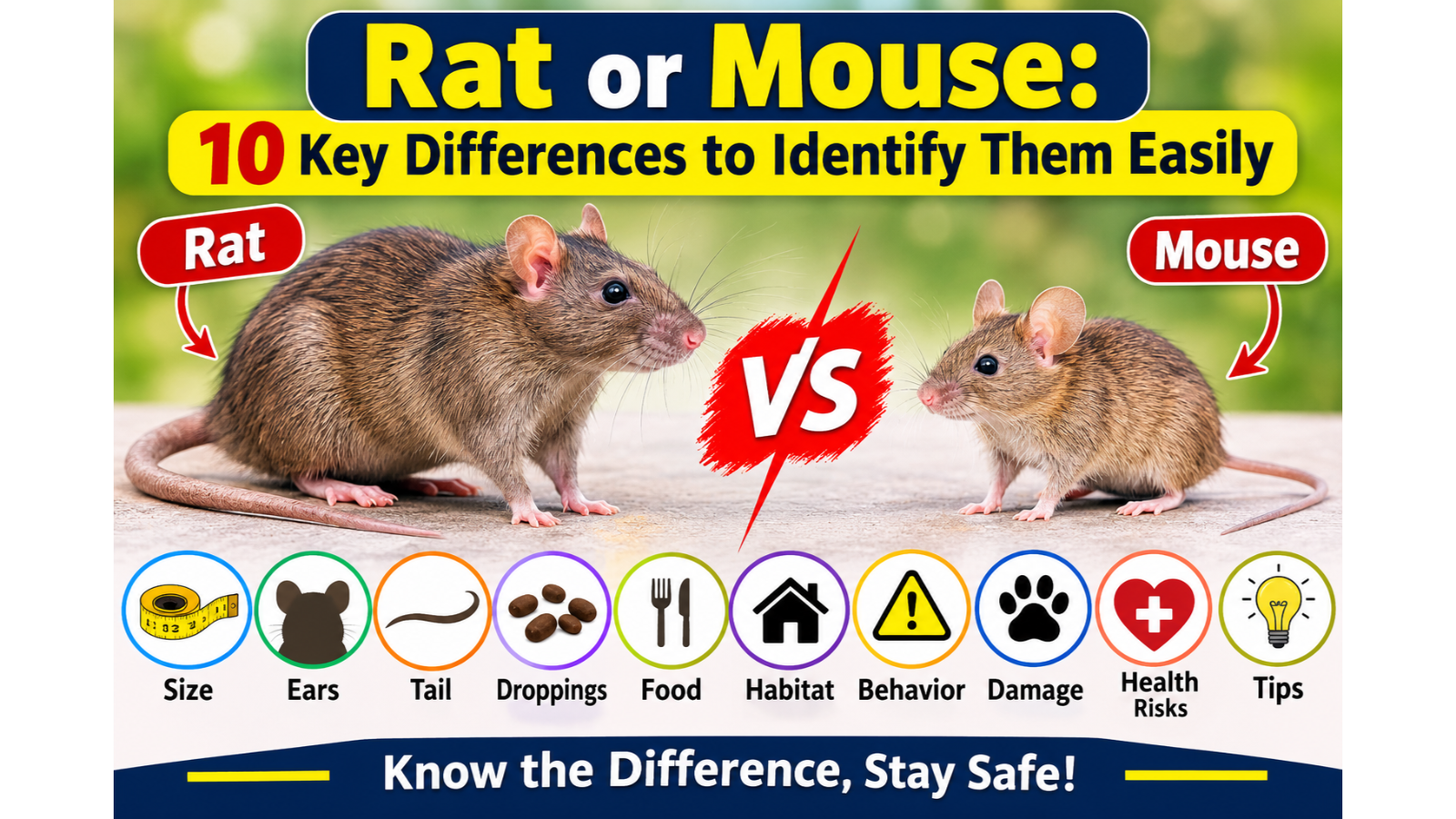
Rat or mouse: Have you ever spotted a small rodent in your home and wondered which one it was? Rats and mice may look similar, but they have many important differences. They belong to the same rodent family, yet their sizes, shapes, habits, and behaviors are different. Knowing these differences can help you identify them correctly. It can also help you choose the right way to control them. A rat is usually larger, heavier, and stronger than a mouse. On the other hand, a mouse has a smaller body, larger ears, and a pointed nose. Both animals can enter homes, damage food packages, and spread germs. In this guide, you will learn how to tell a rat from a mouse. We will also explore their sizes, droppings, habits, and common signs.
Quick Summary: Rat or Mouse?
- Rat: A larger rodent with a thick body, strong teeth, and a heavy tail.
- Mouse: A smaller rodent with large ears, a pointed nose, and a thin tail.
- Size: Adult rats are much bigger than adult house mice.
- Droppings: Rat droppings are larger, while mouse droppings are smaller.
- Behavior: Rats are often more cautious, while mice explore new places.
- Food: Both animals eat many types of food.
- Damage: Both can chew wires, furniture, food packages, and other materials.
- Health: Both can carry germs and spread diseases.
What Is a Rat?
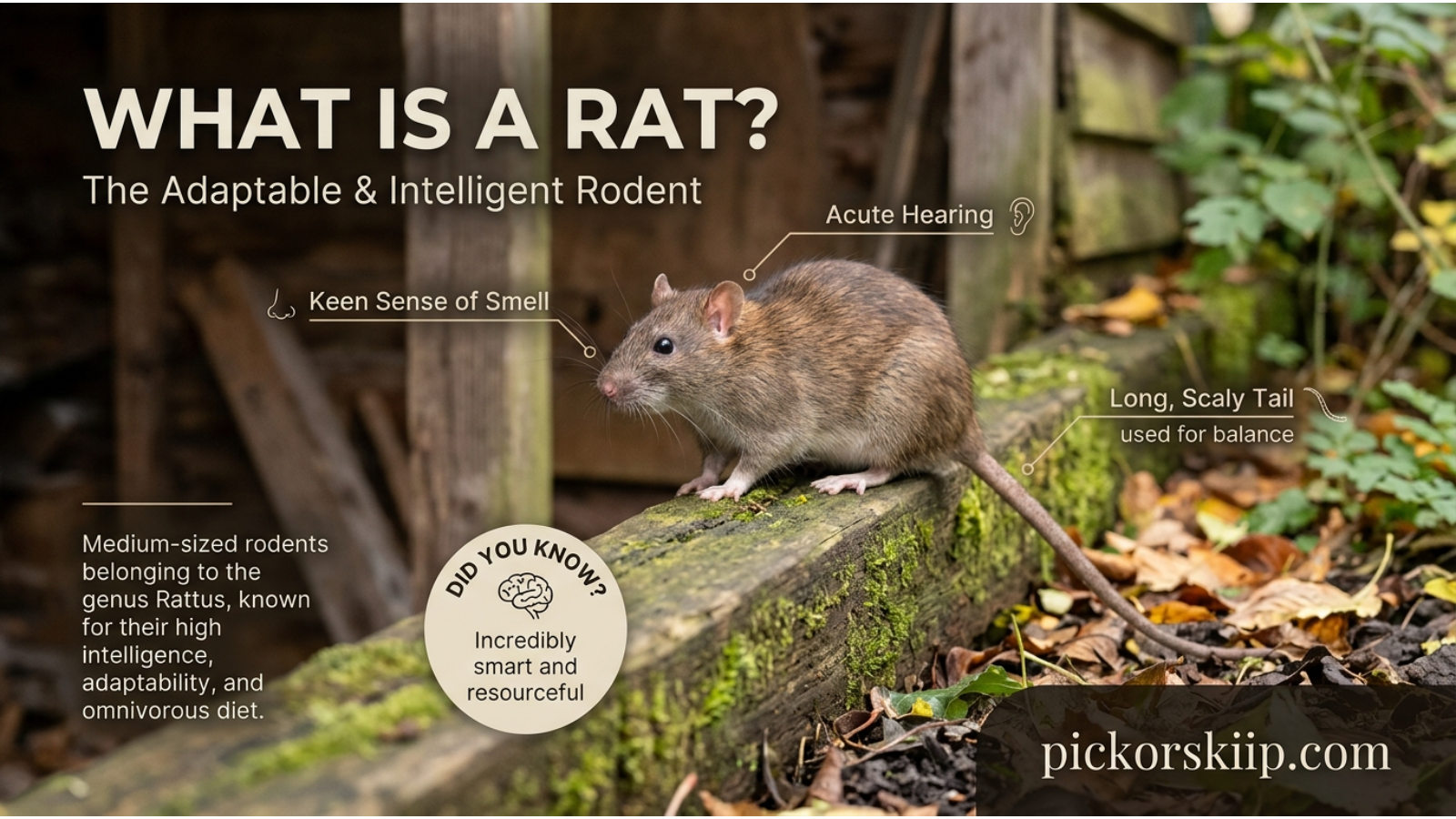
A rat is a medium-sized rodent with a strong body and long tail. It belongs to the rodent family and has sharp front teeth. These teeth continue growing throughout its life.
Rats use their teeth to chew food, wood, plastic, and other materials. They often live near buildings, drains, gardens, and storage areas.
Two common types include:
- Norway rat: A large rat with a heavy body and blunt nose.
- Roof rat: A slimmer rat with a long tail and excellent climbing skills.
Rats can adapt to different environments. They often search for food, water, and safe places to build nests.
What Is a Mouse?
A mouse is a small rodent with a narrow body and pointed nose. It usually has large ears, small feet, and a thin tail.
House mice often live inside buildings, kitchens, cupboards, and storage spaces. They can squeeze through very small openings.
Mice eat grains, seeds, fruits, and many household foods. They also chew different materials to reach food or create nesting spaces.
Common features of a mouse include:
- Small and lightweight body.
- Large ears compared with its head.
- Pointed nose and small feet.
- Thin tail that is often close to body length.
- Quick movements and curious behavior.
Although mice look harmless, they can damage property and contaminate food.
Rat or Mouse: What Are the Main Differences?
The easiest way to identify a rat or mouse is to compare its size and body shape.
Adult rats are generally larger and heavier. Mice have smaller bodies and larger ears relative to their heads.
Here are the main differences:
| Feature | Rat | Mouse |
|---|---|---|
| Body size | Large | Small |
| Body shape | Thick and heavy | Slim and compact |
| Head | Larger and broader | Smaller and pointed |
| Nose | Often blunt | Usually pointed |
| Ears | Smaller relative to head | Larger relative to head |
| Eyes | Usually smaller | Relatively larger |
| Tail | Thick and strong | Thin and delicate |
| Feet | Larger | Smaller |
| Droppings | Larger | Smaller |
| Movement | Often cautious | Usually quick and curious |
| Damage | Can cause heavier chewing damage | Can damage small items and packages |
| Food | Eats many types of food | Eats many types of food |
Important: These features describe common adult rats and house mice. Different species can have different appearances. A young rat may also look similar to an adult mouse.
Rat vs Mouse: Size and Appearance
Size is one of the easiest ways to tell these animals apart.
An adult rat usually has a much larger body than an adult house mouse. Its head, feet, and body also look stronger.
A house mouse has a small, lightweight body. Its ears often look large compared with its head.
Rat Appearance
- Thick and muscular body.
- Broad head and strong jaw.
- Small ears compared with its head.
- Thick, scaly tail.
- Strong back legs and feet.
Mouse Appearance
- Small and lightweight body.
- Narrow face and pointed nose.
- Large, rounded ears.
- Thin tail.
- Small feet and delicate legs.
Remember that size alone cannot confirm the species. Young rats can be smaller than adult mice of some species.
Rat or Mouse: Differences in Droppings
Droppings can provide useful clues when you cannot see the animal.
Rat droppings are generally larger and thicker than mouse droppings. Mouse droppings are much smaller and often have pointed ends.
| Dropping Feature | Rat | Mouse |
|---|---|---|
| Size | Larger | Smaller |
| Shape | Capsule or spindle-shaped | Small rod-shaped |
| Appearance | Dark brown or black | Dark brown or black |
| Location | Near food, walls, and nesting areas | Cupboards, drawers, and food storage |
| Quantity | Often found in groups | Often scattered in small areas |
However, droppings can vary by species, age, and food.
Safety tip: Never touch rodent droppings with bare hands. Do not sweep or vacuum them. Use gloves and disinfectant before cleaning.
Where Do Rats and Mice Usually Live?
Rats and mice can live in many places. However, their preferred nesting areas may differ.
Where Do Rats Live?
Rats often choose places that provide food, water, and shelter.
Common rat hiding places include:
- Drains and sewer systems.
- Gardens and outdoor areas.
- Basements and storage rooms.
- Roof spaces and attics.
- Spaces behind large appliances.
- Holes near building foundations.
Roof rats often climb trees and use higher areas. Norway rats commonly use ground-level spaces and burrows.
Where Do Mice Live?
Mice often hide in small, protected spaces.
Common mouse hiding places include:
- Kitchen cupboards.
- Behind refrigerators.
- Inside storage boxes.
- Wall spaces and small gaps.
- Closets and furniture.
- Areas near food supplies.
Mice can enter buildings through openings about 6 millimeters wide. This makes small gaps important during home inspections.
Rat or Mouse: Differences in Food and Eating Habits
Both rats and mice are flexible eaters. They can survive on many foods found around homes and buildings.
However, their feeding habits may differ.
What Do Rats Eat?
Rats eat a wide range of foods, including:
- Grains and seeds.
- Fruits and vegetables.
- Meat and leftovers.
- Pet food.
- Food waste.
- Nuts and other available foods.
Rats may also chew through food packaging to reach stored food.
What Do Mice Eat?
Mice commonly eat:
- Rice and wheat.
- Seeds and grains.
- Fruits.
- Nuts.
- Cereals.
- Household food scraps.
Mice often nibble small amounts of food from different places.
Both animals can contaminate food with urine, droppings, and saliva. Always store food in sealed containers.
How to Identify a Rat or Mouse in Your Home
You do not always need to see a rodent to identify its presence. Several signs can help you understand what is happening.
Look for these common warning signs:
1. Droppings
Large droppings may suggest a rat. Small droppings may suggest a mouse.
2. Chewed Materials
Look for bite marks on food packages, wooden objects, and plastic containers.
3. Scratching Sounds
You may hear movement inside walls, ceilings, or cupboards.
4. Nesting Materials
Both animals use paper, fabric, and other soft materials to build nests.
5. Strange Smells
A strong, stale smell may indicate rodent activity in hidden spaces.
6. Footprints
Small footprints in dusty areas can help reveal where rodents travel.
Check several signs together instead of relying on one clue. This makes identification more reliable.
Common Mistakes When Identifying a Rat or Mouse
Many people confuse rats and mice because both animals share similar features.
Here are some common mistakes to avoid:
- Mistake 1: Thinking every small rodent is a mouse. Young rats can also look small.
- Mistake 2: Using size alone. Body shape, ears, tail, and droppings also matter.
- Mistake 3: Assuming all rats live underground. Roof rats often climb and nest in higher places.
- Mistake 4: Ignoring droppings. Their size and location can provide useful clues.
- Mistake 5: Thinking mice cannot cause damage. Mice can chew wires, food packages, and furniture.
- Mistake 6: Ignoring small holes. Even tiny openings can allow mice to enter a building.
Correct identification helps you choose a suitable control method.
Are Rats or Mice More Dangerous?
Both rats and mice can create health and safety problems. Neither animal is completely safe to handle.
They can spread germs through bites, urine, saliva, and droppings. They may also carry fleas, ticks, and mites.
Health Risks From Rats
Rats can contaminate food and living spaces. They may also damage electrical wires and building materials.
Health Risks From Mice
Mice can spread germs through their waste. They may contaminate kitchen surfaces and stored food.
Which One Is More Dangerous?
The risk depends on the species, location, infestation, and type of exposure.
A large rat may cause more physical damage. However, a mouse infestation can also create serious hygiene problems.
Keep children and pets away from rodents and their waste. Seek professional help if an infestation becomes difficult to manage.
Tips to Keep Rats and Mice Away
The best way to prevent rodents is to remove their food, water, and shelter.
Follow these simple tips:
- Store food in strong, sealed containers.
- Keep kitchen counters clean.
- Empty garbage bins regularly.
- Repair holes and gaps around your home.
- Fix leaking pipes and taps.
- Remove unnecessary boxes and clutter.
- Keep outdoor areas clean.
- Store pet food in sealed containers.
- Check cupboards and storage spaces regularly.
- Use suitable traps when needed.
Mice can enter through very small openings. Therefore, inspect gaps around doors, pipes, windows, and walls.
Use traps according to their instructions. Keep traps away from children and pets.
For larger infestations, contact a qualified pest control professional.
Expert Insights: Why Correct Identification Matters
Identifying a rat or mouse is more than knowing its name. It helps you understand the type of rodent problem in your home.
Different rodents may use different nesting areas and entry points. Therefore, the control method should match the species and situation.
Here are some useful expert tips:
- Check droppings, body shape, and tail size together.
- Inspect both high and low areas of your property.
- Look for gaps around pipes and doors.
- Remove food sources before using control methods.
- Clean rodent waste with proper safety precautions.
- Seek professional advice when signs continue.
The US Environmental Protection Agency recommends removing food, water, and shelter. It also recommends sealing openings to prevent rodent entry.
The Centers for Disease Control and Prevention advises safe cleaning practices. It warns against sweeping or vacuuming rodent droppings.
These steps help protect your home and reduce exposure to rodent-related health risks.
Frequently Asked Questions About Rat or Mouse
1. What Is the Main Difference Between a Rat and a Mouse?
The main difference is size. Rats are usually larger and heavier, while mice are smaller and have relatively larger ears.
2. Is a Mouse Just a Baby Rat?
No. Rats and mice are different animals. They belong to the same rodent family but have different species and life cycles.
3. How Can I Tell If I Have a Rat or Mouse?
Look at the body size, tail thickness, ears, and droppings. Rats usually leave larger droppings and have thicker bodies.
4. Are Rats More Dangerous Than Mice?
Both can spread germs and contaminate food. The level of risk depends on the type of rodent and its environment.
5. Do Rats and Mice Eat the Same Food?
They eat many similar foods, including grains, seeds, fruits, and food scraps. Their exact diets depend on available food.
6. Can Mice Fit Through Small Holes?
Yes. Mice can squeeze through openings about 6 millimeters wide. Sealing small gaps can help prevent them from entering.
7. Do Rats and Mice Come Out at Night?
Both animals are often active at night. However, they may also move around during the day, especially when searching for food.
8. What Is the Best Way to Keep Rats and Mice Away?
Keep food sealed, remove clutter, clean garbage areas, and repair holes. Use suitable traps or contact a pest control professional when needed.
Conclusion
Understanding the difference between a rat or mouse can help you identify rodents around your home. Rats are generally larger, heavier, and stronger. Mice are smaller and have larger ears, pointed noses, and thinner tails. Both animals can damage property and contaminate food. Therefore, it is important to recognize the signs of rodent activity early. Check their droppings, nesting areas, and chewing marks for useful clues. Also, keep your home clean and seal small openings around walls and doors. Never handle rodents or their waste without proper protection. If you notice ongoing activity, consider professional pest control. The simple takeaway is this: know what you are dealing with before choosing a control method.

James Carter is a comparison writer and research specialist with over 10 years of experience in digital publishing. With a background in business communication and consumer research, he creates detailed comparison articles, buying guides, and reviews that help readers make informed decisions with confidence. “Every comparison should help readers make better decisions. My goal is to turn complex information into clear, practical guidance that people can trust.” — James Carter