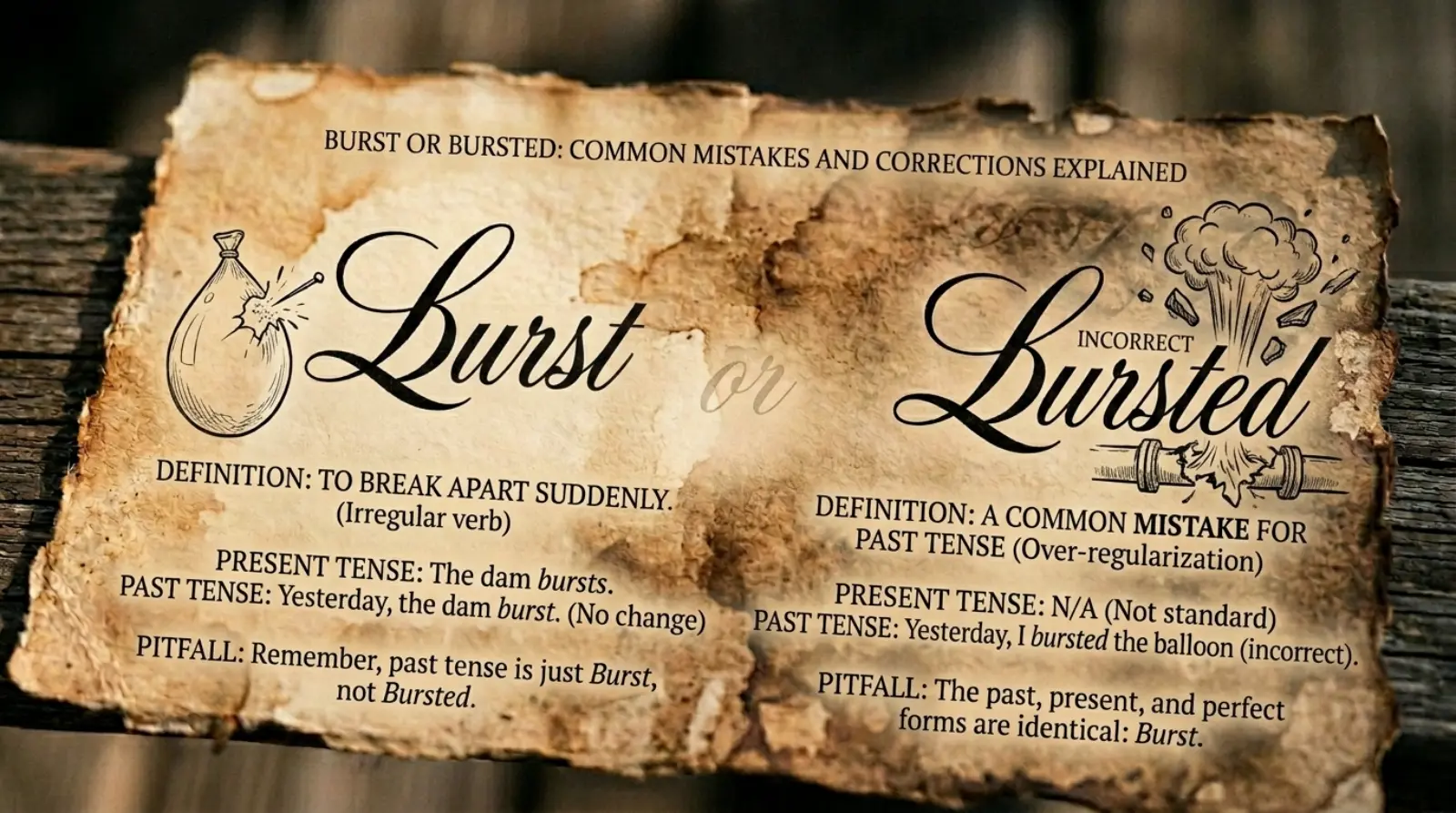
Bursted or burst is a common grammar question. Many people wonder which word is correct. The answer is simple. Burst is the correct past tense and past participle of burst. The word bursted is not standard English. However, some people still use it in casual speech or older regional dialects.
Learning the correct form helps you write and speak with confidence. It also improves your grammar in school, work, and daily conversations. In this guide, you will learn the meaning of burst, see real-life examples, compare the two words, avoid common mistakes, and discover easy tips to remember the correct usage.
Quick Summary Box
- Burst is the correct present, past, and past participle form.
- Bursted is considered incorrect in modern standard English.
- Use burst for all verb tenses except when adding helping verbs.
- Example: The balloon burst yesterday.
- Example: The pipe has burst.
- Remember: Many irregular verbs do not add -ed.
What Does “Burst” Mean?
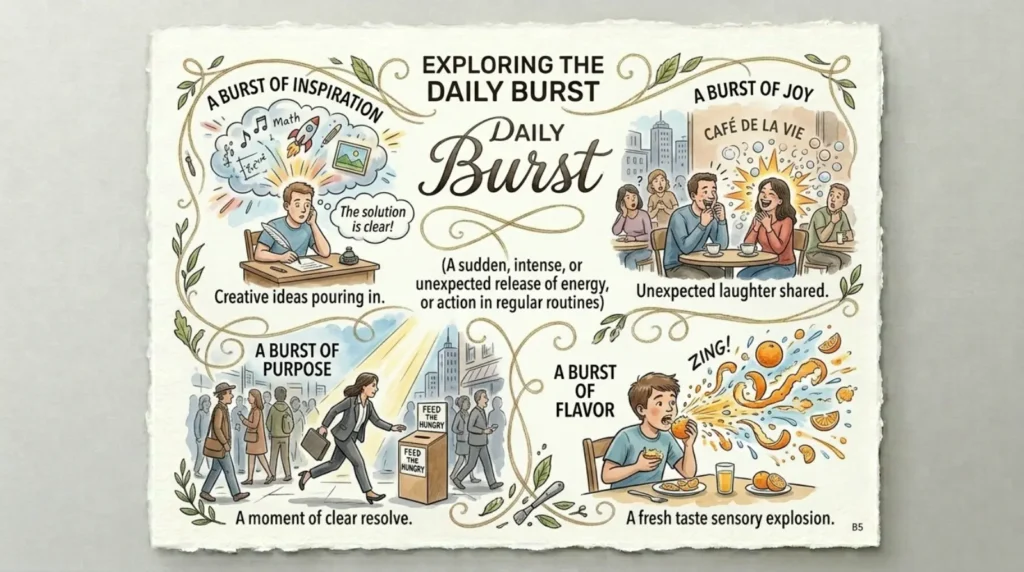
The word burst means to break open suddenly because of pressure. It can also mean to happen quickly with great force or emotion.
Simple Definition
Burst (verb):
- To break open suddenly
- To explode
- To happen very quickly
Burst (noun):
- A sudden explosion
- A short period of activity or energy
Examples
- The balloon burst.
- The pipe burst during winter.
- Everyone burst into laughter.
- She burst through the door.
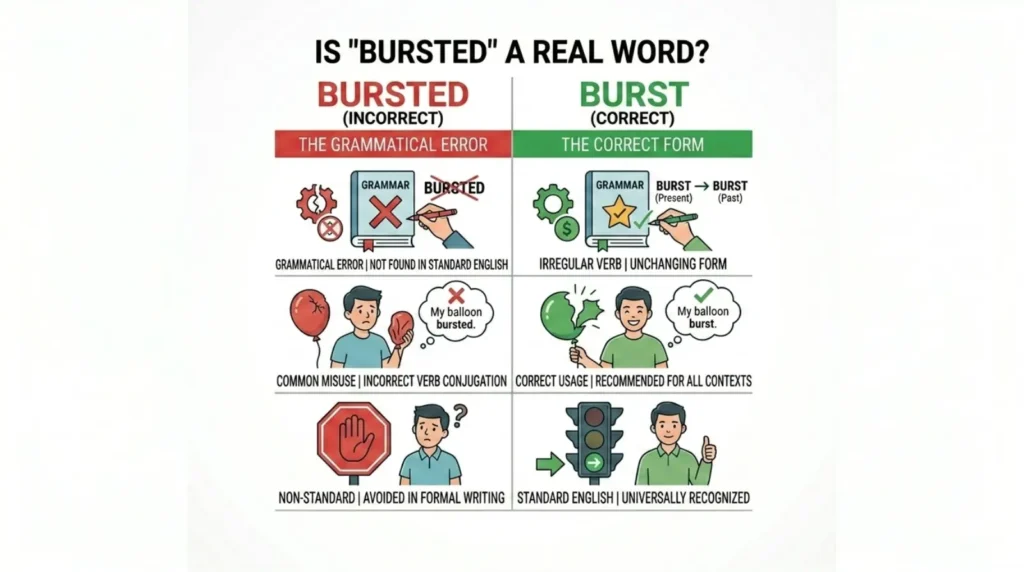
Is “Bursted” a Real Word?
The short answer is no.
Modern English dictionaries consider burst the correct past tense.
Although bursted has appeared in old texts and regional speech, it is not accepted in formal writing.
Correct
- The balloon burst.
- The tire burst.
- The dam burst after heavy rain.
Incorrect
- The balloon bursted.
- The tire bursted.
Bursted or Burst: What’s the Difference?
| Feature | Burst | Bursted |
|---|---|---|
| Present tense | ✅ Correct | ❌ Incorrect |
| Past tense | ✅ Correct | ❌ Incorrect |
| Past participle | ✅ Correct | ❌ Incorrect |
| Modern English | ✅ Yes | ❌ No |
| Academic writing | ✅ Accepted | ❌ Avoid |
Winner
Always use burst.
Why Doesn’t “Burst” Become “Bursted”?
English has many irregular verbs.
Most verbs add -ed.
Examples:
- Walk → Walked
- Jump → Jumped
- Play → Played
However, irregular verbs change differently.
Examples:
| Base Verb | Past Tense |
|---|---|
| Cut | Cut |
| Put | Put |
| Hit | Hit |
| Burst | Burst |
| Cost | Cost |
These verbs stay the same.
How to Use “Burst” in Different Tenses
| Tense | Example |
|---|---|
| Present | The balloon bursts easily. |
| Simple Past | The balloon burst yesterday. |
| Present Perfect | The balloon has burst. |
| Past Perfect | The balloon had burst before we arrived. |
| Future | The balloon will burst soon. |
| Present Continuous | The balloon is bursting. |
Notice that the past tense remains burst.
Real-Life Examples of Burst
At Home
- The water pipe burst overnight.
- The popcorn bag burst in the microwave.
School
- The class burst into applause.
- The students burst out laughing.
Work
- The computer battery almost burst.
- Sales burst past expectations.
Sports
- The runner burst ahead.
- The crowd burst into cheers.
Nature
- The volcano burst with lava.
- The clouds burst with heavy rain.
Common Expressions Using “Burst”
English speakers use many phrases with burst.
Burst into
Means to suddenly start doing something.
Examples
- Burst into tears
- Burst into laughter
- Burst into song
Burst out
Means to suddenly begin.
Examples
- Burst out laughing
- Burst out crying
Burst open
Means to break open.
Example
- The box burst open.
Burst through
Means to break through something.
Example
- The firefighters burst through the door.
Common Mistakes People Make
Many learners make these errors.
Mistake 1
❌ The balloon bursted.
✅ The balloon burst.
Mistake 2
❌ The pipe has bursted.
✅ The pipe has burst.
Mistake 3
Adding -ed to every verb.
Remember that irregular verbs follow different rules.
Easy Trick to Remember
Think about these verbs.
- Cut → Cut
- Hit → Hit
- Put → Put
- Burst → Burst
None of them add -ed.
A simple memory trick:
If something bursts quickly, the word stays quick too—it never grows an “-ed.”
Burst in Daily Life
You probably hear burst every day.
Examples include:
- A balloon burst at a birthday party.
- A tire burst on the highway.
- Kids burst into laughter.
- Fireworks burst in the sky.
- Water pipes burst during freezing weather.
- People burst into applause after a performance.
Using the correct form makes your English sound natural.
Synonyms of Burst
Depending on the situation, you can use similar words.
Something Explodes
- Explode
- Pop
- Break
- Split
- Rupture
- Crack
Someone Moves Quickly
- Rush
- Dash
- Charge
- Sprint
Emotions Appear Suddenly
- Erupt
- Overflow
- Break out
Related Keywords (LSI Keywords)
Use these naturally in your writing.
- burst meaning
- burst past tense
- burst grammar
- is bursted correct
- burst verb forms
- burst or bursted
- irregular verbs
- English grammar rules
- past tense of burst
- correct use of burst
Expert Insight
Grammar experts agree that burst is an irregular verb. Its base form, past tense, and past participle remain the same.
Using burst correctly improves writing quality. It also helps readers trust your content. Search engines reward clear, accurate, and helpful information. That makes correct grammar important for both readers and SEO.
When writing blogs, emails, essays, or business documents, always choose burst instead of bursted.
FAQs
Is “bursted” a correct word?
No. Modern English considers burst the correct form.
What is the past tense of burst?
The past tense is burst.
Example:
The balloon burst yesterday.
Is “has burst” correct?
Yes.
Example:
The pipe has burst.
Why doesn’t burst become bursted?
Because burst is an irregular verb. It keeps the same spelling.
Can I use bursted in conversation?
Some regional dialects may use it, but standard English does not. Avoid it in writing.
Is burst both a noun and a verb?
Yes.
Verb:
The balloon burst.
Noun:
A burst of energy helped him finish.
What is the difference between burst and explode?
Burst means something breaks open suddenly. Explode usually means a violent blast with force.
Featured Snippet Answer
Bursted or Burst: Which Is Correct?
Burst is the correct word in modern English. It serves as the base verb, past tense, and past participle. Bursted is considered incorrect in standard grammar and should be avoided in formal writing.
Internal Linking Suggestions
Consider linking this article to related grammar guides such as:
- Irregular Verbs in English
- Chose vs Choose
- Lie vs Lay
- Paid vs Payed
- Began vs Begun
- Broke vs Broken
- Shrank vs Shrunk
Conclusion
The debate over bursted or burst has a clear answer. Burst is the correct choice in standard English. It works as the present tense, past tense, and past participle. Although you may occasionally hear bursted, grammar experts and modern dictionaries do not accept it for formal writing.
Remember one simple rule: burst never adds “-ed.” Whether you talk about balloons, pipes, emotions, or explosions, burst is always the right word. Mastering this small grammar rule will make your writing clearer, more professional, and easier to understand. The next time you wonder whether to write bursted or burst, choose burst with confidence.

James Carter is a comparison writer and research specialist with over 10 years of experience in digital publishing. With a background in business communication and consumer research, he creates detailed comparison articles, buying guides, and reviews that help readers make informed decisions with confidence. “Every comparison should help readers make better decisions. My goal is to turn complex information into clear, practical guidance that people can trust.” — James Carter