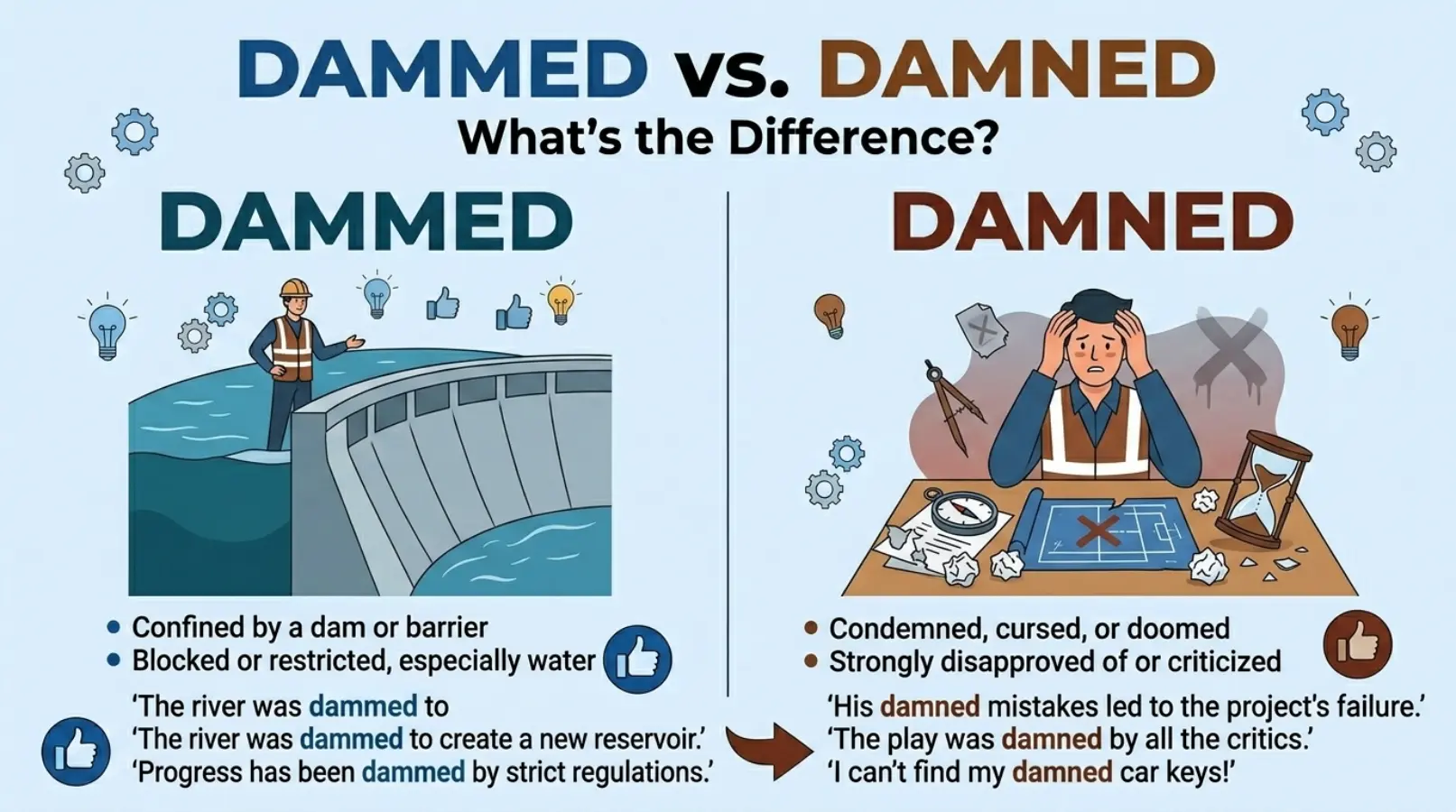
Dammed or damned is a common spelling question that confuses many English learners and native speakers alike. These two words look almost identical, but they have very different meanings.
One word relates to building barriers for water. The other refers to condemnation, criticism, or bad luck. Because they differ by only one letter, people often use the wrong word by mistake.
Understanding the difference is simple once you know what each word means. This guide explains both words in plain English. You will also find examples, comparison tables, memory tricks, and common mistakes to avoid.
By the end, you’ll know exactly when to use dammed and when to use damned.
Quick Summary Box
Dammed or Damned at a Glance
- Dammed = blocked or controlled water with a dam
- Damned = condemned, cursed, criticized, or considered bad
- Dammed relates to rivers, lakes, and water systems
- Damned relates to judgment, emotions, religion, or frustration
- The words sound similar but have different meanings
- Using the wrong spelling can change your sentence completely
What Does “Dammed” Mean?
The word dammed is the past tense of the verb dam.
A dam is a structure built across a river or stream to stop or control water flow.
Definition
Dammed means:
Blocked, stopped, or controlled by a dam.
Examples
- Engineers dammed the river to create a reservoir.
- The stream was dammed after heavy flooding.
- Workers dammed the water to protect nearby towns.
In each example, the word refers to water being blocked or controlled.
What Does “Damned” Mean?
The word damned is the past tense of damn.
It often means condemned, cursed, criticized, or considered very bad.
Definition
Damned means:
Condemned, cursed, or strongly criticized.
Examples
- He felt damned by his poor decisions.
- The movie received a damned review from critics.
- She was damned for breaking the rules.
People also use the word for emphasis in casual speech.
- Turn off that damned alarm.
- I can’t find the damned keys.
Dammed vs Damned: Key Difference
The main difference is simple.
Dammed relates to water.
Damned relates to judgment, criticism, curses, or strong emotions.
If water is involved, use dammed.
If condemnation or frustration is involved, use damned.
Dammed or Damned Comparison Table
| Feature | Dammed | Damned |
|---|---|---|
| Root Word | Dam | Damn |
| Meaning | Blocked by a dam | Condemned or cursed |
| Related To | Water and rivers | Judgment and criticism |
| Part of Speech | Verb (past tense) | Verb or adjective |
| Common Usage | Environmental projects | Emotional or religious contexts |
| Example | The river was dammed. | He was damned by critics. |
How to Remember the Difference
A simple memory trick can help.
Remember “Dammed”
Dammed contains the word dam.
Think of:
- Dam
- River
- Water
If the sentence involves water, choose dammed.
Remember “Damned”
Damned contains the word damn.
Think of:
- Criticism
- Curse
- Judgment
If the sentence involves blame or condemnation, choose damned.
Real-Life Examples of Dammed
Here are examples from everyday situations.
Water Management
- The river was dammed to prevent flooding.
- The government dammed the valley to create a lake.
Hydroelectric Power
- The water was dammed to generate electricity.
- Engineers dammed the river for renewable energy.
Agriculture
- Farmers dammed the stream to store irrigation water.
In all cases, water control is the key idea.
Real-Life Examples of Damned
Here are common real-life uses.
Criticism
- The project was damned by experts.
- Critics damned the new policy.
Frustration
- Where are my damned glasses?
- That damned computer keeps crashing.
Religious Context
- Some traditions describe sinners as damned.
These examples focus on condemnation or annoyance.
Common Mistakes People Make
Many writers confuse these words because they sound similar.
Mistake #1: Using Dammed for Criticism
❌ He was dammed by the media.
✅ He was damned by the media.
Why?
The sentence involves criticism, not water.
Mistake #2: Using Damned for Water
❌ The river was damned last year.
✅ The river was dammed last year.
Why?
The sentence refers to a physical dam.
Mistake #3: Relying Only on Pronunciation
The words sound nearly alike.
Always check the meaning before choosing a spelling.
When Should You Use Dammed?
Use dammed when discussing:
- Rivers
- Streams
- Lakes
- Reservoirs
- Flood control
- Water storage
- Hydroelectric power
Examples
- Workers dammed the river.
- The valley was dammed decades ago.
- Officials dammed the waterway for safety.
When Should You Use Damned?
Use damned when discussing:
- Criticism
- Condemnation
- Curses
- Religion
- Frustration
- Strong emotions
Examples
- The actor was damned by reviewers.
- Stop that damned noise.
- He felt damned after the mistake.
Synonyms for Dammed
Depending on context, similar words include:
- Blocked
- Restricted
- Obstructed
- Barricaded
- Controlled
- Impounded
Example
- The river was blocked by a dam.
- The river was dammed.
Synonyms for Damned
Depending on context, similar words include:
- Condemned
- Cursed
- Criticized
- Denounced
- Blamed
- Rebuked
Example
- The decision was condemned.
- The decision was damned.
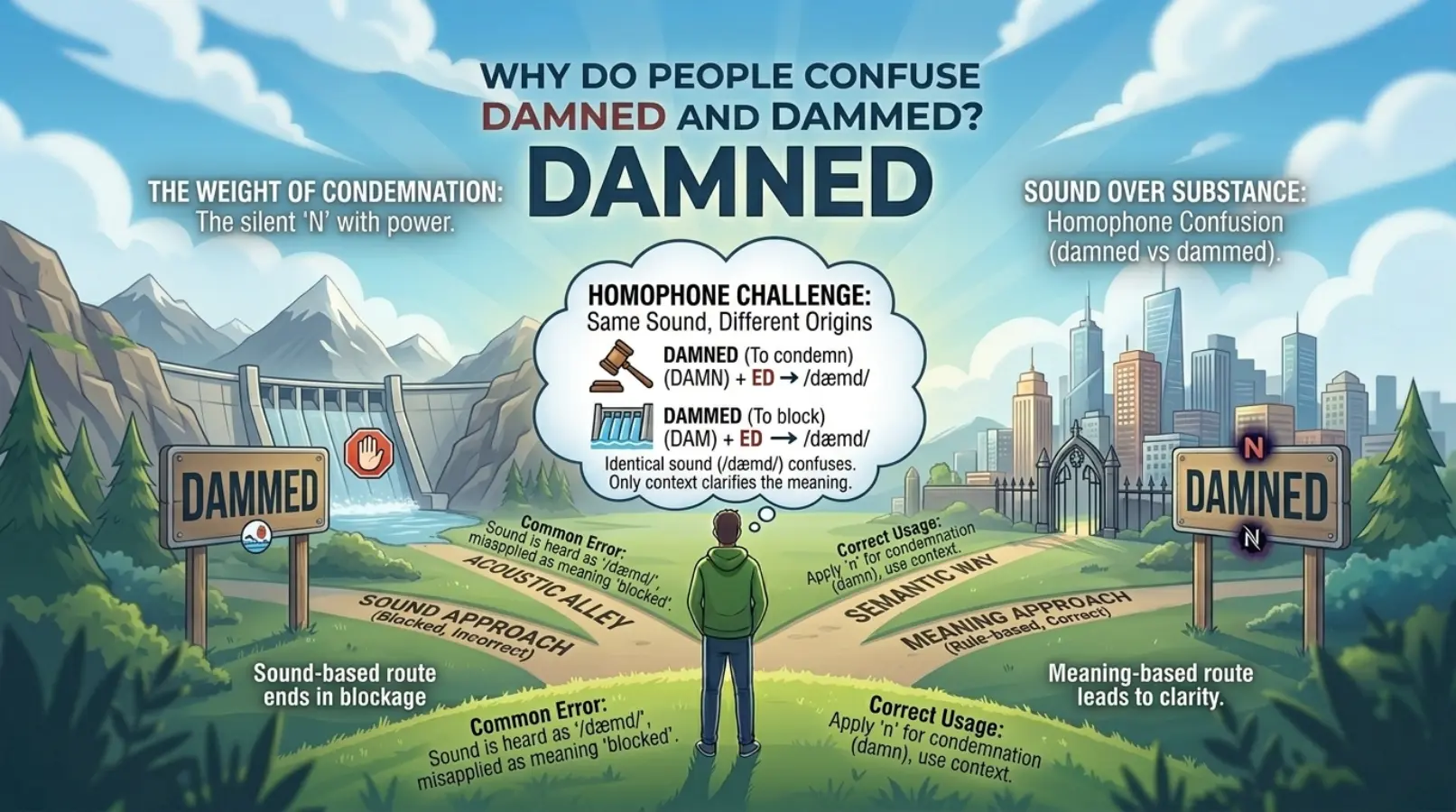
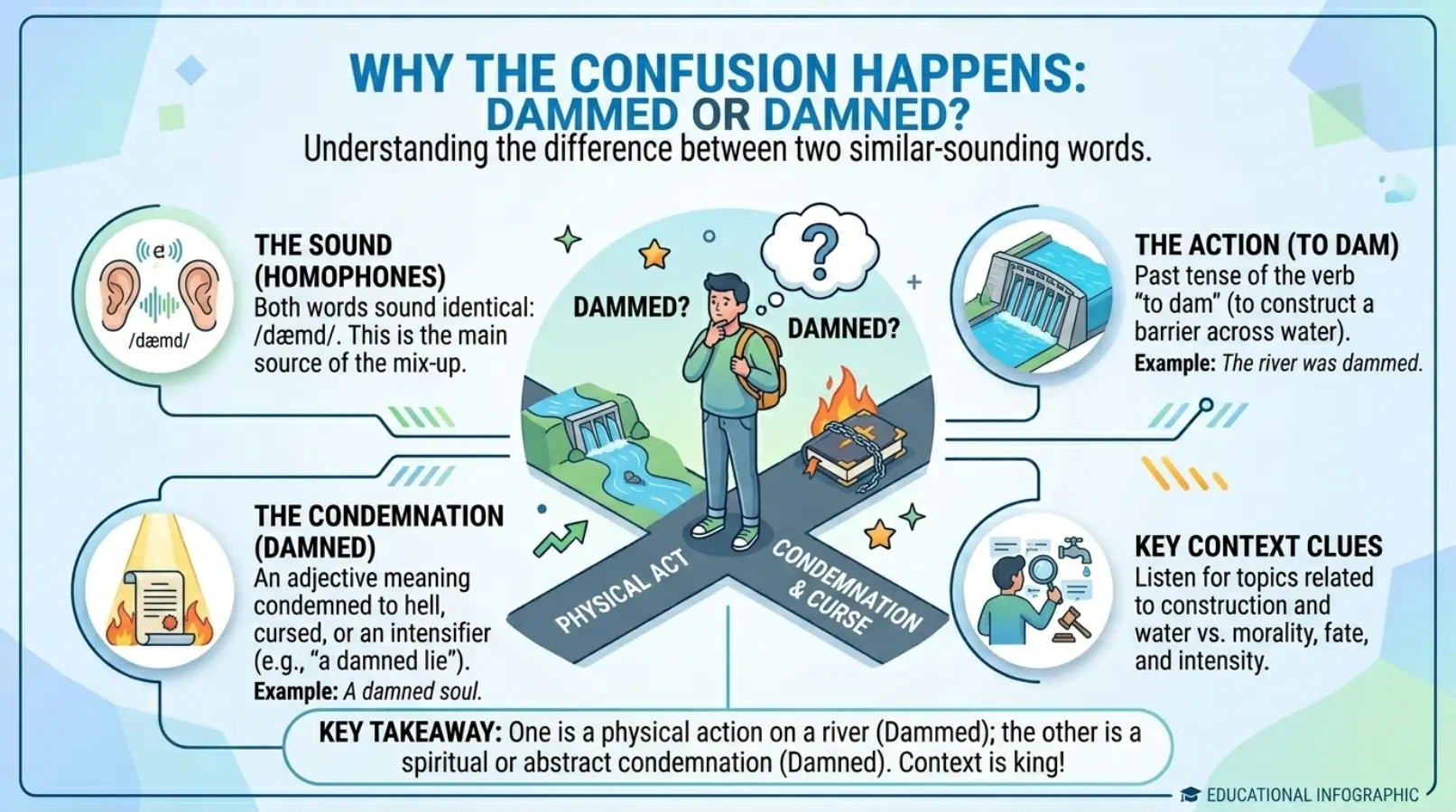
Why the Confusion Happens
English contains many words that differ by only one letter.
Examples include:
- Affect vs Effect
- Desert vs Dessert
- Principal vs Principle
- Dammed vs Damned
Because both words sound similar, writers often choose the wrong spelling quickly.
The best solution is to focus on the meaning.
Ask yourself:
Is this about water or judgment?
The answer usually reveals the correct spelling.
Expert Insight: Why Correct Usage Matters
Correct spelling improves communication and credibility.
Readers notice grammar and word choice mistakes. Using dammed instead of damned can confuse your audience.
Search engines also favor high-quality content with accurate language.
Professional writers, students, and business professionals benefit from understanding these commonly confused words.
A small spelling difference can create a completely different meaning.
That is why learning the distinction matters.
Usage in Daily Life
You may encounter these words in:
News Articles
- Rivers being
- Policies being damned by critics
Books
- Historical accounts of dammed waterways
- Characters feeling damned
Everyday Conversations
- Discussions about hydroelectric dams
- Expressions of frustration using “damned”
Understanding both words helps you read and write more accurately.
FAQs
It depends on the meaning. Use dammed for water barriers and damned for condemnation or criticism.
What does dammed mean?
Dammed means blocked or controlled by a dam.
What does damned mean?
Damned means condemned, cursed, criticized, or strongl.
Why do people confuse dammed and damned?
They look and sound very similar but have different meanings.
Canbe used as an adjective?
Yes. Example: “That damned phone won’t stop ringing.”
In some situations, yes. It may sound informal or mildly offensive.
How can I remember the difference?
Think of dammed = dam = water and damned = damn = criticism or curse.
Internal Linking Suggestions
To strengthen SEO, link this article to:
- Commonly confused English words
- Affect vs Effect
- Principal vs Principle
- Then vs Than
- Your vs You’re
- Grammar mistakes in English writing
Final Verdict: Dammed or Damned?
Understanding dammed or damned is easier than it first appears. The difference comes down to meaning.
Use dammed when talking about water being blocked by a dam. Use damned when discussing criticism, condemnation, curses, or frustration.
A simple memory trick helps. If water is involved, choose dammed. If judgment or blame is involved, choose damned.
These words may differ by only one letter, but they create completely different meanings. Learning the distinction will improve your writing, boost your confidence, and help you avoid common grammar mistakes.
The next time you see dammed or damned, you’ll know exactly which spelling belongs in your sentence.

Emma Collins is a language writer and grammar enthusiast specializing in English vocabulary, spelling comparisons, and word usage guides. She creates easy-to-understand content that helps readers improve their writing, communication, and language skills with confidence.