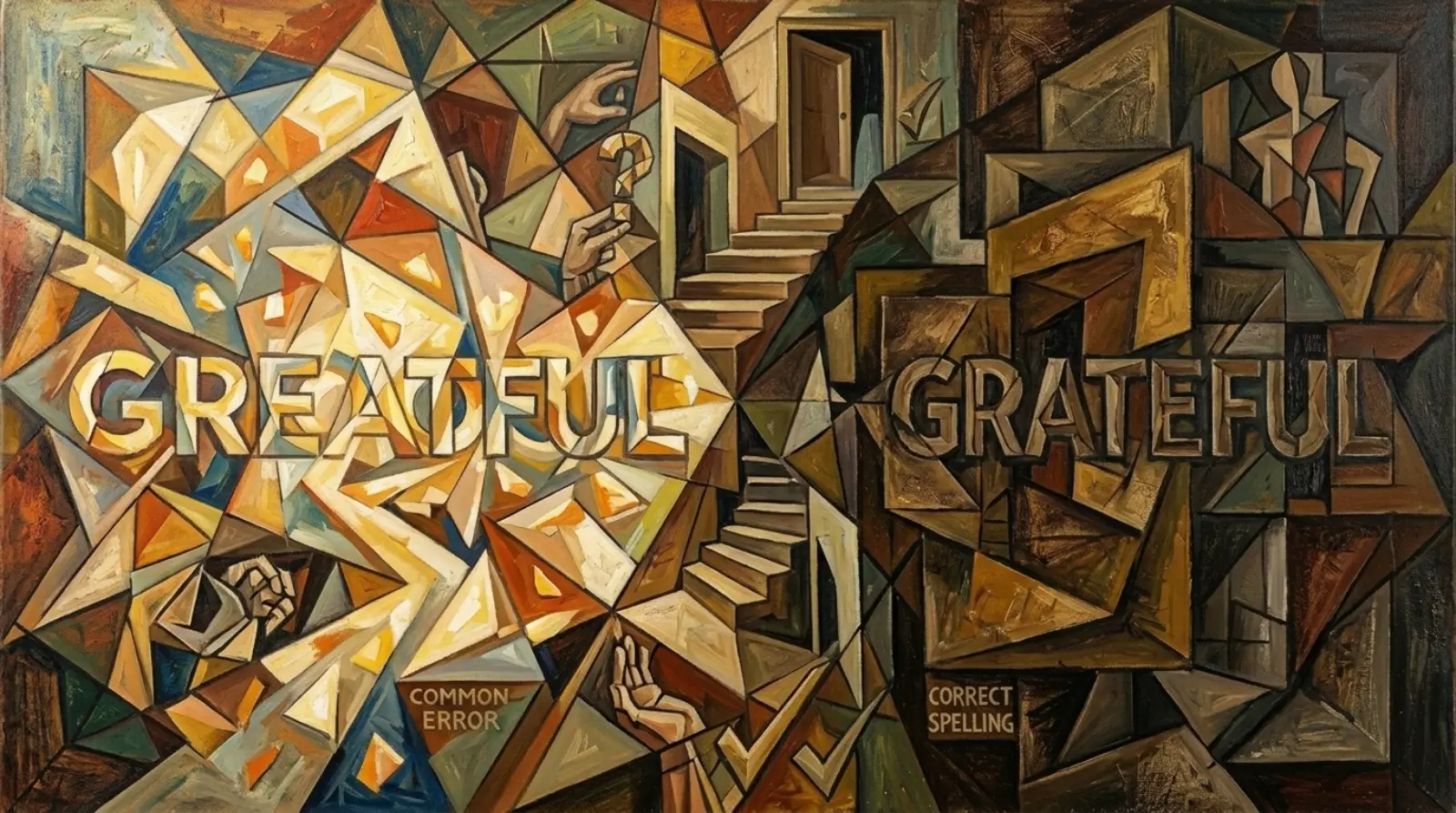
Greatful or grateful spelling is a common question for English learners and native speakers alike. Many people write “greatful” because it sounds similar to “grateful.” However, only one spelling is correct.
English contains many words that look and sound confusing. That is why spelling mistakes happen often. The good news is that this mistake is easy to fix once you understand the rule.
In this guide, you will learn the correct spelling, meaning, pronunciation, and usage of the word. You will also see real-life examples, common mistakes, and simple memory tricks. By the end, you will never confuse “greatful” and “grateful” again.
Quick Summary Box
- The correct spelling is grateful
- Greatful is incorrect in standard English
- Grateful means thankful or appreciative
- Use grateful in writing, emails, messages, and conversations
- Remember: grateful comes from “gratitude,” not “great”
- “Greatful” is a common spelling mistake
What Does Grateful Mean?
The word grateful means feeling thankful for something.
A person feels grateful when they appreciate kindness, help, support, or good fortune.
Examples
- I am grateful for your help.
- She felt grateful after receiving the gift.
- We are grateful for your support.
The word expresses appreciation and thankfulness.
Greatful or Grateful Spelling: Which Is Correct?
The correct spelling is grateful.
| Word | Correct? | Meaning |
|---|---|---|
| Grateful | ✅ Yes | Feeling thankful |
| Greatful | ❌ No | Incorrect spelling |
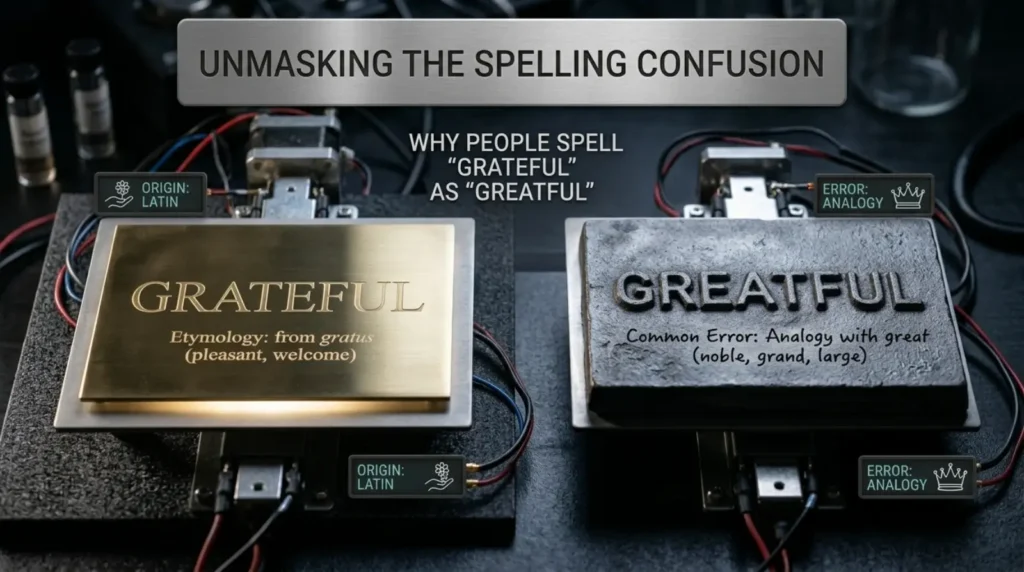
Many people mistakenly write “greatful” because they connect the word with “great.” However, the word actually comes from gratitude.
Therefore, “grateful” is always the correct choice.
Why Do People Spell Grateful as Greatful?
This mistake happens because of pronunciation and word association.
People often think:
- Great = something good
- Greatful = full of greatness
While this idea seems logical, English spelling follows history and word origins.
The word comes from:
- Gratitude
- Gracious
- Gratify
These words begin with grat-, not great-.
That is why the correct spelling remains grateful.
The Origin of the Word Grateful
Understanding the origin helps you remember the spelling.
The word grateful comes from the Latin word gratus, which means pleasing or thankful.
Related words include:
- Gratitude
- Gratify
- Gratuitous
- Gracious
Notice that none of these words use the spelling “great.”
This historical connection explains why “grateful” is correct.
How to Remember the Correct Spelling
Simple memory tricks can prevent future mistakes.
Trick 1: Connect It to Gratitude
Think:
Gratitude → Grateful
Both words start with grat.
Trick 2: Use a Short Phrase
“Grateful comes from gratitude.”
Repeat this sentence whenever you write the word.
Trick 3: Ignore the Word Great
Although grateful sounds similar to great, the spelling does not come from that word.
These tricks help many learners remember the correct form.
Real-Life Examples of Grateful
Here are common situations where people use the word.
Work
- I am grateful for this opportunity.
- Thank you. I am grateful for your guidance.
School
- Students felt grateful for the extra help.
- We are grateful to our teachers.
Family Life
- I am grateful for my parents.
- She felt grateful for her family’s support.
Friendships
- I am grateful to have such caring friends.
- He was grateful for their kindness.
These examples show how often the word appears in daily communication.
Common Mistakes People Make
Many writers make similar errors.
Mistake 1: Writing Greatful
❌ I am greatful for your help.
✅ I am grateful for your help.
Mistake 2: Assuming It Comes From Great
Many people think grateful means “full of greatness.”
That is not correct.
The word means thankful.
Mistake 3: Using Spellings Based on Sound
English words do not always follow pronunciation rules.
Always check spelling when unsure.
Grateful vs Greatful Comparison Table
| Feature | Grateful | Greatful |
|---|---|---|
| Correct English spelling | ✅ Yes | ❌ No |
| Found in dictionaries | ✅ Yes | ❌ No |
| Means thankful | ✅ Yes | ❌ No |
| Suitable for professional writing | ✅ Yes | ❌ No |
| Accepted in academic writing | ✅ Yes | ❌ No |
| Common spelling mistake | ❌ No | ✅ Yes |
This table clearly shows that only “grateful” is acceptable.
How to Use Grateful in Sentences
Using the word correctly is simple.
Examples
- I am grateful for your kindness.
- We are grateful for the support.
- She felt grateful after receiving help.
- They remain grateful to their customers.
- He was grateful for another chance.
These examples work in both formal and informal writing.
Synonyms of Grateful
Using synonyms can improve your writing.
Common Synonyms
- Thankful
- Appreciative
- Obliged
- Indebted
- Blessed
- Acknowledging
- Recognizing
- Respectful
Example
Instead of:
- I am grateful for your support.
You can write:
- I am thankful for your support.
- I am appreciative of your support.
These alternatives add variety to your content.
Usage of Grateful in Daily Life
The word appears in many everyday situations.
Emails
- I am grateful for your quick response.
Social Media
- Feeling grateful for all the birthday wishes.
Business Communication
- We are grateful for your partnership.
Personal Messages
- I am grateful to have you in my life.
Because gratitude is a common human emotion, the word appears frequently.

Why Correct Spelling Matters
Correct spelling improves communication.
Benefits include:
- Better professional image
- Stronger writing skills
- Higher credibility
- Fewer misunderstandings
- Improved academic performance
Using “grateful” correctly shows attention to detail.
Even small spelling mistakes can affect how readers view your writing.
Expert Insight: Why This Spelling Confuses So Many People
Language experts often identify “grateful” as a high-frequency spelling mistake.
The confusion comes from sound patterns. People naturally connect the word with “great.” However, English spelling often follows historical roots rather than pronunciation alone.
Writers who understand word origins usually remember spellings more easily. Learning that grateful comes from gratitude creates a stronger memory connection.
This simple insight helps eliminate the mistake permanently.
FAQs
Is greatful a real word?
No. Greatful is considered a misspelling in standard English.
Which spelling is correct: greatful or grateful?
Grateful is the only correct spelling.
Why do people write greatful?
People often connect the word with “great” because of the pronunciation.
What does grateful mean?
Grateful means thankful or appreciative.
Does grateful come from the word great?
No. It comes from the same root as gratitude.
How can I remember the spelling?
Think of the phrase: “Gratitude leads to grateful.”
Can I use greatful in formal writing?
No. Use grateful in all formal and informal writing.
Is grateful commonly used?
Yes. It is a very common word in everyday English.
Internal Linking Suggestions
For related content, consider linking to:
- Gratitude vs Appreciation
- Thankful vs Grateful
- Common English Spelling Mistakes
- Affect vs Effect
- Their vs There vs They’re
- Accept vs Except
- Loose vs Lose
These topics support readers interested in improving English usage.
Conclusion
When comparing greatful or grateful spelling, the answer is simple. Grateful is the correct spelling, while greatful is incorrect. The word grateful means thankful and comes from the same root as gratitude. That connection makes the spelling easier to remember.
Many people make this mistake because the word sounds similar to “great.” However, English spelling often follows word history rather than pronunciation. By remembering the link between gratitude and grateful, you can avoid the error forever.
The next time you want to express thanks, use grateful with confidence. Correct spelling improves your writing, strengthens your credibility, and helps your message look professional.

James Carter is a comparison writer and research specialist with over 10 years of experience in digital publishing. With a background in business communication and consumer research, he creates detailed comparison articles, buying guides, and reviews that help readers make informed decisions with confidence. “Every comparison should help readers make better decisions. My goal is to turn complex information into clear, practical guidance that people can trust.” — James Carter