Is pais masculine or feminine? If you are learning Spanish, this question can feel confusing. The correct answer is simple: país is masculine. You use el país when you say “the country.” You also use masculine adjectives with it. For example, “El país es grande” means “The country is large.” The word país refers to a country, nation, or land. It is a common Spanish noun, so learning its gender helps you build correct sentences. One important detail is the accent mark. The correct spelling is país, not pais. The accent appears on the í. In this guide, you will learn why país is masculine. You will also see simple examples, grammar rules, common mistakes, and useful phrases. By the end, using el país should feel natural.
Quick Summary
- País is masculine in Spanish.
- The correct form is el país.
- País means country or nation.
- Its plural form is los países.
- Use masculine adjectives with país.
- Example: El país es hermoso.
- Do not say la país.
- Always write the word with its accent: país.
What Does País Mean in Spanish?
The Spanish word país means country or nation.
It describes a geographical area with its own government, people, and territory.
For example:
- España es un país. — Spain is a country.
- México es un país grande. — Mexico is a large country.
- Vivo en un país tranquilo. — I live in a peaceful country.
The noun país can describe any country in the world.
It can also appear in phrases about national identity, geography, politics, travel, and culture.
Is País Masculine or Feminine?
País is masculine.
Therefore, you should use masculine articles and adjectives with it.
The singular definite article is el.
So, the correct phrase is:
el país = the country
The indefinite article is un.
Therefore:
un país = a country
You should not say la país or una país.
Those forms are grammatically incorrect.
Correct Forms
| Spanish | English |
|---|---|
| el país | the country |
| un país | a country |
| este país | this country |
| ese país | that country |
| mi país | my country |
| nuestro país | our country |
| los países | the countries |
| unos países | some countries |
Why Is País Masculine?
Spanish nouns have grammatical gender.
Most nouns are either masculine or feminine.
The gender does not always depend on the meaning of the noun.
For example, país ends in -ís, not -o.
Therefore, you cannot determine its gender from a simple ending rule.
You must learn the noun together with its article.
A useful way to remember it is:
país → el país
Learning nouns with their articles makes Spanish grammar easier.
Instead of memorizing only país, memorize el país.
País: Masculine or Feminine? Comparison Table
| Feature | País | Países |
|---|---|---|
| Meaning | Country | Countries |
| Gender | Masculine | Masculine |
| Singular/Plural | Singular | Plural |
| Article | El país | Los países |
| Indefinite Article | Un país | Unos países |
| Example | El país es grande. | Los países son diferentes. |
| English Meaning | The country is large. | The countries are different. |
| Correct Gender | ✅ Masculine | ✅ Masculine |
Quick Rule
País is a masculine Spanish noun.
Use el país, not la país.
Example:
✅ España es un país hermoso.
❌ España es una país hermoso.
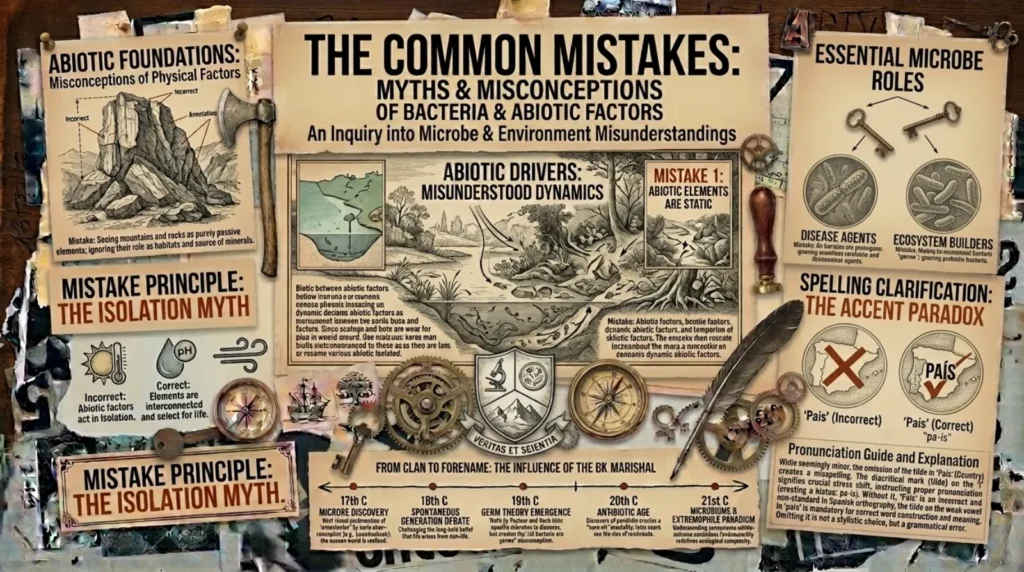
What Is the Correct Spelling: Pais or País?
The correct spelling is país, with an accent mark over the í.
The accent is important because it shows the correct pronunciation.
The word has two syllables:
pa-ís
The vowel í receives the stress.
Without the accent, pais is not the standard spelling of the Spanish noun meaning “country.”
Correct:
país
Incorrect:
pais
When writing Spanish, remember the accent.
This small mark changes the correct spelling and pronunciation.
El País vs. La País
The correct phrase is:
el país
The incorrect phrase is:
la país
Why?
Because país is masculine.
Use el for the singular definite article.
Examples
- El país tiene muchas montañas.
- El país necesita más schools.
- El país es famoso por su comida.
- El país tiene una larga historia.
The adjectives also agree with the masculine noun.
For example:
El país es grande.
Here, grande does not show masculine gender.
But consider:
El país es hermoso.
The adjective hermoso uses the masculine form.
Masculine Adjective Agreement With País
Spanish adjectives often agree with the nouns they describe.
Since país is masculine, many adjectives take their masculine form.
| Masculine | Feminine | Meaning |
|---|---|---|
| país grande | — | large country |
| país pequeño | — | small country |
| país hermoso | — | beautiful country |
| país moderno | — | modern country |
| país desarrollado | — | developed country |
| país independiente | — | independent country |
For example:
Es un país pequeño.
This means:
It is a small country.
The adjective pequeño agrees with masculine país.
Singular and Plural Forms of País
The singular form is:
país
The plural form is:
países
The plural article becomes los.
Therefore:
el país → los países
For example:
- El país es pequeño.
- Los países son diferentes.
- Mi país tiene muchas ciudades.
- Estos países comparten una frontera.
Notice that the plural spelling changes from país to países.
The accent remains on the í.
Real-Life Examples With País
You can use país in many everyday conversations.
Talking About Your Home Country
Mi país es muy hermoso.
Meaning: My country is very beautiful.
Talking About Travel
Quiero visitar otro país.
Meaning: I want to visit another country.
Talking About Geography
Este país tiene muchas montañas.
Meaning: This country has many mountains.
Talking About Culture
El país tiene una cultura rica.
Meaning: The country has a rich culture.
Talking About Food
La comida de mi país es deliciosa.
Meaning: The food from my country is delicious.
Talking About Citizenship
Soy ciudadano de este país.
Meaning: I am a citizen of this country.
Common Mistakes With País
Spanish learners often make a few mistakes with this word.
Mistake 1: Using la país
❌ La país es grande.
✅ El país es grande.
País is masculine, so use el.
Mistake 2: Using una país
❌ Una país pequeño
✅ Un país pequeño
The masculine indefinite article is un.
Mistake 3: Forgetting the Accent
❌ pais
✅ país
The accent helps show the correct pronunciation.
Mistake 4: Using the Feminine Adjective
❌ Un país pequeña
✅ Un país pequeño
The adjective must agree with masculine país.
Mistake 5: Forgetting Plural Agreement
❌ Los país
✅ Los países
The plural form is países.
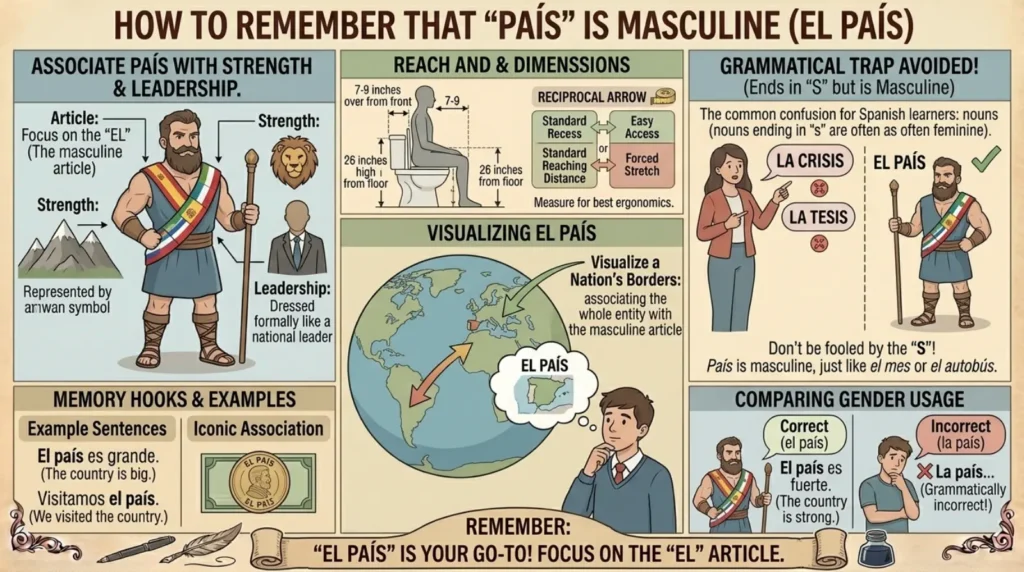
How to Remember That País Is Masculine
The easiest trick is to memorize the complete phrase.
Do not learn:
país = country
Instead, learn:
el país = the country
You can also create a short memory sentence:
El país es grande.
Repeat it several times.
This helps connect the noun with its masculine article.
Another useful pattern is:
un país → el país → mi país → este país
These common phrases make the gender easier to remember.
País in Daily Spanish
The word país appears frequently in everyday Spanish.
You may hear it when people discuss travel, family, politics, culture, or geography.
Here are useful phrases:
- Mi país — my country
- Tu país — your country
- Su país — his/her country
- Nuestro país — our country
- Otro país — another country
- Este país — this country
- Otro país — another country
- El país vecino — the neighboring country
- País extranjero — foreign country
- País de origen — country of origin
These expressions are useful for beginners and advanced Spanish learners.
Related Words and LSI Keywords
If you are studying Spanish vocabulary, these related words can help.
- nación — nation
- estado — state
- territorio — territory
- ciudad — city
- pueblo — town or people
- frontera — border
- gobierno — government
- ciudadano — citizen
- nacional — national
- extranjero — foreign
- países — countries
One important distinction is that nación is also feminine.
You say:
la nación
But you say:
el país
This shows why Spanish noun gender requires memorization.
País vs. Nación: Are They the Same?
The words país and nación can have similar meanings.
However, they are not always interchangeable.
País usually refers to a country as a geographical or political entity.
Nación often emphasizes a people, national identity, or community.
Their grammatical genders are also different.
| Word | Gender | Article | Meaning |
|---|---|---|---|
| país | Masculine | el | country |
| nación | Feminine | la | nation |
| estado | Masculine | el | state |
| territorio | Masculine | el | territory |
This distinction can help Spanish learners understand noun gender.
Expert Insights: Why Noun Gender Matters
Spanish noun gender affects more than articles.
It can also affect adjectives, pronouns, and other words in a sentence.
That makes noun gender an important part of Spanish grammar.
For país, remember this basic structure:
el + país + masculine adjective
Example:
El país es moderno.
A strong learning habit is to memorize nouns with their articles.
This approach reduces common agreement mistakes.
Also, pay attention to accent marks.
Spanish accents can affect pronunciation and spelling.
Therefore, learn el país as one vocabulary unit.
Frequently Asked Questions
Is país masculine or feminine?
País is masculine. The correct definite article is el, as in el país.
Do you say el país or la país?
You say el país. The phrase la país is incorrect.
Is país masculine in Spanish?
Yes. País is a masculine Spanish noun.
What does país mean?
País means country or nation in English.
What is the plural of país?
The plural is países, meaning countries.
Does país need an accent?
Yes. The standard spelling is país, with an accent on the í.
Is nación masculine or feminine?
Nación is feminine. You say la nación.
What is an example sentence with país?
Mi país es hermoso. This means, “My country is beautiful.”
Internal Linking Suggestions
To build a stronger Spanish grammar content cluster, consider linking this article to related topics such as:
- Spanish masculine and feminine nouns
- Spanish noun gender rules
- El vs. La: How to choose the correct article
- Spanish accent marks and pronunciation
- Common Spanish vocabulary mistakes
- Spanish plural noun rules
- Spanish adjective agreement
- Nación vs. país: Meaning and usage
These internal links can improve navigation and help readers explore related grammar topics.
Conclusion
So, is país masculine or feminine? The answer is clear: país is masculine. You should say el país, not la país. The indefinite form is un país, and the plural is los países. Remember to keep the accent on the í in país. Adjectives also need to agree with the masculine noun. For example, un país pequeño means “a small country.” The best way to remember the gender is to learn the noun with its article. Think of el país as one vocabulary unit. This simple habit can prevent many Spanish grammar mistakes. Once you remember el país, you can use the word confidently in everyday Spanish conversations.

James Carter is a comparison writer and research specialist with over 10 years of experience in digital publishing. With a background in business communication and consumer research, he creates detailed comparison articles, buying guides, and reviews that help readers make informed decisions with confidence. “Every comparison should help readers make better decisions. My goal is to turn complex information into clear, practical guidance that people can trust.” — James Carter