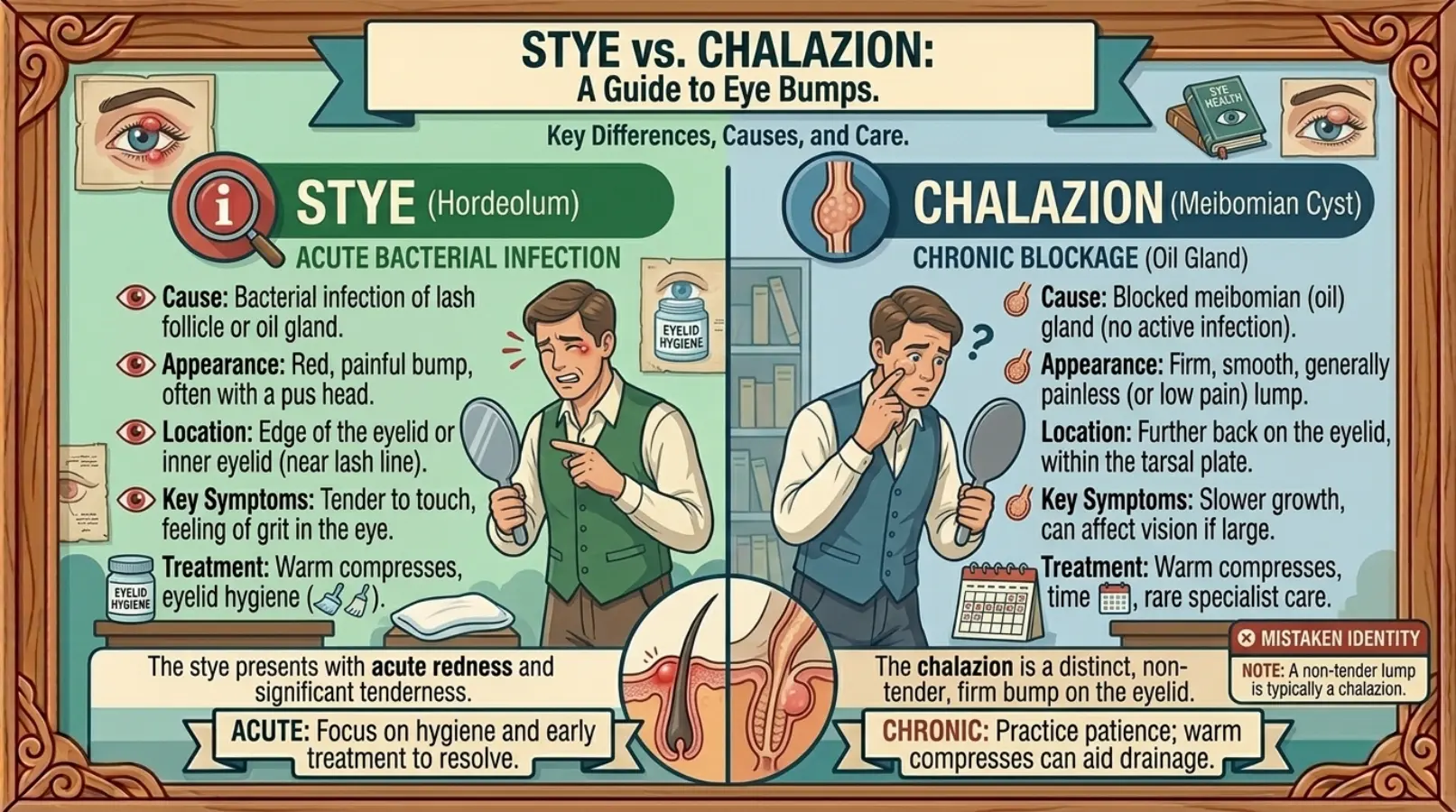
Stye or chalazion can both cause a small lump on your eyelid. However, they are not exactly the same condition. A stye usually causes pain, redness, and tenderness. A chalazion usually causes a firm lump with little or no pain. A stye often develops from an infection near an eyelash. A chalazion usually forms when an oil gland becomes blocked.
Both conditions are common and often improve without major treatment. Warm compresses can help with both problems. However, you should not squeeze or pop an eyelid lump. Doing so may spread infection or cause more irritation.
Knowing the difference can help you choose the right self-care steps. This guide explains stye or chalazion symptoms, causes, treatments, and warning signs.
Quick Summary: Stye vs. Chalazion
- A stye is usually a painful, red lump near the eyelash line.
- A chalazion is usually a firm, painless lump caused by a blocked oil gland.
- Styes often involve infection or acute inflammation.
- Chalazia usually result from blocked meibomian oil glands.
- Both conditions can cause eyelid swelling.
- Warm compresses can support natural drainage and healing.
- Avoid squeezing, popping, or picking at either lump.
- Avoid eye makeup and contact lenses while the area heals.
- Seek medical advice if symptoms worsen or affect your vision.
What Is a Stye?
A stye, also called a hordeolum, is a painful lump on the eyelid. It often looks like a small pimple or boil. Styes commonly develop near the base of an eyelash.
A stye can occur on the outside or inside of the eyelid. External styes often develop around an eyelash follicle. Internal styes can involve an oil gland inside the eyelid.
Common signs include:
- Pain or tenderness
- A red eyelid lump
- Swelling
- Watery eyes
- Eyelid irritation
- A yellow or pus-filled spot in some cases
Most uncomplicated styes improve on their own. Warm compresses can help encourage drainage and reduce discomfort.
What Is a Chalazion?
A chalazion is a firm lump caused by a blocked oil gland in the eyelid. These glands are called meibomian glands. They produce oil that helps keep the surface of your eye moist.
Unlike a typical stye, a chalazion is usually not painful. It may begin with mild irritation or swelling. Over time, it can become a firm, round bump.
A chalazion can appear on either the upper or lower eyelid. Most are harmless and eventually shrink or disappear. Some can remain for several weeks or longer.
Stye or Chalazion: Key Difference
The easiest way to remember the difference is pain versus blockage.
A stye usually hurts and often develops quickly. A chalazion usually feels like a firm lump and causes little pain.
| Feature | Stye | Chalazion |
|---|---|---|
| Main cause | Infection or acute inflammation | Blocked oil gland |
| Pain | Usually painful | Usually painless |
| Appearance | Red, swollen lump | Firm, round lump |
| Location | Often near the eyelash line | Often deeper in the eyelid |
| Pus | May contain pus | Usually does not contain pus |
| Onset | Often develops quickly | Often develops gradually |
| Redness | Common | May occur |
| Swelling | Common | Common |
| Treatment | Often warm compresses and self-care | Often warm compresses and gentle massage |
| Healing | Often days to weeks | Often weeks or longer |
The symptoms can overlap, so a healthcare professional can help when the diagnosis is unclear.
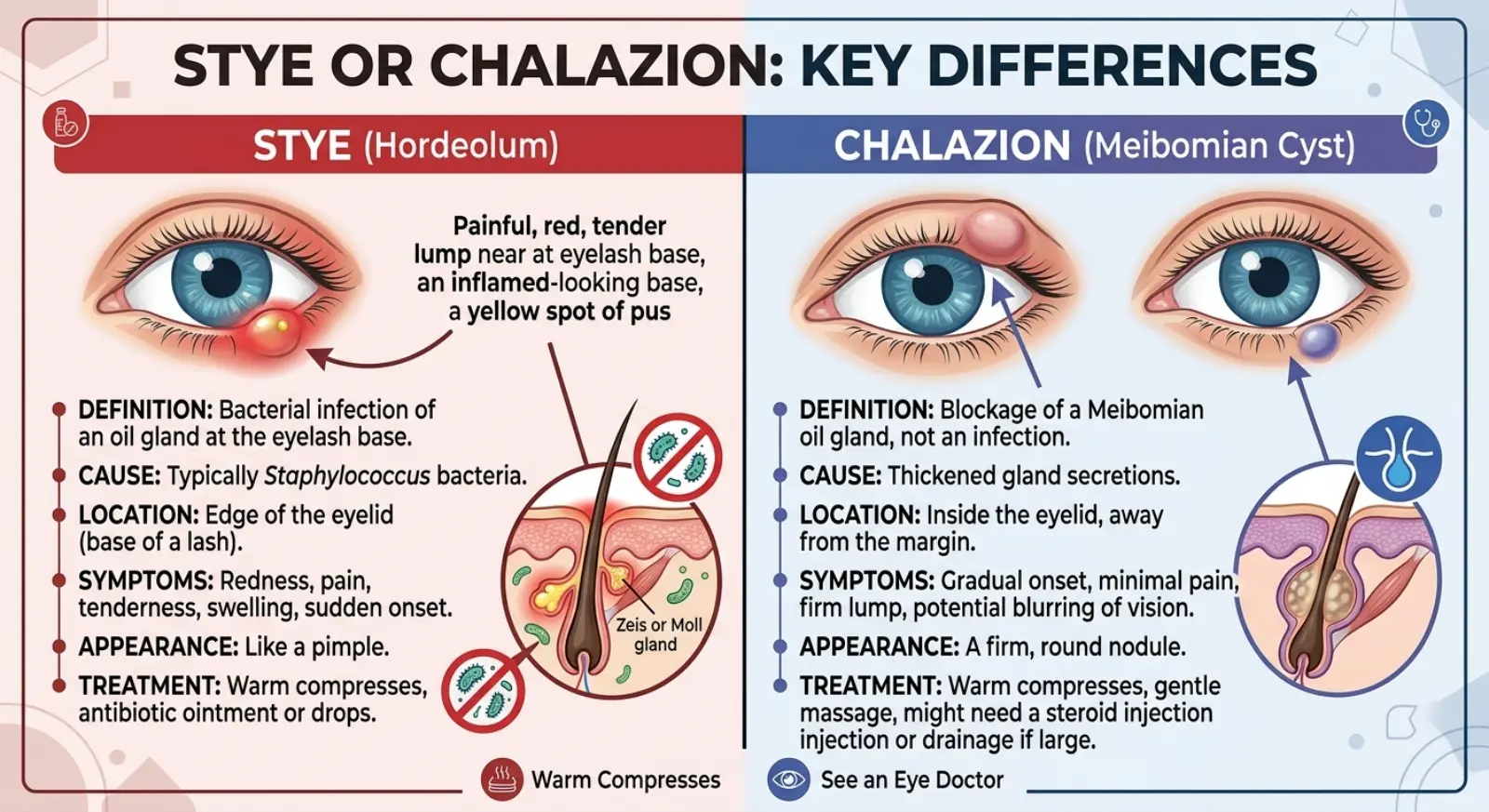
How Do You Tell a Stye From a Chalazion?
Look at three main clues: pain, location, and appearance.
A painful red lump near your eyelashes is more likely to be a stye. A firm lump with little pain is more likely to be a chalazion.
For example, imagine waking up with a tender red bump near your upper eyelashes. The eyelid feels sore when you touch it. This pattern fits a stye.
Now imagine finding a firm lump inside your upper eyelid. It causes little discomfort but stays for several weeks. This pattern fits a chalazion.
These clues can help, but they cannot replace an eye examination when symptoms are unusual.
Stye Symptoms to Watch For
A stye may cause several noticeable symptoms.
Common symptoms include:
- A painful eyelid bump
- Redness around the lump
- Eyelid tenderness
- Swelling
- Watery eyes
- Eyelid irritation
- A yellow spot containing pus
- Mild discharge in some cases
A stye can sometimes make the whole eyelid look swollen. However, widespread swelling or redness needs medical attention.
Chalazion Symptoms to Watch For
A chalazion often looks different from an active stye.
Typical symptoms include:
- A firm eyelid lump
- Little or no pain
- Mild irritation
- Eyelid swelling
- Local redness
- A feeling of eyelid heaviness
- Blurred vision in some larger cases
Large chalazia can sometimes press against the cornea. This pressure may affect vision.
What Causes a Stye?
Styes commonly involve bacteria and inflammation around eyelid glands or eyelash follicles. The affected area can become swollen and develop a small abscess.
Certain habits may increase irritation around the eyelids. Touching your eyes with unwashed hands can introduce bacteria. Old eye makeup can also irritate the eyelid.
Regular eyelid hygiene can help reduce irritation and support healthier eyelid margins.
What Causes a Chalazion?
A chalazion usually starts when an oil gland becomes blocked. The trapped oil can trigger inflammation and create a lump.
Chalazia may also occur alongside eyelid inflammation. Conditions such as blepharitis can contribute to recurring eyelid gland problems.
Some people develop chalazia repeatedly. Recurrent or unusual lumps deserve professional assessment.
Stye or Chalazion Treatment at Home
Warm compresses are a common first step for both conditions.
Follow these basic steps:
- Use a clean cloth.
- Soak it in warm water.
- Make sure the water is comfortable, not dangerously hot.
- Close your eye.
- Hold the warm cloth gently against the eyelid.
- Repeat several times each day.
- Keep your hands and eyelids clean.
Warmth can soften blocked oils and encourage natural drainage. Gentle eyelid massage may also help with a chalazion.
Do not press hard on the lump.
Stye vs. Chalazion: Comparison Table
| Feature | Stye | Chalazion |
|---|---|---|
| Medical name | Hordeolum | Chalazion |
| What it is | A painful infection or inflammation of an eyelid gland | A blocked oil gland in the eyelid |
| Pain | Usually painful and tender | Usually painless or mildly uncomfortable |
| Appearance | Red, swollen bump near the eyelash line | Firm, round lump deeper in the eyelid |
| Redness | Often red | Usually less red |
| Pus | May contain pus | Usually does not contain pus |
| Main cause | Bacterial infection, often involving Staphylococcus bacteria | Blocked meibomian (oil) gland |
| Location | Often appears along the eyelid edge | Usually develops inside the eyelid |
| Vision | Usually does not affect vision | A large chalazion may temporarily blur vision |
| Treatment | Warm compresses; medical treatment may be needed if it persists | Warm compresses; persistent cases may need medical treatment |
| Contagious? | The infection itself is not usually considered contagious | No |
| Typical course | Often improves within days to a couple of weeks | May take several weeks to resolve |
| When to seek care | If it becomes severe, spreads, or does not improve | If it persists, grows, affects vision, or keeps returning |
Quick takeaway: A stye is usually painful and red, while a chalazion is usually a painless, firm lump caused by a blocked oil gland.
Can You Pop a Stye or Chalazion?
No. Do not pop, squeeze, or puncture an eyelid lump yourself.
Trying to drain it yourself can increase irritation. It may also spread infection to nearby tissues.
Instead, use gentle warm compresses and allow the lump to drain naturally.
If the problem does not improve, an eye specialist can decide whether additional treatment is needed.
What Should You Avoid During Healing?
Certain habits can slow healing or increase irritation.
Avoid:
- Squeezing the lump
- Popping the lump
- Rubbing your eyes
- Sharing eye makeup
- Using old eye makeup
- Wearing contact lenses while the area remains irritated
- Applying unapproved products around the eye
Moorfields Eye Hospital recommends avoiding eye makeup and contact lenses while a chalazion heals. Similar precautions can help with a stye.
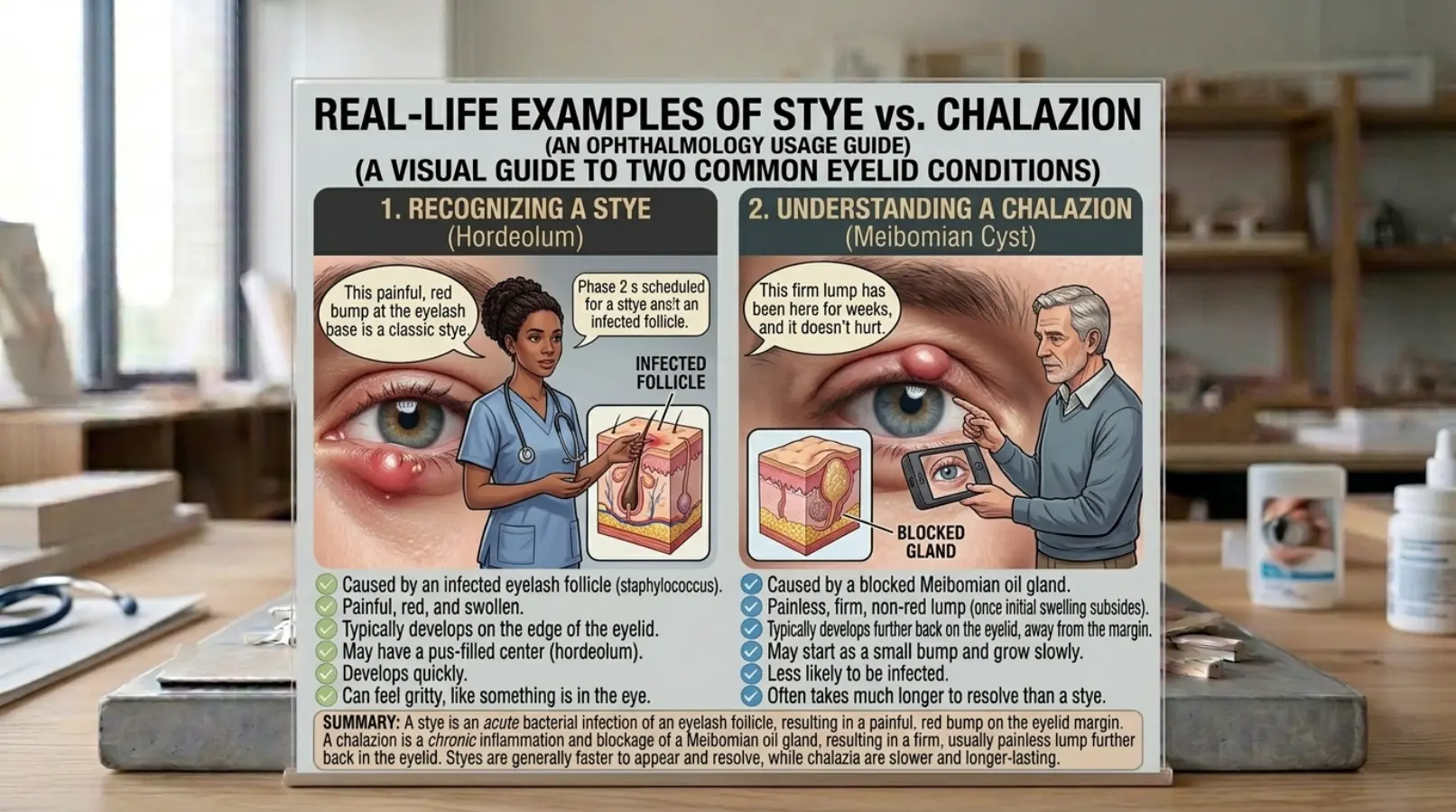
Real-Life Examples of Stye vs. Chalazion
Example 1:
Painful Red Bump
Sarah notices a painful red bump near her eyelashes. The area feels tender when touched.
Most likely: Stye.
The sudden painful lump fits the typical pattern of a stye.
Example 2:
Firm Painless Lump
David notices a small, firm lump inside his upper eyelid. It does not hurt much.
Most likely: Chalazion.
A painless, firm eyelid lump commonly fits a chalazion.
Example 3:
Lump That Changes Over Time
Maria first develops a painful eyelid bump. The pain later disappears, but a firm lump remains.
Possible explanation: The original stye may have settled while a chalazion-like lump remained.
A healthcare professional can confirm the diagnosis if the lump persists.
Common Mistakes People Make
Many people make simple mistakes when treating eyelid lumps.
1. Squeezing the Lump
This can increase irritation and potentially spread infection.
2. Using Very Hot Water
Very hot compresses can burn delicate eyelid skin. Use comfortably warm water instead.
3. Rubbing the Eye
Rubbing can worsen swelling and irritation.
4. Continuing Eye Makeup
Makeup can irritate the affected area. It can also contaminate products.
5. Wearing Contact Lenses
Contact lenses can increase discomfort while the eyelid heals.
6. Ignoring Persistent Lumps
A lump that keeps returning or does not improve deserves professional evaluation.
Tips to Help Prevent Future Eyelid Lumps
Good eyelid hygiene may help reduce recurring problems.
Try these simple habits:
- Wash your hands before touching your eyes.
- Remove eye makeup before sleeping.
- Keep makeup tools clean.
- Replace old eye makeup.
- Avoid sharing eye cosmetics.
- Clean your eyelids gently.
- Avoid rubbing your eyes.
- Follow proper contact lens hygiene.
These habits can reduce irritation and help maintain cleaner eyelid margins.
When Should You See a Doctor?
Most uncomplicated styes and chalazia are not emergencies. However, some symptoms need professional attention.
Seek medical advice if:
- The lump keeps getting worse.
- Redness spreads beyond the eyelid.
- The entire eyelid becomes very swollen.
- The swelling extends toward the cheek or face.
- Your vision becomes affected.
- You develop significant eye pain.
- The lump keeps returning.
- The lump does not improve with home care.
Mayo Clinic advises medical evaluation when a stye does not begin improving after about 48 hours or when redness and swelling spread.
Persistent or recurrent chalazia may also require further assessment. Rarely, other eyelid conditions can look similar to a chalazion.
Medical Treatment for a Stye or Chalazion
Most cases do not need surgery.
A healthcare professional may recommend additional treatment when symptoms persist or complications develop.
For a persistent stye, treatment may include prescription antibiotics in selected cases. A clinician may also drain a stye when necessary.
For a persistent chalazion, an eye specialist may consider procedures such as incision and curettage. Some cases may also receive other specialist treatments.
Treatment depends on the cause, size, duration, and symptoms.
Stye or Chalazion: Synonyms and Related Terms
Understanding related terms can make medical information easier to follow.
- Stye: Sty or hordeolum
- Chalazion: Meibomian gland cyst or blocked oil-gland lump
- Eyelid bump: General term for a lump on the eyelid
- Blepharitis: Inflammation of the eyelid margins
- Meibomian glands: Oil-producing glands in the eyelids
- Warm compress: Warm cloth applied to the closed eyelid
These terms describe related eyelid conditions, but they are not interchangeable in every medical context.
Frequently Asked Questions
Is a stye or chalazion more painful?
A stye is usually more painful. A chalazion is usually painless or only mildly tender.
Can a chalazion turn into a stye?
A blocked gland can become inflamed or infected. This can create symptoms that resemble a stye.
How long does a stye last?
Many styes improve within days or weeks. Warm compresses can support natural drainage and healing.
How long does a chalazion last?
Many chalazia improve over several weeks. Some can remain for months before fully disappearing.
Can I pop a stye?
No. You should not try to pop or puncture a stye yourself. This may spread infection.
Can a chalazion affect vision?
A large chalazion can sometimes press against the cornea. This may cause blurred vision or other visual changes.
Are styes and chalazia contagious?
A typical chalazion results from a blocked oil gland and is not considered contagious. A stye can involve bacteria, so good hand and eyelid hygiene remains important.
Should I see an eye doctor for a chalazion?
See an eye professional if the lump persists, repeatedly returns, becomes very painful, or affects vision. Recurrent or unusual lumps may need further evaluation.
Expert Insights: Stye or Chalazion
The most useful clue is the type of lump and level of pain.
A sudden, painful, red lump near the lashes often points toward a stye. A slower-growing, firm, painless lump often points toward a chalazion.
However, symptoms can overlap. A healthcare professional should evaluate persistent, recurrent, or unusual eyelid lumps.
From an eye-health perspective, avoid aggressive home treatment. Warm compresses are safer than squeezing or puncturing the lump.
Also remember that a persistent eyelid lump does not always represent a simple stye or chalazion. Recurrent or atypical lesions may require specialist assessment.
Internal Linking Suggestions
For a stronger SEO content cluster, consider linking this article to related pages such as:
- Blepharitis vs. Dry Eye
- How to Clean Your Eyelids Safely
- Why Do I Have a Bump on My Eyelid?
- Common Causes of Eye Irritation
- Eye Makeup Hygiene Tips
- When Should You See an Eye Doctor?
- How to Use a Warm Compress for Eye Problems
These topics can create a useful internal-linking structure around eye health.
Conclusion:
Understanding stye or chalazion becomes easier when you know their key differences. A stye usually causes a painful, red lump near the eyelash line. A chalazion usually causes a firm lump with little or no pain. Styes often involve infection or acute inflammation. Chalazia usually result from blocked oil glands.
Both conditions often improve with simple care. Warm compresses can encourage natural drainage and reduce discomfort. Avoid squeezing, popping, or rubbing the affected eyelid. Also avoid eye makeup and contact lenses while the area heals.
If swelling spreads, vision changes, or the lump persists, seek professional advice. The simple takeaway is this: pain often points toward a stye, while a painless firm lump often points toward a chalazion.

Emma Collins is a language writer and grammar enthusiast specializing in English vocabulary, spelling comparisons, and word usage guides. She creates easy-to-understand content that helps readers improve their writing, communication, and language skills with confidence.