
Layed up or laid up is a common spelling question that confuses many English learners and native speakers alike. At first glance, both phrases may seem correct. However, only one follows standard English grammar rules.
Many people write “layed up” when talking about illness, injury, or being unable to work. Yet dictionaries and grammar experts recommend a different spelling.
In this guide, you will learn the correct form, its meaning, and how to use it in daily life. You will also see examples, common mistakes, and memory tricks that make the answer easy to remember.
By the end, you will know exactly when to use “laid up” and why “layed up” is usually incorrect.
Quick Summary Box
- ✅ Correct phrase: laid up
- ❌ Incorrect phrase: layed up
- Meaning: Unable to do normal activities because of illness or injury
- “Laid” is the past tense and past participle of “lay”
- “Layed” is not accepted in standard English
- Example: She was laid up with the flu for a week.
What Does “Laid Up” Mean?
“Laid up” means someone cannot perform normal activities because they are sick, injured, or recovering.
People often use this phrase when describing a temporary condition.
Examples
- He was laid up with a broken leg.
- She stayed home because she was laid up with the flu.
- My grandfather was laid up after surgery.
The phrase suggests that a person needs rest and cannot continue their usual routine.
1:Is It Layed Up or Laid Up?
1.1:The correct phrase is laid up.
Many people mistakenly write “layed up,” but standard English dictionaries do not recognize it as correct.
Correct
- I was laid up for two weeks after the accident.
Incorrect
- I was layed up for two weeks after the accident.
Always choose laid up when writing or speaking.
2: Why Is “Laid Up” Correct?
The confusion comes from the verb lay.
The verb forms are:
| Verb Form | Word |
|---|---|
| Base Form | Lay |
| Past Tense | Laid |
| Past Participle | Laid |
| Present Participle | Laying |
Notice that laid is the correct past form.
English does not normally use layed as the past tense of lay.
Therefore, the phrase becomes laid up, not layed up.
Layed Up vs Laid Up Comparison Table
| Feature | Layed Up | Laid Up |
|---|---|---|
| Standard English | ❌ No | ✅ Yes |
| Found in Dictionaries | ❌ Rarely | ✅ Yes |
| Grammatically Correct | ❌ No | ✅ Yes |
| Common Online Mistake | ✅ Yes | ❌ No |
| Professional Writing | ❌ Avoid | ✅ Use |
| Example | Layed up with flu | Laid up with flu |
Winner
Laid up is always the correct choice.
3:How “Laid Up” Is Used in Daily Life
People use “laid up” in many everyday situations.
Illness
- I was laid up with a bad cold.
Injury
- He was laid up after hurting his back.
Recovery
- She remained laid up for several days after surgery.
Sports
- The athlete was laid up with a knee injury.
The phrase appears often in conversations, news reports, and medical discussions.
Rear Life Eaxmple Laid up
Here are examples you may hear in everyday English.
Example 1
My brother was laid up with the flu all week.
Example 2
The worker was laid up after a workplace accident.
Example 3
“She spent a month laid up recovering from surgery.”
Example 4
Our coach was laid up with a back injury.
Example 5
He has been laid up since slipping on ice.
These examples show how the phrase relates to temporary physical limitations.

Common Mistakes People
Mistake 1: Using “Layed Up”
❌ I was layed up for days.
✅ I was laid up for days.
Mistake 2: Confusing Lay and Lie
People often mix up the verbs “lay” and “lie.”
- Lay = put something down
- Lie = recline or rest
This confusion often leads to spelling mistakes.
Mistake 3: Assuming Layed Is a Real Verb Form
Many people think adding “-ed” creates the past However, “lay” is an irregular verb.
Its past tense is laid, not layed.
Easy Trick to Remember the Correct Spelling
A simple memory trick can help.
Think of These Pairs
- Pay → Paid
- Lay → Laid
Notice the pattern.
You would never write “payed” in most situations. Likewise, you should not write “layed up.”
Quick Memory Rule
If someone is sick or injured, they are “laid up.”
This rule works every time.
Synonyms for “Laid Up”
Using synonyms can improve your writing.
Common Synonyms
- Sick
- Injured
- Recovering
- Bedridden
- Unwell
- Incapacitated
- Out of action
- Under the weather
- Convalescing
Example
Original:
- He was laid up after surgery.
Alternative:
- He was recovering after surgery.
These variations help avoid repetition.
Related Terms and LSI Keywords
Search engines often associate these related phrases with the topic.
LSI Keywords
- laid up meaning
- laid up definition
- layed or laid
- laid up with illness
- laid up with injury
- correct spelling of laid
- grammar rules for lay and laid
- laid up examples
- English spelling mistakes
Using these terms naturally can improve topical relevance.
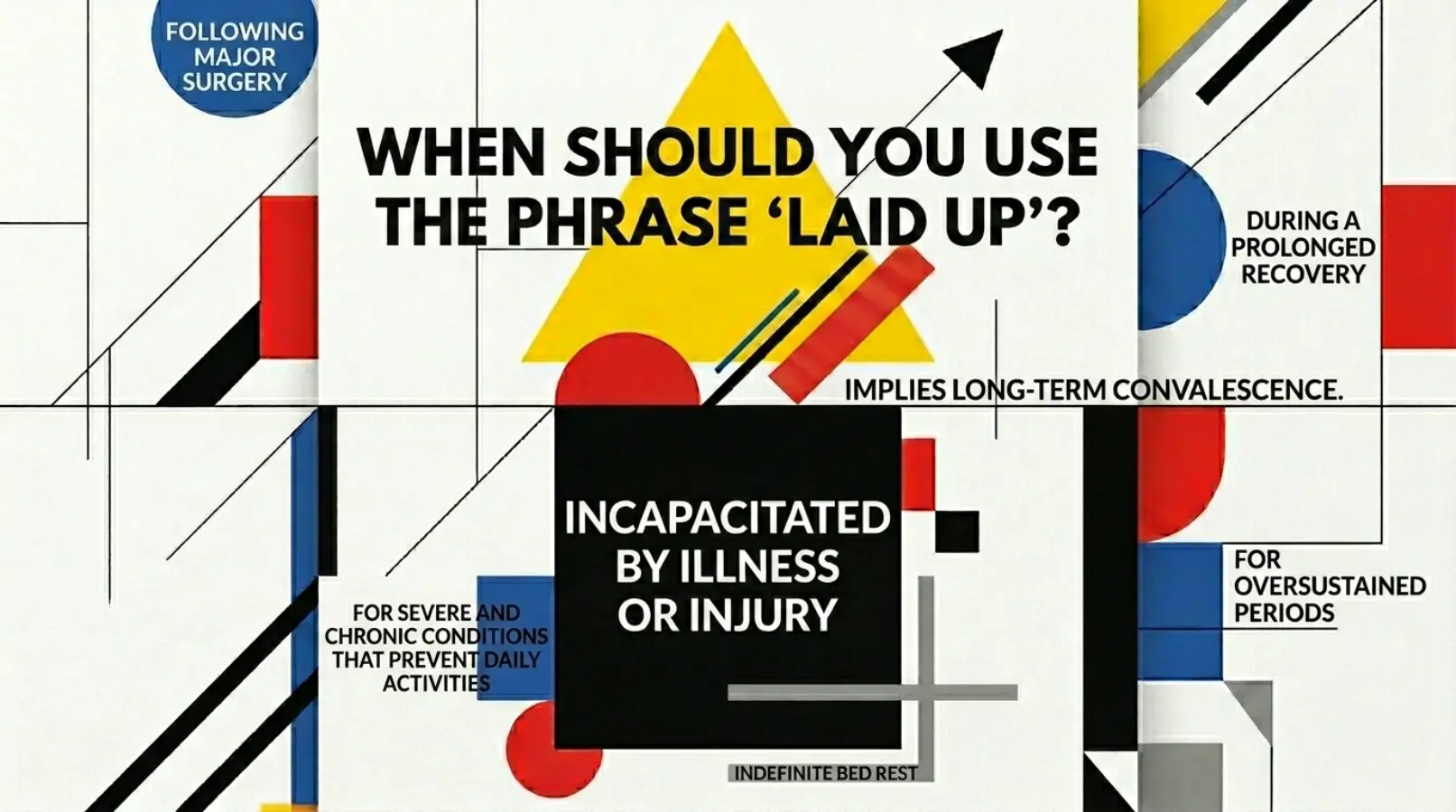
When Should You Use “Laid Up”?
Appropriate Situations
- Illness
- Recovery
- Medical treatment
- Sports injuries
- Physical limitations
Example Sentences
- She was laid up after her operation.
- He remained laid up for several weeks.
- The player was laid up with a shoulder injury.
Expert Insight: Why This Grammar Rule Matters
Correct spelling builds trust with readers.
Search engines also favor high-quality content with proper grammar.
Using “laid up” instead of “layed up” helps:
- Improve credibility
- Avoid reader confusion
- Strengthen professional writing
- Enhance communication clarity
Grammar experts consistently recommend using “laid up” because it follows established English rules.
Whether you write emails, blogs, or reports, choosing the correct form creates a stronger impression.
Internal Linking Suggestions
To strengthen SEO, link this article to related topics such as:
- Lay vs Lie Explained
- Common English Grammar Mistakes
- Paid vs Payed
- Affect vs Effect
- Everyday English Vocabulary
- Commonly Confused Words
These related articles help readers explore similar grammar questions.
Frequently Asked Questions
1: Is “layed up” ever correct?
No. Standard English uses laid up, not layed up.
What does “laid up” mean?
It means someone cannot perform normal activities because of illness or injury.
Why do people write “layed up”?
Many people mistakenly apply a regular “-ed” ending to the verb “lay.”
2:Is “laid up” an idiom?
Yes. It functions as a common English expression.
Can I say “laid up with the flu”?
Yes. That is a correct and natural phrase.
3: Is “laid up” formal or informal?
It works in both formal and informal English.
What is the past tense of lay?
The past tense of “lay” is laid.
Is “layed” a dictionary word?
In standard English, it is generally not accepted as the past tense of “lay.”
Conclusion
The answer to layed up or laid up is simple: laid up is the correct form. The phrase means someone is unable to carry out normal activities because of illness, injury, or recovery. While many people write “layed up,” grammar experts and dictionaries consistently recommend “laid up.”
Remember the easy rule: lay becomes laid, just as pay becomes paid. This simple trick helps prevent mistakes in everyday writing.
Whether you are writing an email, school assignment, blog post, or social media update, always choose laid up. Using the correct spelling improves clarity, strengthens credibility, and ensures your English sounds natural and professional.

Michael Reed is a language content writer and word comparison researcher based in the United States. He studied English Language and Communication and focuses on grammar, spelling differences, and word usage. His work helps readers understand confusing English words through clear comparisons and practical explanations. Michael creates simple, reader-friendly content designed to improve everyday language skills.