
Introduction
Nosey or nosy UK is a common spelling question that confuses many English speakers. Both words describe someone who is too interested in other people’s business. However, many people wonder which spelling is correct in the UK.
English spelling often changes between regions. Some words have different forms in British and American English. This creates confusion for writers, students, and professionals.
In this guide, you will learn the difference between nosey and nosy, how people use them in the UK, and which spelling dictionaries prefer. You will also see real-life examples, common mistakes, expert tips, and answers to frequently asked questions.
By the end, you will know exactly when to use each spelling with confidence.
Quick Summary Box
- Nosy and nosey have the same meaning.
- Both describe someone who is overly curious.
- Nosy is the preferred spelling in modern dictionaries.
- Nosey is still accepted in some British writing.
- Most UK style guides recommend nosy.
- The word often has a negative meaning.
- Example: “My nosy neighbour asks too many questions.”
What Does Nosey or Nosy Mean?
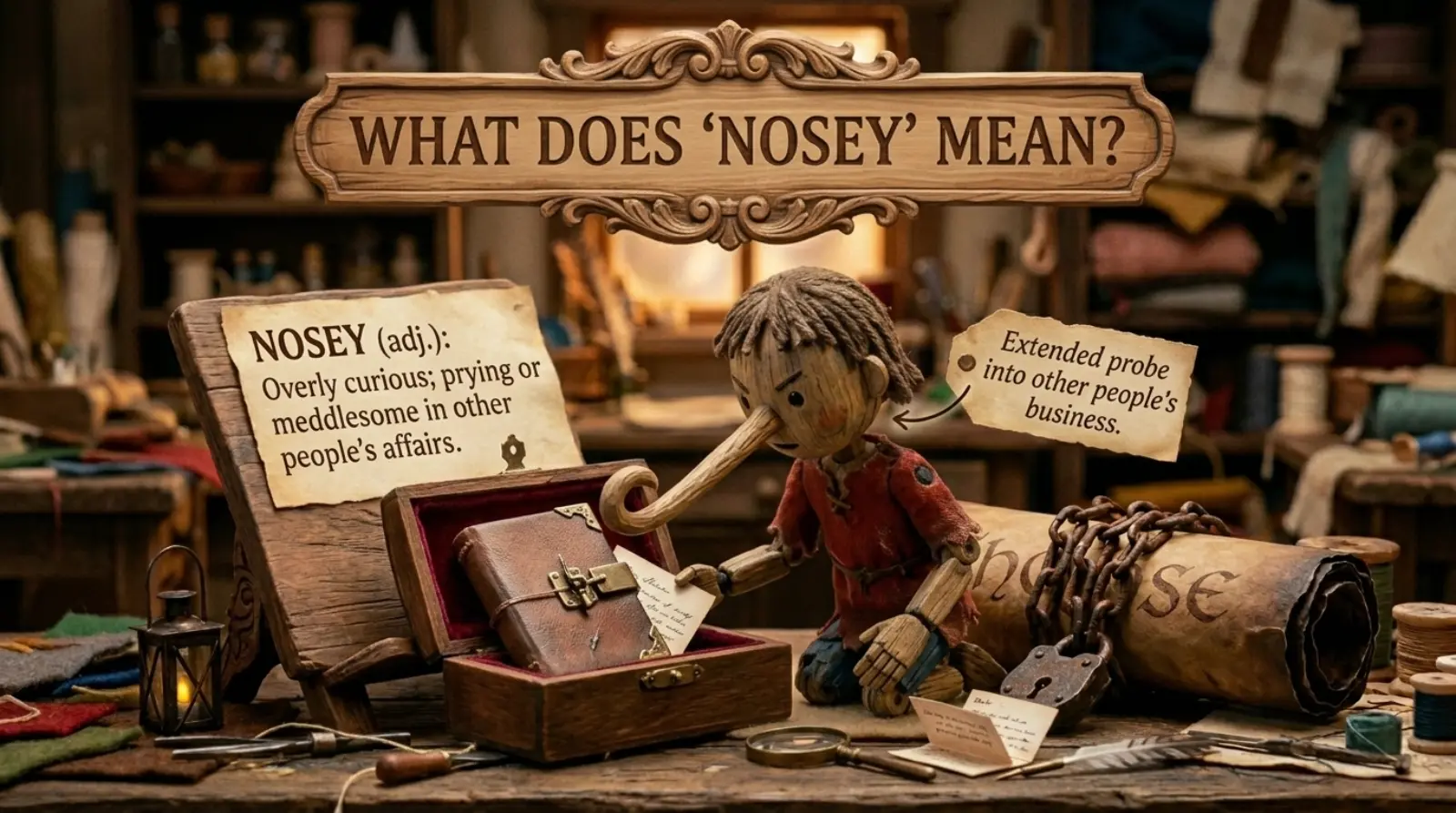
The words nosey and nosy describe a person who takes too much interest in other people’s affairs.
A nosy person often asks personal questions. They may listen to private conversations or seek information that does not concern them.
Simple Definition
Nosy (or nosey): Too interested in other people’s private matters.
Example
- Sarah is very nosy and always wants to know everyone’s news.
- My nosey neighbour watches who visits our house.
It Is a Nosey or Nosy UK
In the UK, both spellings appear in writing. However, nosy is generally the preferred modern spelling.
Many major dictionaries list nosy as the main version. Some also recognize nosey as an alternative spelling.
If you want the safest choice for professional or academic writing, use nosy.
Quick Answer
- Preferred UK spelling: Nosy
- Alternative spelling: Nosey
- Meaning: Exactly the same
Nosey vs Nosy Comparison Table
| Feature | Nosy | Nosey |
|---|---|---|
| Meaning | Overly curious | Overly curious |
| Accepted in UK | Yes | Yes |
| Preferred by dictionaries | Yes | Less common |
| Modern usage | More common | Less common |
| Formal writing | Recommended | Usually avoided |
| Informal writing | Accepted | Accepted |
Winner
For most UK writing, choose nosy.
Why Do Two Spellings Exist?
English spelling changes over time. Some words develop more than one accepted form.
The spelling nosey likely came from the word nose. People associated a curious person with someone sticking their nose into other people’s business.
Later, nosy became shorter and more popular. Today, many writers prefer the simpler version.
How People Use Nosy in Daily Life
The word appears often in everyday conversations.
Examples
- My nosy coworker asks about everyone’s salary.
- The children became nosy when they heard a strange noise.
- Don’t be so nosy about my weekend plans.
- Our nosy neighbour knows everything happening on the street.
- She looked through my desk because she was nosy.
These examples show how the word usually describes unwanted curiosity.
Real-Life Examples of Nosey and Nosy
At Work
A colleague keeps asking about your promotion.
- “He’s being nosy about my career plans.”
At School
A student reads another student’s messages.
- “That was a nosy thing to do.”
In the Neighborhood
Someone watches every visitor arriving at your house.
- “Our nosy neighbour notices everything.”
Within Families
A relative asks many personal questions.
- “My aunt can be a bit nosy sometimes.”
Common Mistakes People Make
Many writers make simple mistakes when using these words.
Mistake 1: Thinking One Is Completely Wrong
Both spellings are accepted.
Mistake 2: Mixing Spellings in One Article
Choose one spelling and stay consistent.
Mistake 3: Using Nosey in Formal Writing
Most editors prefer nosy.
Mistake 4: Confusing It with Nose
The adjective does not refer to a person’s physical nose.
When Should You Use Nosy?
Use nosy when:
- Writing blog posts
- Creating academic content
- Writing professional emails
- Publishing business content
- Following modern style guides
Example
“The journalist avoided asking nosy questions.”
When Might You Use Nosey?
Some people still prefer nosey because it looks closer to the word nose.
You may see it in:
- Older books
- Informal messages
- Personal blogs
- Creative writing
Example
“My nosey cousin always checks everyone’s social media.”

Synonyms for Nosy
Using related words can improve your writing.
Common Synonyms
- Curious
- Inquisitive
- Meddlesome
- Intrusive
- Prying
- Snoopy
- Interfering
- Busybody
Example
Instead of saying:
- “She is nosy.”
You could write:
- “She is very inquisitive.”
- “She can be quite intrusive.”
Related Keywords and LSI Terms
Search engines associate several related terms with nosey or nosy UK.
LSI Keywords
- nosy meaning
- nosey meaning
- nosy person
- British English spelling
- curious person
- meddlesome behaviour
- intrusive questions
- nosy neighbour
- nosey neighbour
- correct UK spelling
Using these naturally helps improve SEO relevance.
How to Remember the Correct UK Spelling
A simple memory trick can help.
Easy Tip
Think of modern dictionaries.
Modern dictionary = modern spelling = nosy
When unsure, choose nosy.
Most editors, teachers, and publishers will accept it without question.
Expert Insight: Why This Spelling Matters
Small spelling choices affect credibility.
Readers expect consistency and accuracy. Using the preferred spelling can make your writing look more professional.
As an SEO content writer, I recommend using nosy for UK audiences because:
- It matches modern dictionary preferences.
- It appears more often in current content.
- It creates consistency across articles.
- Editors are more likely to approve it.
While nosey remains acceptable, nosy is usually the safer choice.
Nosey or Nosy UK: Featured Snippet Answer
In the UK, both “nosey” and “nosy” are accepted spellings of the same word. However, “nosy” is the preferred spelling in modern British English and is recommended for formal and professional writing.

FAQs
Is nosey correct in British English?
Yes. Nosey is accepted in British English, but it is less common than nosy.
Which spelling is more common in the UK?
Nosy is generally more common in modern UK writing.
Do nosey and nosy mean the same thing?
Yes. Both words describe someone who is overly curious about other people’s affairs.
Should I use nosy in formal writing?
Yes. Most editors and style guides prefer nosy.
Is nosey an old-fashioned spelling?
Many people consider nosey the older or less common version.
Can I use nosey in creative writing?
Yes. Creative writing allows either spelling.
What is a nosy neighbour?
A nosy neighbour takes excessive interest in other people’s lives and activities.
Is nosy a negative word?
Usually, yes. It often suggests unwanted curiosity.
Internal Linking Suggestions
If you run a grammar or language website, link this article to:
- Nosy vs Nosey
- Curious vs Inquisitive
- British vs American English Spellings
- Common English Spelling Mistakes
- Neighbor or Neighbour
These links can improve user engagement and SEO performance.
Conclusion
Understanding nosey or nosy UK is easier than it first appears. Both spellings are accepted and share the same meaning. They describe someone who takes too much interest in other people’s private matters.
However, modern British English generally prefers nosy. Most dictionaries, editors, and style guides recommend this spelling. For professional, academic, and online writing, nosy is usually the best choice.
If you encounter nosey, do not assume it is incorrect. It remains a recognized alternative spelling. The key is consistency. Choose one spelling and use it throughout your writing.
For most UK readers, nosy is the safest and most widely accepted option.

Emma Collins is a language writer and grammar enthusiast specializing in English vocabulary, spelling comparisons, and word usage guides. She creates easy-to-understand content that helps readers improve their writing, communication, and language skills with confidence.