
Unshakable or unshakeable is a question many English learners and writers ask. Both words look similar. However, one spelling appears more often in modern writing.
These words describe something that cannot be shaken, changed, or weakened. People use them to talk about confidence, faith, beliefs, trust, and determination.
The confusion happens because English often allows different spelling forms. Yet some versions become more popular over time.
In this guide, you will learn the difference between unshakable and unshakeable, their meanings, examples, common mistakes, and the correct way to use them in daily writing.
By the end, you will know which spelling works best in professional, academic, and everyday English.
Quick Summary Box
- Unshakable and unshakeable have the same meaning.
- Both words are correct English spellings.
- Unshakable is more common in modern English.
- Unshakeable is an accepted alternative spelling.
- The words describe strong confidence, belief, trust, or determination.
- Most style guides prefer unshakable.
- Use one spelling consistently throughout your writing.
What Does Unshakable Mean?
Unshakable means something cannot be disturbed, weakened, or changed.
It often describes:
- Strong confidence
- Firm beliefs
- Deep trust
- Steady determination
- Emotional strength
Simple Definition
Unshakable = so strong that nothing can change or weaken it.
Example Sentences
- She has unshakable confidence in her abilities.
- His unshakable faith helped him through difficult times.
- The team showed unshakable determination.
What Does Unshakeable Mean?
Unshakeable has exactly the same meaning as unshakable.
The extra “e” does not change the definition.
Example Sentences
- They shared an unshakeable friendship.
- Her unshakeable belief inspired others.
- He remained unshakeable under pressure.
Both examples express strength and stability.
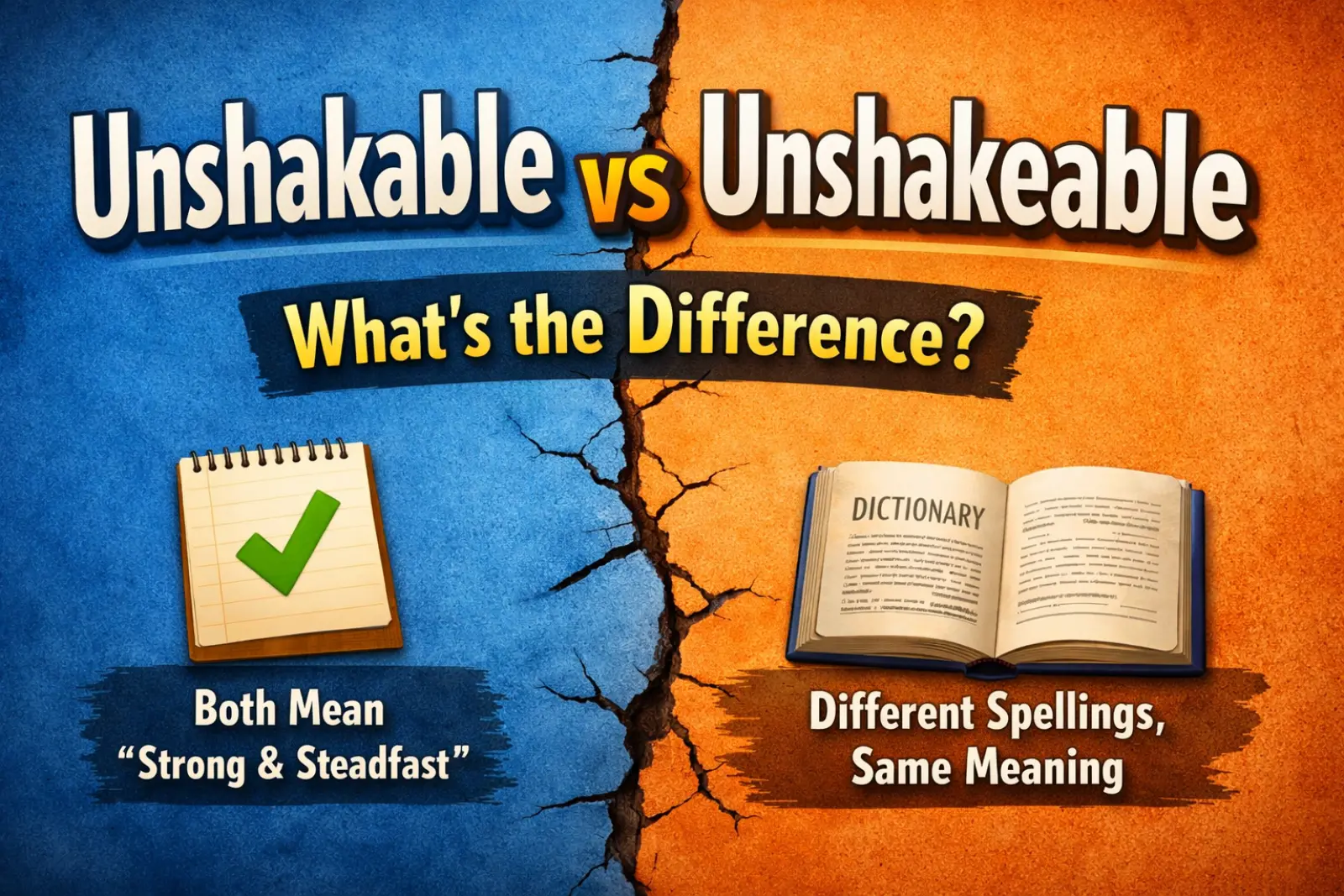
Unshakable vs Unshakeable: What’s the Difference?
The main difference is spelling.
There is no difference in meaning, pronunciation, or usage.
Comparison Table
| Feature | Unshakable | Unshakeable |
|---|---|---|
| Meaning | Cannot be weakened | Cannot be weakened |
| Pronunciation | Same | Same |
| Modern Usage | More common | Less common |
| Accepted English | Yes | Yes |
| Professional Writing | Preferred | Acceptable |
| Dictionary Recognition | Yes | Yes |
Quick Answer
If you are unsure, choose unshakable because it appears more often in modern English.
Why Are There Two Spellings?
English has many words with alternative spellings.
This happens because language changes over time.
Some words lose letters and become simpler.
For example:
| Traditional Form | Modern Form |
|---|---|
| Acknowledgement | Acknowledgment |
| Judgement | Judgment |
| Unshakeable | Unshakable |
As English evolved, many writers began favoring shorter spellings.
Which Spelling Is More Common?
Today, unshakable appears more frequently in:
- Books
- News articles
- Business writing
- Academic content
- Online publications
Many editors choose unshakable because it follows modern spelling trends.
However, readers will still understand unshakeable.
When Should You Use Unshakable?
Use unshakable when writing:
Professional Documents
- Reports
- Business emails
- Presentations
Academic Writing
- Essays
- Research papers
- Assignments
Online Content
- Blogs
- Websites
- Articles
Example
“The company built an unshakable reputation for quality.”
Real-Life Examples of Unshakable
In Confidence
A student believes in their abilities before an exam.
Example:
“She entered the room with unshakable confidence.”
In Friendship
Friends support each other through challenges.
Example:
“They developed an unshakable bond.”
In Business
Customers trust a reliable brand.
Example:
“The company earned unshakable customer loyalty.”
In Sports
Athletes stay focused despite setbacks.
Example:
“His unshakable determination led to victory.”
Common Mistakes People Make
1. Thinking One Spelling Is Wrong
Many people believe one version is incorrect.
Both spellings are valid.
2. Mixing Spellings
Avoid switching between forms in the same article.
Choose one and stay consistent.
3. Using the Word Too Often
Repeating the same word can hurt readability.
Use synonyms when appropriate.
4. Confusing Meaning
The word does not mean physically impossible to move.
It often refers to emotions, beliefs, or confidence.
How to Remember the Preferred Spelling
A simple trick helps.
Think about the base word:
Shake → Shakable
Many modern writers drop the extra “e.”
So:
- Shake → Shakable
- Unshakeable → Unshakable
Memory Tip
Shorter spelling = more modern spelling.
This makes unshakable easier to remember.
Synonyms of Unshakable
Using related words improves writing quality and SEO.
Common Synonyms
- Firm
- Steady
- Strong
- Resolute
- Determined
- Confident
- Secure
- Loyal
- Constant
- Stable
Example
Instead of:
“He had unshakable confidence.”
You can write:
“He had unwavering confidence.”
Related Keywords and LSI Terms
Search engines associate these terms with unshakable.
LSI Keywords
- unwavering confidence
- strong determination
- firm belief
- steadfast faith
- unwavering trust
- resilient mindset
- strong conviction
- emotional strength
- unwavering commitment
- mental toughness
Use these naturally throughout content.
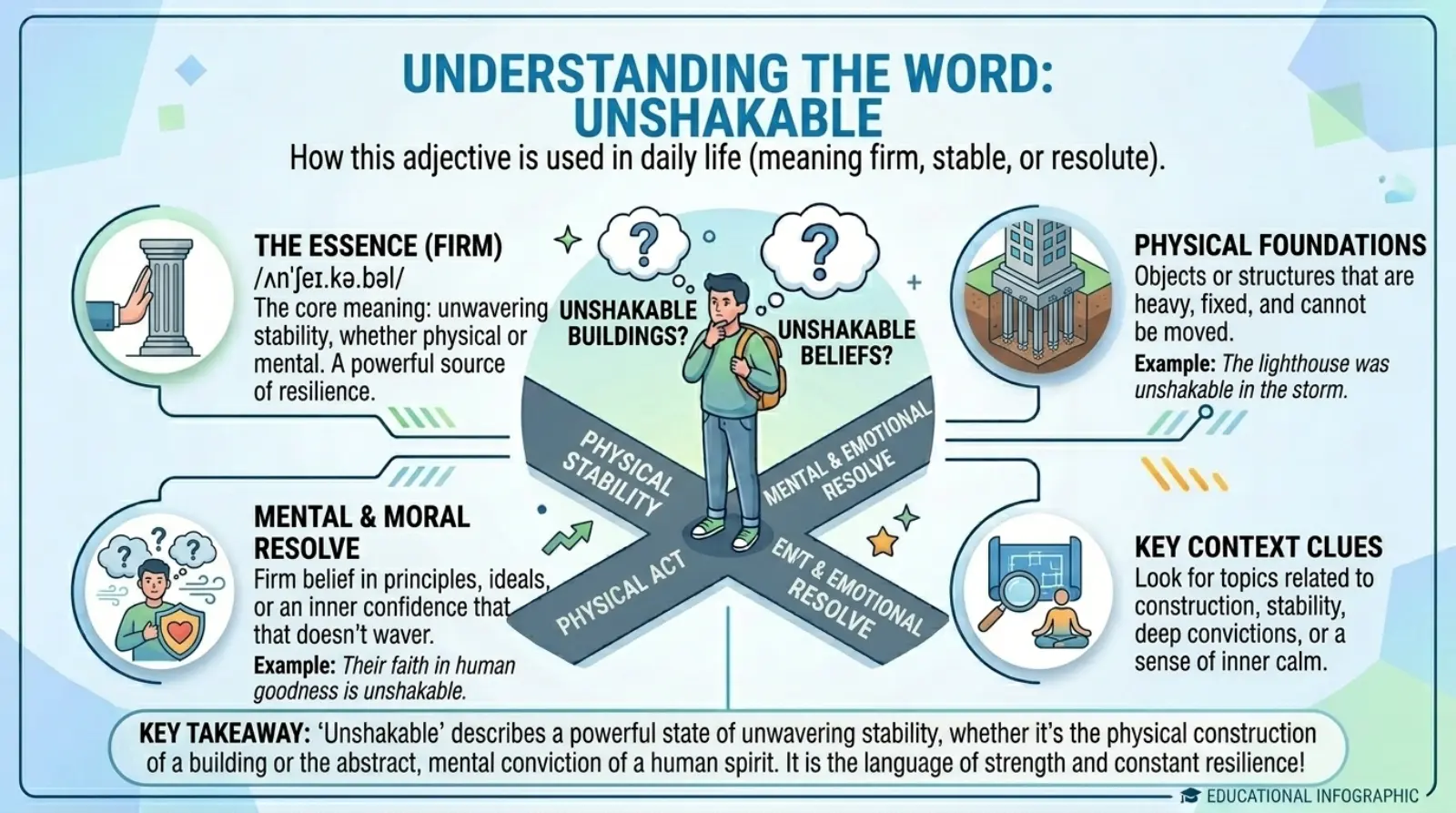
How Unshakable Is Used in Daily Life
People use this word often in everyday situations.
Family
“My parents gave me unshakable support.”
Education
“She showed unshakable dedication to learning.”
Work
“The manager displayed unshakable leadership.”
Relationships
“They built unshakable trust.”
Personal Growth
“He developed unshakable self-confidence.”
Expert Insight: Why This Word Matters
Strong language creates a stronger message.
Words like unshakable help readers understand emotional strength and commitment.
Professional writers often choose precise words because they improve clarity.
From an SEO perspective, understanding spelling variations helps capture more search traffic.
People search for both unshakable and unshakeable. Therefore, covering both forms can increase visibility.
Writers should focus on consistency and audience expectations.
Most modern publications prefer unshakable because it aligns with current usage patterns.
Internal Linking Suggestions
If you run a grammar or language website, link to articles about:
- Common spelling mistakes
- Homophones and confusing words
- British vs American spelling
- Grammar tips
- Vocabulary improvement
- Writing guides
- Word choice examples
These related topics improve user engagement and SEO.
FAQs
Is unshakable or unshakeable correct?
Both spellings are correct. However, unshakable is more common today.
Which spelling should I use?
Use unshakable for modern and professional writing.
Do the words have different meanings?
No. Both words have the same meaning.
Is unshakeable outdated?
Not completely. It is still accepted but less common.
How do you pronounce unshakable?
It is pronounced: uhn-SHAY-kuh-buhl.
Can I use unshakeable in formal writing?
Yes. Most readers will recognize it.
Why is unshakable more popular?
Modern English often favors shorter spellings.
Is unshakable a positive word?
Usually yes. It often describes strength, confidence, and determination.
Conclusion
The debate over unshakable or unshakeable is mostly about spelling preference. Both words are correct and carry the same meaning. They describe something strong, steady, and impossible to weaken.
Today, unshakable appears more often in books, articles, business writing, and online content. For that reason, it is usually the safer choice. Still, unshakeable remains an accepted alternative.
The most important rule is consistency. Pick one spelling and use it throughout your writing. If you want a modern, widely accepted option, choose unshakable.
Remember: whether you write unshakable or unshakeable, the message remains the same—strength that does not break.

Michael Reed is a language content writer and word comparison researcher based in the United States. He studied English Language and Communication and focuses on grammar, spelling differences, and word usage. His work helps readers understand confusing English words through clear comparisons and practical explanations. Michael creates simple, reader-friendly content designed to improve everyday language skills.