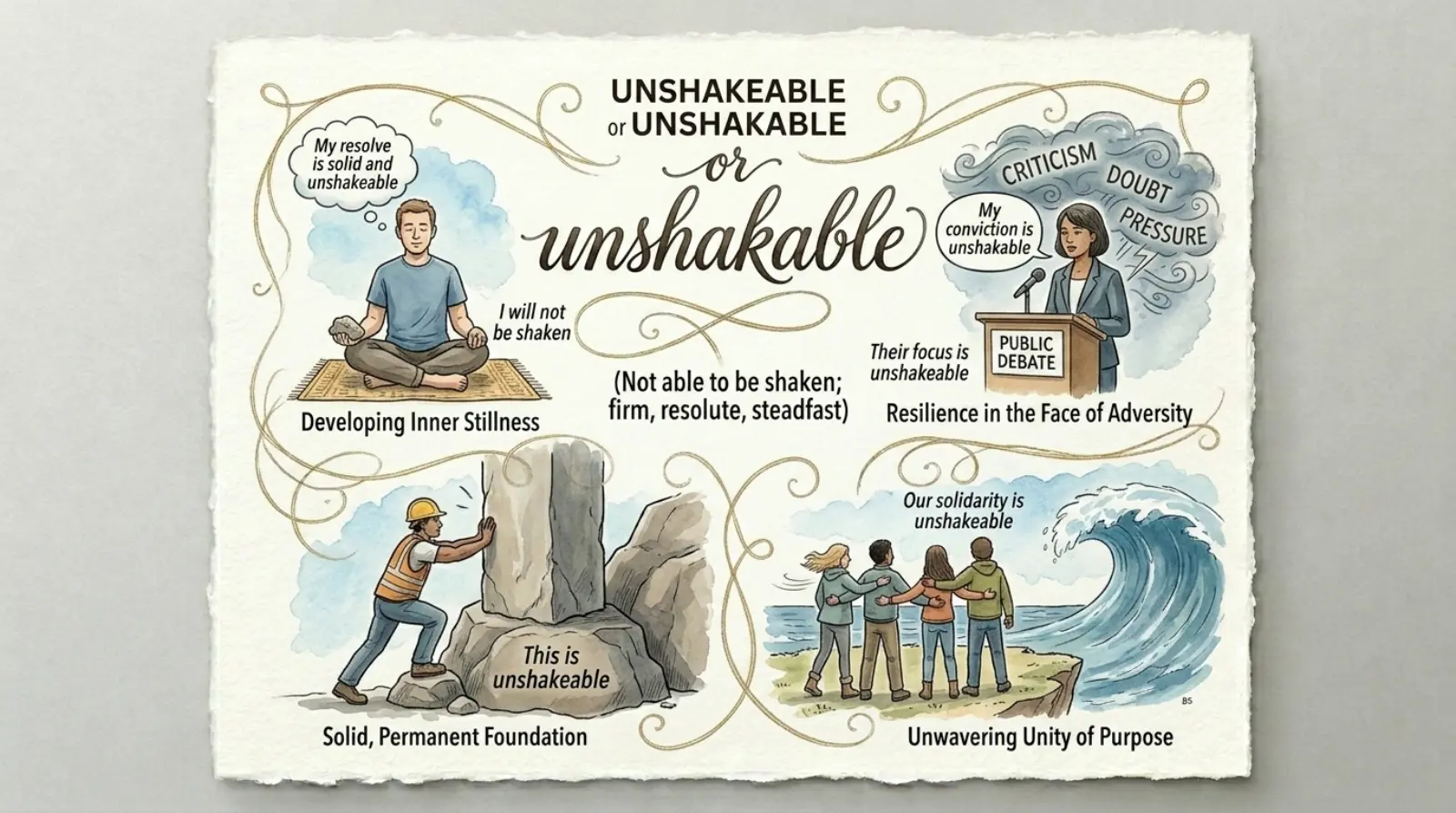
Unshakeable or unshakable is a common spelling question that confuses many English learners and writers. Both words look very similar. However, people often wonder which version is correct and when to use it.
The good news is simple. Both spellings are accepted in English. Yet one version appears more often in modern writing.
Understanding the difference helps you write with confidence. It also helps you avoid mistakes in school, work, and daily communication.
In this guide, you will learn the meaning of both spellings, see real-life examples, compare their usage, and discover which version experts recommend. By the end, you will know exactly when to use unshakeable and unshakable.
Quick Summary Box
- Unshakeable and unshakable have the same meaning.
- Both spellings are correct.
- They describe something strong, firm, or impossible to weaken.
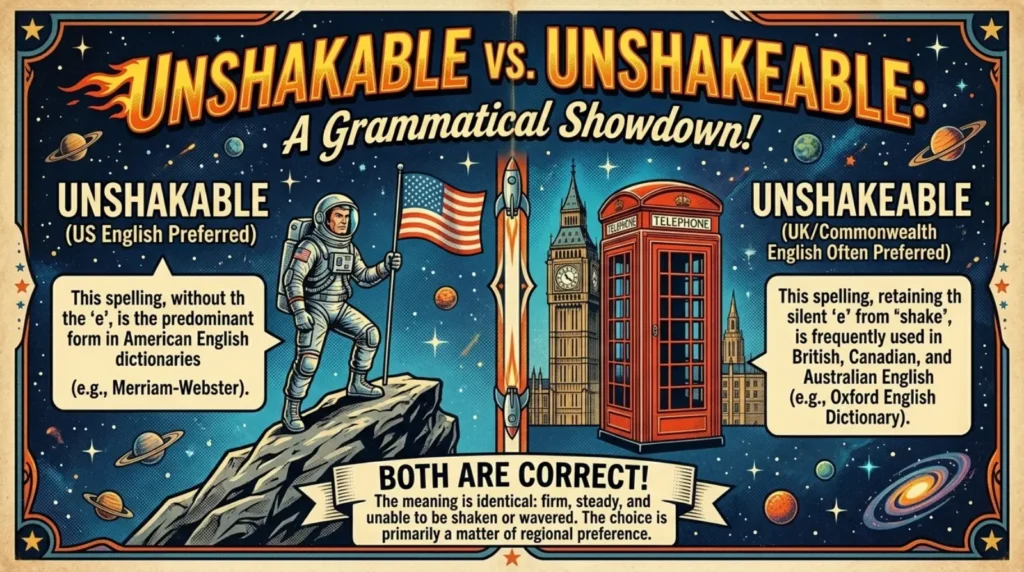
- Unshakable is more common in modern English.
- Unshakeable is often seen in British-style writing.
- The choice depends on style and preference.
- Always stay consistent throughout your writing.
What Does Unshakeable or Unshakable Mean?
The words unshakeable and unshakable describe something that cannot be shaken, weakened, changed, or disturbed.
They often refer to:
- Strong beliefs
- Confidence
- Faith
- Determination
- Trust
- Commitment
Simple Definition
Unshakeable/Unshakable: So strong that nothing can change or weaken it.
Example
- She had an unshakable belief in her team’s success.
- His unshakeable confidence helped him overcome challenges.

Is It Unshakeable or Unshakable?
Both spellings are correct.
However, unshakable is generally more popular in modern English.
Quick Answer
| Spelling | Correct? | Usage |
|---|---|---|
| Unshakable | Yes | More common today |
| Unshakeable | Yes | Less common but accepted |
Most dictionaries recognize both versions.
Why Are There Two Spellings?
English often allows multiple spellings of the same word.
The difference comes from how the suffix is added.
Formation
- Shake + able = Shakeable
- Shake + able with added “e” = Shakeable
- Negative form = Unshakeable
Over time, many writers preferred dropping the extra “e.”
This led to the shorter form:
- Unshakable
Today, both versions remain acceptable.
Unshakeable vs Unshakable Comparison Table
| Feature | Unshakeable | Unshakable |
|---|---|---|
| Meaning | Same | Same |
| Correct Spelling | Yes | Yes |
| Modern Usage | Less common | More common |
| Professional Writing | Accepted | Preferred |
| Dictionaries | Listed | Listed |
| Readability | Good | Slightly cleaner |
Winner
If you are unsure, choose unshakable because it appears more often in modern publications.
How to Use Unshakeable and Unshakable in Sentences
Both words work exactly the same way.
Examples with Unshakable
- She showed unshakable courage during the crisis.
- Their friendship remained unshakable.
- He has unshakable confidence in his abilities.
Examples with Unshakeable
- Her unshakeable faith inspired others.
- The company built an unshakeable reputation.
- They shared an unshakeable bond.
Real-Life Examples of Unshakeable and Unshakable
Understanding real situations makes learning easier.
In School
A student studies every day despite difficulties.
- She has unshakable determination.
In Sports
An athlete keeps training after losing competitions.
- His confidence remains unshakeable.
In Business
A company stays committed to quality.
- The brand has an unshakable commitment to excellence.
In Relationships
Friends support each other during hard times.
- Their trust is unshakeable.
Common Phrases Using Unshakeable or Unshakable
You will often see these expressions:
- Unshakable confidence
- Unshakeable faith
- Unshakable belief
- Unshakeable commitment
- Unshakable trust
- Unshakeable determination
- Unshakable loyalty
- Unshakeable support
These phrases appear frequently in books, articles, and speeches.
Common Mistakes People Make
Many writers make simple errors with these words.
Mistake 1: Thinking One Is Wrong
Both spellings are correct.
Mistake 2: Switching Spellings
Avoid using both versions in the same article.
Choose one style and keep it consistent.
Mistake 3: Using It for Physical Objects
The word usually describes emotions, beliefs, or attitudes.
Incorrect
- The unshakable chair sat in the room.
Better
- She had unshakable confidence.
Tips to Remember the Correct Spelling
Here are easy memory tricks.
Choose Unshakable for Modern Writing
Most readers recognize this version quickly.
Stay Consistent
Use the same spelling throughout your document.
Follow Style Guides
Many editors prefer unshakable because it is shorter.
Check Existing Content
Match the spelling style already used in your organization.
Unshakeable or Unshakable in Daily Life
These words appear often in everyday communication.
Personal Growth
- Build unshakable confidence.
Career Development
- Maintain unshakable focus on goals.
Relationships
- Create unshakeable trust.
Leadership
- Show unshakable commitment.
Because the words express strength, they work well in motivational content.

Synonyms of Unshakeable and Unshakable
Using related words improves writing variety.
Common Synonyms
- Firm
- Steady
- Strong
- Resolute
- Determined
- Loyal
- Constant
- Dependable
- Secure
- Confident
Related LSI Keywords
- unwavering confidence
- strong belief
- firm commitment
- lasting trust
- steadfast faith
- determined mindset
- resilient attitude
- mental strength
- personal conviction
- unwavering support
These keywords help search engines understand the topic.
When Should You Use Unshakable Instead of Unshakeable?
Use unshakable when:
- Writing blog posts
- Creating business content
- Publishing professional articles
- Following modern style guides
Use unshakeable when:
- Matching older content
- Following a specific publication style
- Maintaining consistency with existing text
In most cases, unshakable is the safer choice.
Expert Insight: Why This Spelling Choice Matters
Professional writers value consistency.
Search engines also favor content that appears polished and trustworthy.
Using a single spelling throughout your content improves readability.
Readers notice consistency. Editors appreciate it too.
From an SEO perspective, targeting both spellings naturally helps capture more search traffic.
That is why many successful articles mention both forms while focusing on one preferred version.
FAQs
Is unshakeable a real word?
Yes. Unshakeable is a correct English word.
Is unshakable more common than unshakeable?
Yes. Unshakable appears more often in modern writing.
Do unshakeable and unshakable mean the same thing?
Yes. Both words have identical meanings.
Which spelling should I use in professional writing?
Most editors prefer unshakable.
Is unshakeable used in British English?
Yes. It appears more frequently in British-style writing.
Can I use both spellings in one article?
It is better to choose one spelling and stay consistent.
What is an example of unshakable confidence?
A person who remains confident despite challenges shows unshakable confidence.
Are both spellings found in dictionaries?
Yes. Major dictionaries recognize both forms.
Internal Linking Suggestions
Consider linking this article to related topics:
- Commonly confused English words
- Affect vs Effect
- Practice vs Practise
- Adviser vs Advisor
- Judgment vs Judgement
- Toward vs Towards
- Gray vs Grey
- Cancelled vs Canceled
These related articles can improve user engagement and SEO.
Conclusion
The debate over unshakeable or unshakable is simpler than many people think. Both spellings are correct and carry the same meaning. They describe something strong, firm, and impossible to weaken.
However, unshakable is more common in modern English and often appears in professional writing. Meanwhile, unshakeable remains an accepted alternative.
The most important rule is consistency. Choose one spelling and use it throughout your content. This approach improves readability and creates a more professional impression.
Whether you write unshakeable or unshakable, your message remains the same: strength, confidence, and determination that cannot be shaken.

Michael Reed is a language content writer and word comparison researcher based in the United States. He studied English Language and Communication and focuses on grammar, spelling differences, and word usage. His work helps readers understand confusing English words through clear comparisons and practical explanations. Michael creates simple, reader-friendly content designed to improve everyday language skills.