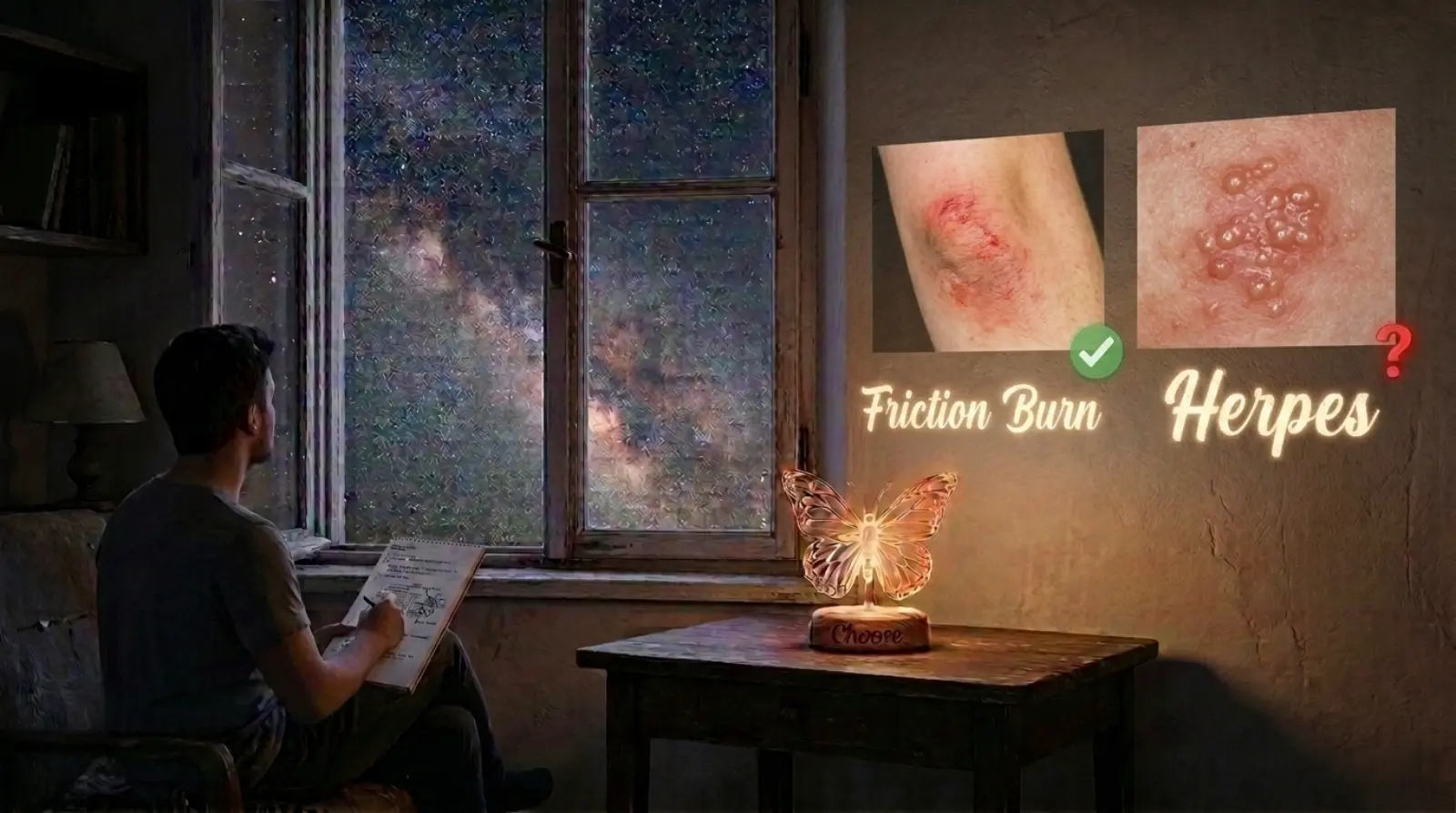
Friction burn or herpes can cause painful, irritated skin around sensitive areas. However, they have different causes and often show different signs. A friction burn usually develops after repeated rubbing, pressure, or skin contact. Herpes comes from the herpes simplex virus, or HSV. The two conditions can sometimes look similar, especially when the skin becomes red, sore, or blistered. This makes self-diagnosis difficult. Herpes can also cause mild symptoms that resemble pimples or other skin problems.
Learning the common differences can help you decide what to do next. Still, appearance alone cannot always confirm the cause. A healthcare professional can examine the area and perform appropriate testing. This article explains friction burn vs herpes in simple terms. It also covers symptoms, causes, treatment, prevention, and warning signs.
Quick Summary: Friction Burn vs Herpes
- Friction burns happen when skin rubs against another surface.
- Herpes comes from herpes simplex virus infections.
- Friction burns often cause redness, soreness, stinging, or raw skin.
- Herpes often causes small blisters that can become painful sores.
- Both conditions can cause burning or tenderness.
- Friction usually follows rubbing, exercise, sex, or tight clothing.
- Herpes can occur without an obvious trigger.
- Herpes may return in the same general area.
- A healthcare professional can help confirm the cause.
- Genital sores should receive medical evaluation, especially after sexual exposure.
What Is a Friction Burn?
A friction burn is a skin injury caused by repeated rubbing. The rubbing creates heat and damages the skin’s surface.
Friction burns can happen on many body parts. Common causes include rough clothing, sports, carpets, ropes, and exercise equipment. Sexual activity can also create friction around sensitive skin.
A mild friction burn may look red or irritated. The area can feel warm, sore, or painful. More serious friction injuries may cause blisters or broken skin.
The injury usually has a clear physical cause. For example, you may notice symptoms after prolonged rubbing or exercise.
What Is Herpes?
Genital herpes is a sexually transmitted infection caused by herpes simplex virus type 1 or type 2.
Herpes can cause one or more small blisters around the genitals, anus, buttocks, or nearby areas. The blisters can break and form painful sores.
Some people have very mild symptoms. Others have painful outbreaks. Some people have no noticeable symptoms at all.
Herpes is a lifelong viral infection. However, medicines can shorten outbreaks and reduce symptoms. Daily antiviral medicine can also lower the risk of transmission for some people.
Friction Burn or Herpes: Key Differences
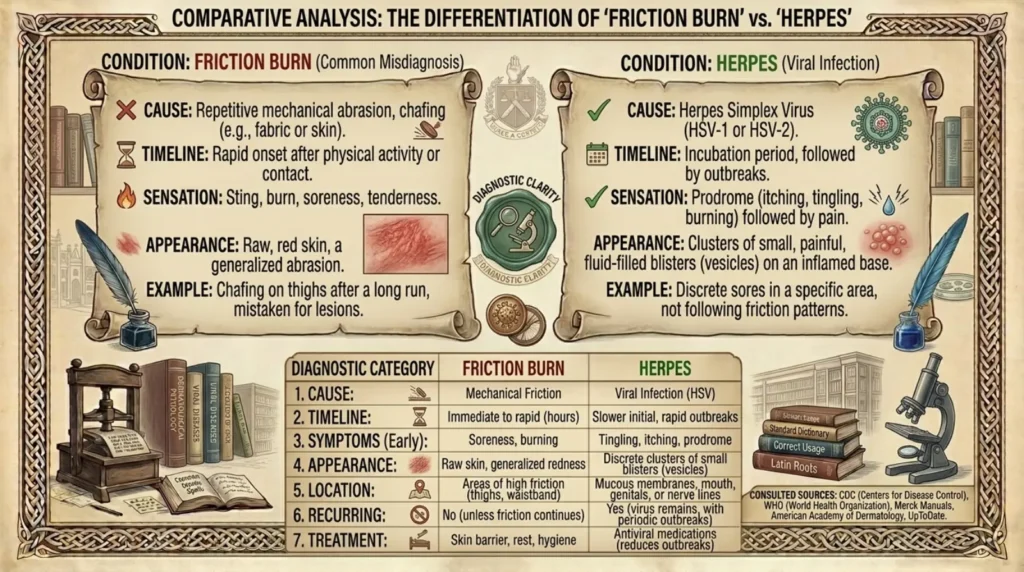
| Feature | Friction Burn | Herpes |
|---|---|---|
| Main cause | Repeated rubbing or pressure | Herpes simplex virus |
| Common feeling | Burning, stinging, soreness | Burning, itching, tingling, or pain |
| Appearance | Red, raw, irritated skin | Small blisters that may become sores |
| Blisters | Can occur with deeper injury | Common during typical outbreaks |
| Trigger | Friction, exercise, tight clothing, sexual activity | Viral outbreak |
| Contagious | No | Yes |
| Recurrence | Usually linked to repeated friction | Can recur after the first outbreak |
| Testing | Usually diagnosed by examination | Testing may confirm HSV |
| Treatment | Protect and care for damaged skin | Antiviral treatment may help |
| Sexual transmission | No | Yes |
This table gives general clues. It cannot replace a medical examination. Genital ulcers can have several causes, and clinical diagnosis alone can sometimes be inaccurate.
What Does a Friction Burn Look and Feel Like?
A friction burn often causes irritation at the exact place where rubbing occurred.
Common signs include:
- Red or irritated skin
- Burning or stinging
- Tenderness
- Pain when touched
- Raw or scraped skin
- Peeling
- Possible blistering
- Swelling in more severe cases
The severity depends on how much force and rubbing affected the skin.
For example, tight clothing may rub the groin during exercise. The skin may then become sore and irritated.
Friction injuries usually have a connection to the physical activity that caused them.
What Does Genital Herpes Look and Feel Like?
Genital herpes commonly causes small blisters around the genital or anal area.
The blisters may break open and form painful sores. Some people also notice tingling, itching, or burning before the sores appear.
A first outbreak can sometimes cause flu-like symptoms. These may include fever, body aches, or swollen glands. Later outbreaks are often shorter and less severe.
However, herpes does not always look obvious. Some people have mild symptoms that resemble pimples, ingrown hairs, or other skin problems.
That is why a healthcare professional may recommend testing when symptoms suggest genital herpes.
Friction Burn or Herpes: Comparison Table
| Feature | Friction Burn | Herpes |
|---|---|---|
| Main cause | Skin irritation from rubbing or friction | Herpes simplex virus (HSV-1 or HSV-2) |
| How it starts | Often after repeated rubbing, exercise, sex, or tight clothing | Often begins with tingling, itching, or burning before sores appear |
| Appearance | Red, raw, irritated, or scraped skin | Small, painful blisters that may break and form sores |
| Blisters | Usually uncommon | Common, especially during an outbreak |
| Pain | Burning, tenderness, or soreness | Burning, tingling, itching, and painful sores |
| Location | Anywhere exposed to repeated friction | Usually around the mouth or genitals, depending on the infection |
| Spread | Does not spread from person to person | Can spread through skin-to-skin or sexual contact |
| Healing | Usually improves after friction stops | Sores usually heal, but HSV remains in the body |
| Recurrence | May return if the same friction occurs | Outbreaks can recur |
| Diagnosis | Often identified from the appearance and history | A healthcare professional may use an examination or laboratory test |
| Treatment | Stop friction, keep the area clean, and allow the skin to heal | Antiviral medicines may shorten or reduce outbreaks |
| Key clue | Recent rubbing or irritation is common | Clusters of painful blisters or sores can suggest herpes |
Important: These conditions can look similar, especially early on. A comparison table cannot confirm a diagnosis. If you have new genital sores, blisters, severe pain, or concern about an STI, consider getting checked by a healthcare professional.
Friction Burn vs Herpes: Real-Life Examples
Example 1:
After Exercise
Someone wears tight clothing during a long workout. Their inner thighs rub together for several hours.
Later, the skin feels raw, sore, and irritated.
This pattern may fit friction or chafing more closely.
Example 2:
After Sexual Activity
Someone develops soreness after prolonged sexual activity. The irritated area matches the area that experienced rubbing.
This could result from friction. However, sexual activity can also expose someone to HSV.
Therefore, the timing alone cannot confirm the cause.
Example 3:
Small Blisters and Sores
Someone notices several small blisters around the genital area. The blisters become painful sores.
This pattern can occur with genital herpes. Medical evaluation and testing can help confirm the diagnosis.
Example 4:
Repeated Symptoms
Someone repeatedly develops similar blisters in the same general genital area.
Recurring outbreaks can occur with genital herpes. A healthcare professional can determine whether HSV or another condition causes the symptoms.
Can a Friction Burn Look Like Herpes?
Yes, a friction injury can sometimes look similar to other skin conditions.
Both can cause redness, pain, burning, and irritation. Friction can also cause blisters when the skin suffers deeper damage.
However, herpes often produces clusters or groups of small blisters that later become sores.
The problem is that symptoms vary from person to person. Some herpes infections cause very mild or unusual symptoms.
Therefore, you should not diagnose herpes based only on a photograph or visual appearance. CDC guidance notes that genital herpes can be difficult to diagnose clinically.
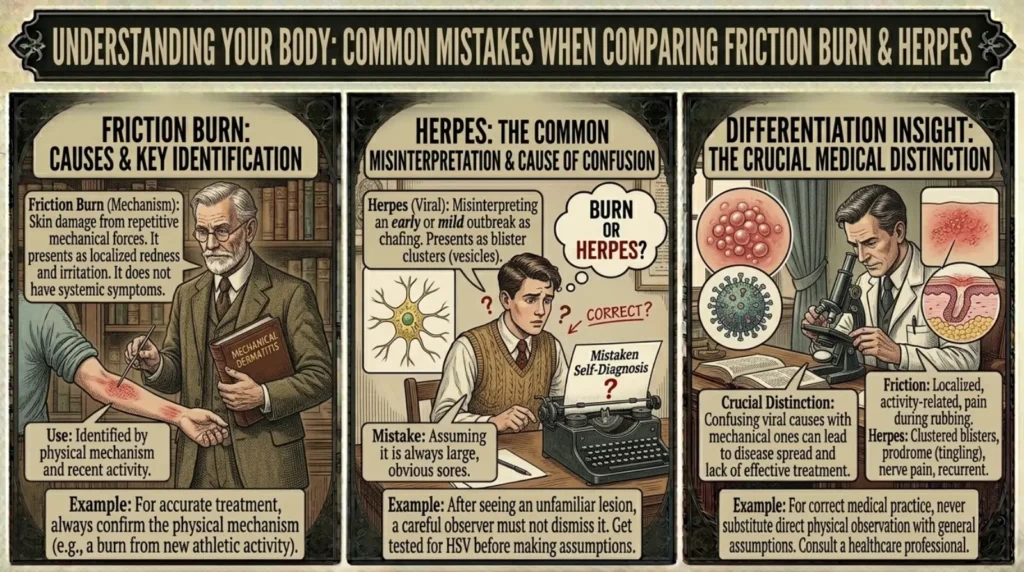
Common Mistakes When Comparing Friction Burn and Herpes
Mistake 1:
Assuming Every Blister Is Herpes
Blisters can have many causes. Friction, burns, infections, and other skin conditions can cause them.
Mistake 2:
Assuming Burning Means Herpes
Burning can happen with friction, chafing, and other forms of skin irritation.
Mistake 3:
Relying Only on Internet Photos
Skin conditions can look different across people and skin tones. Photos cannot provide a reliable diagnosis.
Mistake 4:
Ignoring Sexual Exposure
If genital sores appear after a possible STI exposure, consider professional testing.
Mistake 5:
Popping Blisters
Breaking blisters can increase irritation and infection risk. Burn-care guidance recommends leaving blisters intact when possible.
How to Care for a Possible Friction Burn
For a small, superficial friction injury, focus on protecting the skin.
Helpful steps may include:
- Stop the activity causing the rubbing.
- Keep the area clean.
- Avoid tight clothing.
- Protect damaged skin from additional friction.
- Use a clean dressing when needed.
- Avoid picking or breaking blisters.
- Watch for signs of infection.
For burns, avoid putting ice directly on the injured skin. Ice can cause additional tissue damage.
Genital-area burns can require professional care because of their location. Seek medical attention if the injury is severe, extensive, or worsening.
What to Do If You Suspect Herpes
If you notice genital blisters or sores, arrange a medical evaluation.
A healthcare professional may examine the lesions. When visible sores exist, a swab from a lesion can help test for HSV. CDC guidance says testing works best when samples come from appropriate active lesions.
Avoid sexual contact while you have suspected or confirmed herpes sores. Herpes can spread through skin-to-skin sexual contact. Transmission can also occur without visible sores.
If herpes is confirmed, antiviral medicines can help manage outbreaks. A healthcare professional can recommend the right treatment based on your situation.
When Should You See a Doctor?
Consider medical care when:
- You have unexplained genital blisters.
- You have painful genital sores.
- Symptoms keep returning.
- You have pain while urinating.
- You have unusual genital discharge.
- You recently had a possible STI exposure.
- The area becomes increasingly red or swollen.
- Pus or fever develops.
- A wound does not heal as expected.
CDC guidance recommends evaluating genital, anal, or perianal ulcers because several conditions can cause them.
Seek prompt medical advice if you are pregnant and develop possible genital herpes symptoms. New genital herpes during pregnancy can require special management.
Friction Burn or Herpes: Prevention Tips
You can reduce friction-related skin injuries with simple habits.
Wear comfortable clothing that does not rub sensitive areas. Change sweaty clothing after exercise. Avoid activities that repeatedly irritate damaged skin.
For sexual activity, adequate lubrication can reduce friction. If irritation starts, stop and allow the skin to recover.
For herpes prevention, condoms can lower transmission risk. However, condoms do not cover every area where herpes can spread. Avoid sexual contact during active sores or symptoms.
Open communication with sexual partners also helps reduce STI risks.
Friction Burn or Herpes: Synonyms and Related Search Terms
People may use several related terms when searching for this topic.
Friction-related terms
- Friction burn
- Skin burn from rubbing
- Genital chafing
- Groin chafing
- Skin irritation from rubbing
- Friction rash
- Raw skin from rubbing
Herpes-related terms
- Genital herpes
- Herpes simplex virus
- HSV-1 genital herpes
- HSV-2 genital herpes
- Herpes outbreak
- Genital herpes blisters
- Genital herpes sores
These related terms can help readers understand the differences between irritation and viral infection.
Frequently Asked Questions
Can friction burn look like herpes?
Yes. Friction can cause redness, pain, irritation, and sometimes blisters. These signs can overlap with herpes symptoms. Testing may be needed when herpes remains possible.
Does herpes always cause blisters?
No. Many people with genital herpes have no symptoms or very mild symptoms. Some symptoms may resemble other skin conditions.
Does a friction burn go away on its own?
Small, superficial friction burns often heal with proper skin care. Deeper or larger injuries may need medical treatment.
Is friction burn contagious?
No. A friction burn itself is not an infection and does not spread from person to person.
Is genital herpes contagious without sores?
Yes. HSV can spread even when visible sores are absent. The risk increases during an outbreak.
How is genital herpes diagnosed?
A healthcare professional can examine the sores and may collect a swab for laboratory testing. Blood testing may have a role in certain situations.
Should I pop a blister from friction?
No. Popping a blister can increase the chance of infection. Protect the area and seek medical advice if the injury is severe.
Can herpes be cured?
There is currently no cure that removes HSV from the body. Antiviral medicines can shorten outbreaks and help manage the infection.
Expert Insights: What Matters Most?
The biggest mistake is trying to diagnose genital sores by appearance alone.
Friction burns usually have a clear history of rubbing or physical irritation. Herpes results from HSV infection and may cause recurring outbreaks.
Yet symptoms can overlap. Genital ulcers can also result from conditions other than herpes. CDC guidance recommends appropriate evaluation rather than relying only on appearance.
If active sores are present, ask a healthcare professional whether lesion testing is appropriate. Testing can provide stronger evidence than guessing from symptoms.
Also remember that herpes does not always cause obvious symptoms. A person can have HSV without knowing it.
Internal Linking Suggestions for SEO
If this article belongs to a health or medical website, consider linking naturally to related articles such as:
- What Does Genital Herpes Look Like?
- Genital Herpes Symptoms and Treatment
- What Causes Genital Skin Irritation?
- Chafing vs Rash: What’s the Difference?
- How to Treat a Minor Friction Burn
- Common Causes of Genital Sores
- HSV-1 vs HSV-2: Key Differences
- When Should You Get an STI Test?
Use descriptive anchor text instead of generic phrases like “click here.”
Conclusion
Friction burn or herpes can sometimes cause similar symptoms. Both may cause burning, soreness, redness, and irritation. However, their causes are different. Friction burns result from repeated rubbing or physical damage. Genital herpes results from HSV infection. Herpes often causes small blisters that can become painful sores. Yet not everyone develops classic symptoms.
The safest approach is to avoid guessing. If you have unexplained genital blisters or sores, seek medical advice. A healthcare professional can examine the area and recommend suitable testing. This matters because several conditions can cause genital ulcers.
Simple takeaway: Friction usually follows rubbing, while herpes comes from HSV. When symptoms are unclear, professional testing gives you a better answer.

Michael Reed is a language content writer and word comparison researcher based in the United States. He studied English Language and Communication and focuses on grammar, spelling differences, and word usage. His work helps readers understand confusing English words through clear comparisons and practical explanations. Michael creates simple, reader-friendly content designed to improve everyday language skills.