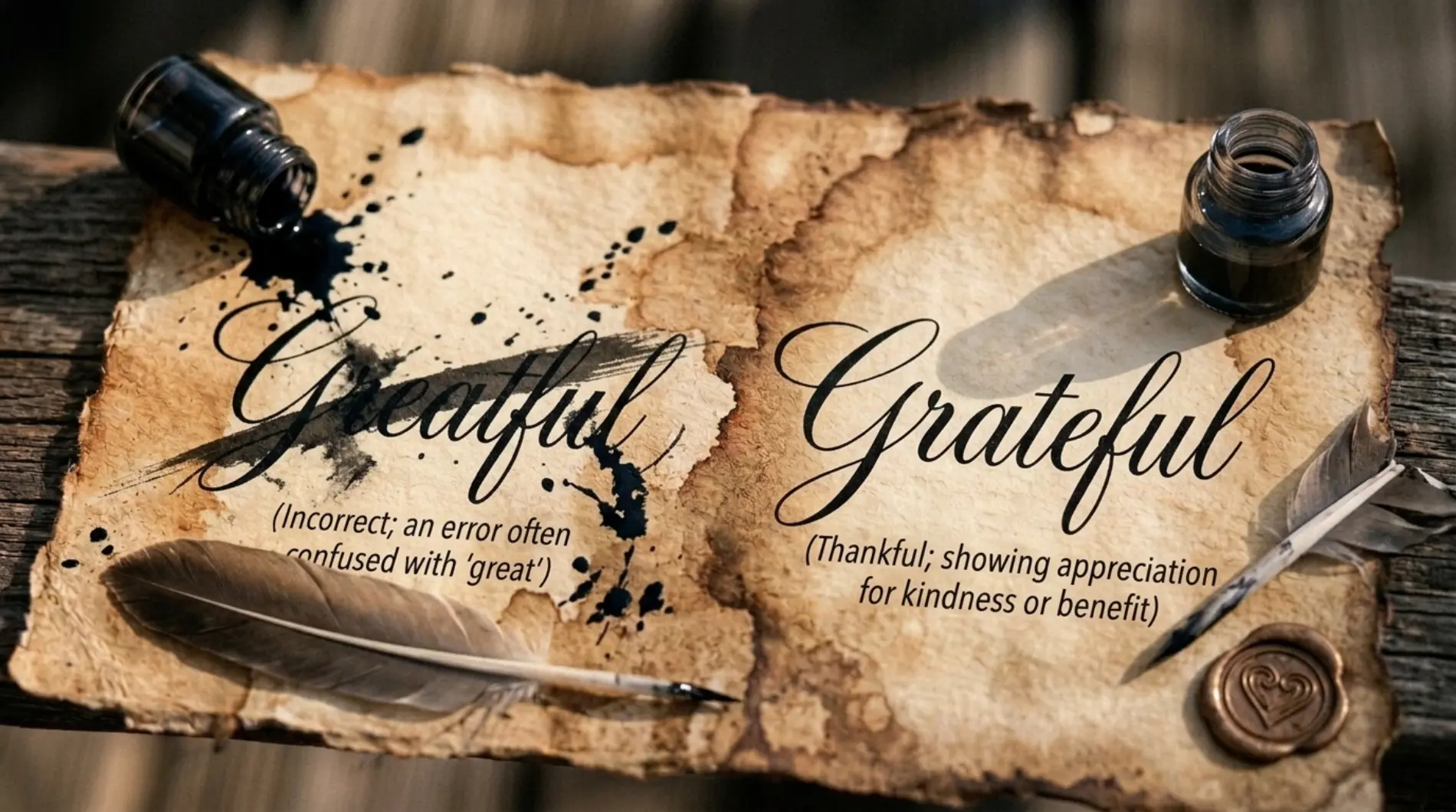
Is it grateful or greatful? Many people ask this question because both words look correct. However, only one spelling is accepted in English. Knowing the right spelling helps you write better emails, essays, and social media posts. It also improves your grammar skills. This guide explains the difference in simple words. You will learn why one spelling is correct and the other is not. You will also see real-life examples, common mistakes, and memory tricks. By the end, you will never confuse these words again. Whether you are a student, teacher, writer, or English learner, this guide will help you use the correct spelling with confidence.
Quick Summary Box (Featured Snippet)
- ✅ Correct spelling: Grateful
- ❌ Incorrect spelling: Greatful
- Grateful means feeling thankful or appreciative.
- Greatful is a common spelling mistake.
- Remember: Grateful comes from “gratitude,” not “great.”
- Use grateful in all formal and informal writing.
What Does “Grateful” Mean?
Grateful is an adjective.
It describes someone who feels thankful for kindness, help, or good fortune.
Simple Definition
Grateful means feeling thankful or showing appreciation.
Examples
- I am grateful for your support.
- She felt grateful after receiving the scholarship.
- We are grateful for your kindness.
- They were grateful for the warm welcome.
Is “Greatful” a Real Word?
No.
Greatful is not a correct English spelling.
Many people write greatful because they think it comes from the word great. That is incorrect.
English dictionaries recognize only grateful.
Correct
- I am grateful for your help.
Incorrect
- I am greatful for your help.
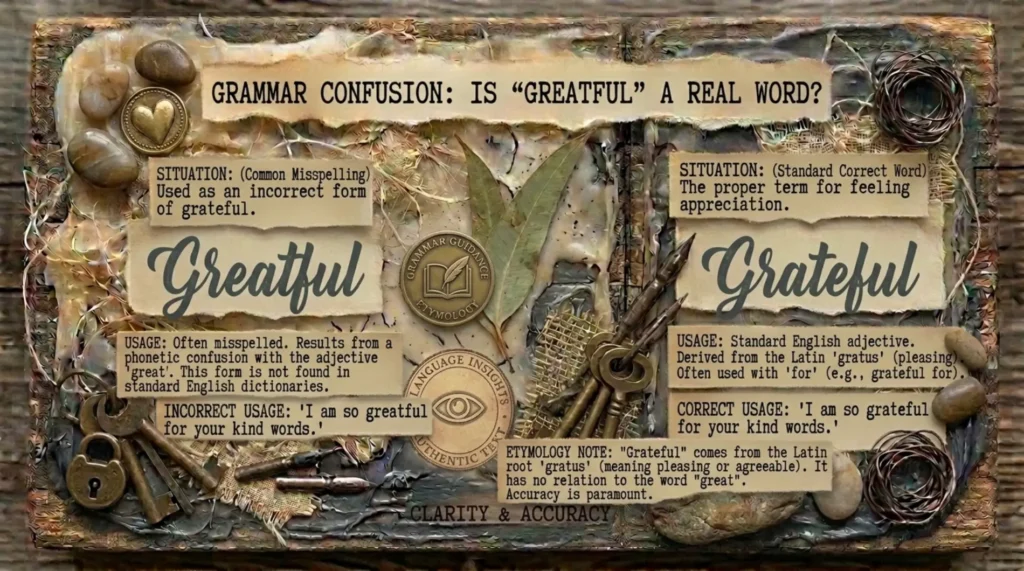
Grateful or Greatful: Comparison Table
| Feature | Grateful | Greatful |
|---|---|---|
| Correct spelling | ✅ Yes | ❌ No |
| Dictionary word | Yes | No |
| Meaning | Feeling thankful | None |
| Formal writing | Yes | No |
| School assignments | Yes | No |
| Business emails | Yes | No |
| Everyday conversations | Yes | No |
Why Do People Spell It “Greatful”?
This mistake happens for several reasons.
1. It Looks Logical
People connect grateful with great.
2. Similar Pronunciation
Both spellings sound almost the same.
3. Fast Typing
Typing quickly often leads to spelling errors.
4. Lack of Grammar Practice
Many learners have never studied the word’s history.
Why Is “Grateful” Spelled This Way?
The word comes from the Latin word gratus, meaning “thankful” or “pleasing.”
It later became linked with the English noun gratitude.
Notice the spelling.
- Gratitude
- Grateful
Both share the same root.
They do not come from the word great.
Easy Trick to Remember the Correct Spelling
Here is a simple memory trick.
Think About Gratitude
Gratitude → Grateful
Both words begin with grat-.
Do not think about the word great.
Another Memory Tip
If you feel gratitude, you are grateful.
This trick works every time.
Real-Life Examples of “Grateful”
Here are common situations where people use grateful.
Work
“I am grateful for the opportunity.”
School
“We are grateful to our teacher.”
Family
“I am grateful for my parents.”
Friends
“She was grateful for their support.”
Social Media
“Feeling grateful for another beautiful day.”
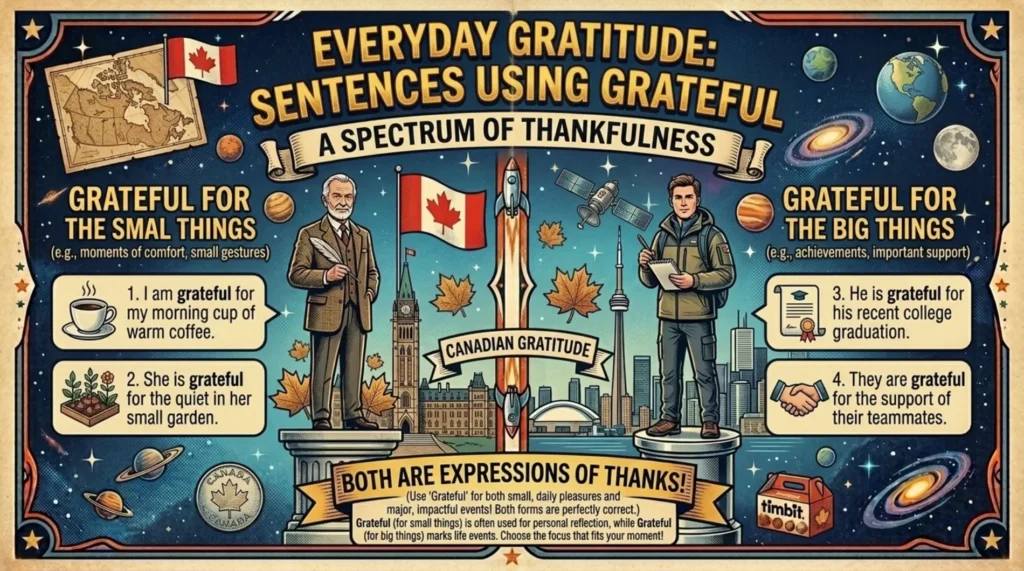
Everyday Sentences Using “Grateful”
These examples show natural usage.
- I’m grateful for your advice.
- We are grateful for your patience.
- He felt grateful after recovering.
- They remain grateful to their community.
- She is grateful for every chance she gets.
- We are grateful that everyone stayed safe.
- I feel grateful every morning.
- My family is grateful for your generosity.
Common Mistakes People Make
Avoid these common errors.
Writing Greatful
❌ I am greatful.
✅ I am grateful.
Mixing It with Great
Remember:
- Great = excellent
- Grateful = thankful
They have different meanings.
Autocorrect Dependence
Do not rely only on spell check.
Always proofread your writing.
Grateful in Daily Life
You can use grateful almost every day.
Thank You Messages
“I am grateful for your gift.”
Emails
“We are grateful for your quick response.”
Job Interviews
“I am grateful for this opportunity.”
Birthday Notes
“I’m grateful to have friends like you.”
Graduation Speeches
“I feel grateful to everyone who helped me.”
Synonyms of Grateful
Using synonyms improves your writing.
Common Synonyms
- Thankful
- Appreciative
- Obliged
- Indebted
- Blessed
- Recognizing
- Acknowledging
- Content
Related Words (LSI Keywords)
- gratitude
- appreciation
- thankful
- thankfulness
- grateful meaning
- grateful definition
- thankful vs grateful
- appreciation message
- gratitude examples
- expressing thanks
Grateful vs Thankful
Many people use these words interchangeably.
There is a small difference.
| Grateful | Thankful |
|---|---|
| Strong feeling of appreciation | Feeling pleased or relieved |
| Often long-lasting | Often tied to one event |
| More emotional | Slightly more general |
Example
“I’m grateful for my family.”
“I’m thankful that it stopped raining.”
Both are correct.
Expert Insights
Grammar experts agree on one rule.
Grateful is the only accepted spelling.
Professional writers, editors, teachers, and dictionaries all recommend using grateful.
If you write greatful, readers may notice the mistake immediately.
Correct spelling builds trust.
It also improves your writing quality and professionalism.
Featured Snippet Answer
Is it grateful or greatful?
The correct spelling is grateful. It means feeling thankful or appreciative. Greatful is a spelling mistake and is not recognized in standard English. Remember that grateful comes from gratitude, not great.
Common Grammar Tips
- Learn common spelling patterns.
- Read regularly.
- Practice difficult words.
- Use dictionaries when unsure.
- Proofread before publishing.
- Keep a personal spelling list.
Internal Linking Suggestions
If this article is part of a grammar website, link to:
- Thankful vs Grateful
- Judgment or Judgement
- Stationary vs Stationery
- Lose vs Loose
- Your vs You’re
- Affect vs Effect
- Whose vs Who’s
- Then vs Than
FAQs:
Is grateful the correct spelling?
Yes. Grateful is the correct spelling in English.
Is greatful wrong?
Yes. Greatful is an incorrect spelling.
Why do people write greatful?
People often connect the word with great, even though it comes from gratitude.
What does grateful mean?
It means feeling thankful or appreciative.
How do I remember the correct spelling?
Think of gratitude. Both words begin with grat-.
Is grateful formal or informal?
It works in both formal and informal writing.
Can I use grateful in professional emails?
Yes. It is common in business communication.
Example:
We are grateful for your continued support.
Is grateful an adjective?
Yes.
It describes a feeling of thankfulness.
SEO Keyword Optimization
Primary Keyword
- is it grateful or greatful
Secondary Keywords
- grateful or greatful
- grateful meaning
- greatful spelling
- correct spelling of grateful
- grateful definition
- gratitude and grateful
- thankful vs grateful
- grateful examples
- grateful in a sentence
- common English spelling mistakes
- how to spell grateful
- grateful vs greatful difference
Conclusion
Many people wonder, is it grateful or greatful? The answer is simple. Grateful is the correct spelling, while greatful is always incorrect. The easiest way to remember this rule is to think of the word gratitude. Both words share the same root and meaning. Using the correct spelling makes your writing look more professional and easier to understand. Whether you write emails, school assignments, blog posts, or social media captions, choosing grateful shows strong language skills. Keep practicing with real-life examples and proofreading your work. Soon, using grateful will become a natural habit, and you will never confuse these spellings again.

James Carter is a comparison writer and research specialist with over 10 years of experience in digital publishing. With a background in business communication and consumer research, he creates detailed comparison articles, buying guides, and reviews that help readers make informed decisions with confidence. “Every comparison should help readers make better decisions. My goal is to turn complex information into clear, practical guidance that people can trust.” — James Carter