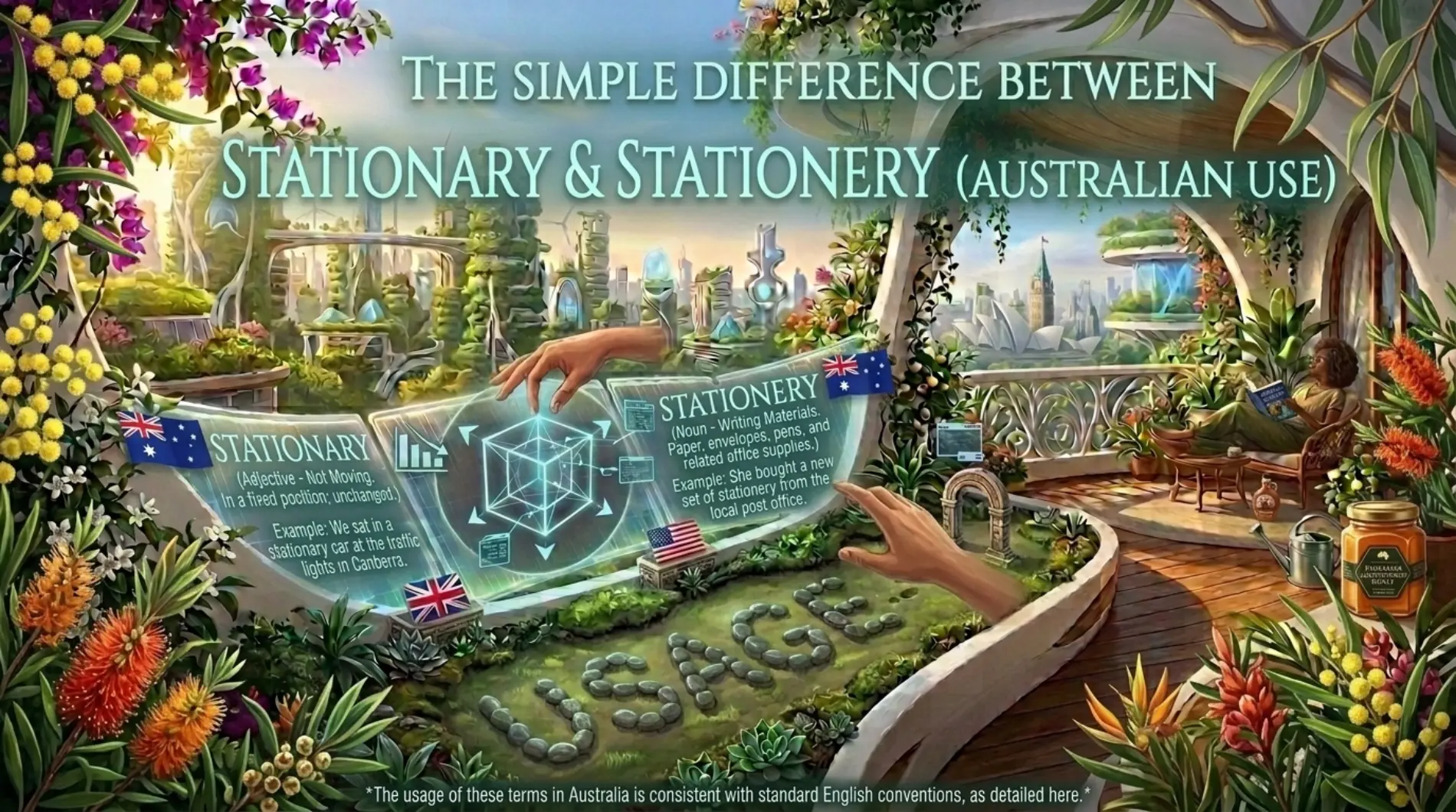
Stationary vs stationery Australia is a common grammar question. Many Australians confuse these two words because they sound the same. However, they have very different meanings. Using the wrong one can change the meaning of your sentence. It may also make your writing look less professional.
The good news is that the difference is easy to remember. One word describes something that does not move. The other refers to writing supplies like pens, notebooks, and envelopes. This guide explains both words in simple English. You will also find examples, memory tricks, common mistakes, and an easy comparison table. By the end, you will know exactly when to use stationary and stationery in Australian English.
Quick Summary Box (Featured Snippet)
- Stationary means not moving.
- Stationery means writing and office supplies.
- Both words sound the same but have different meanings.
- Australians use stationery for notebooks, pens, envelopes, and paper.
- Use stationary when something stays still.
- Remember: Stationery has “e” for envelope.
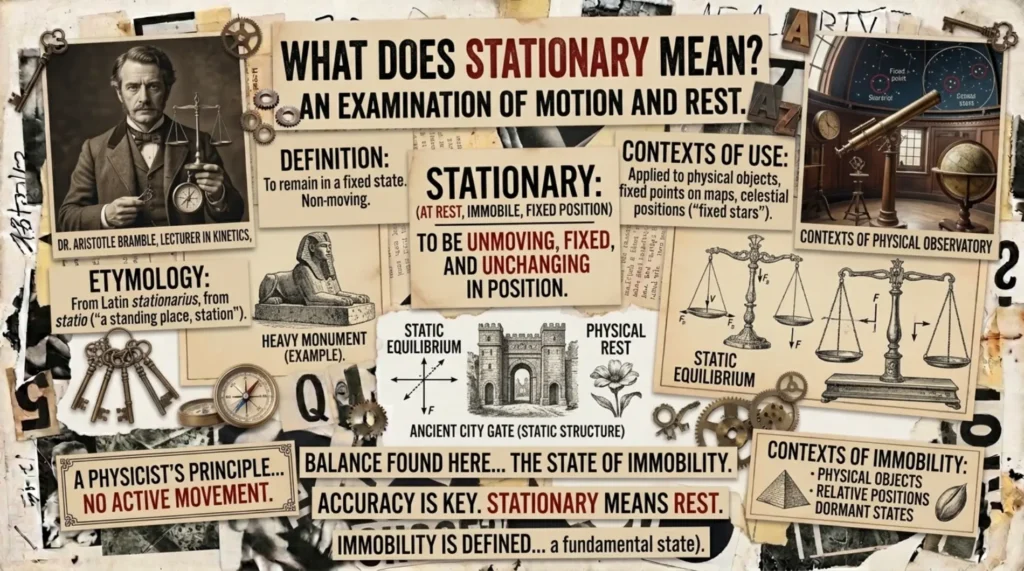
What Does Stationary Mean?
Stationary is an adjective.
It describes someone or something that is not moving.
Examples
- The car remained stationary at the traffic lights.
- The train was stationary for ten minutes.
- Please keep the bike stationary while I fix the tyre.
- The boat stayed stationary in the calm water.
Simple Definition
Stationary = staying still.
What Does Stationery Mean?
Stationery is a noun.
It refers to writing materials and office supplies.
These include:
- Pens
- Pencils
- Paper
- Notebooks
- Envelopes
- Diaries
- Sticky notes
- Greeting cards
- Printer paper
- Files
Examples
- I bought new stationery for school.
- Our office ordered more stationery yesterday.
- The teacher gave every student a stationery pack.
Simple Definition
Stationery = writing supplies.
Stationary vs Stationery Australia: Comparison Table
| Feature | Stationary | Stationery |
|---|---|---|
| Part of Speech | Adjective | Noun |
| Meaning | Not moving | Writing supplies |
| Used For | Cars, trains, people, objects | Pens, paper, notebooks |
| Common Australian Usage | Traffic reports | School and office supplies |
| Memory Trick | Stay still | Envelope contains “E” |
| Example | The bus stayed stationary. | I bought stationery for school. |
Why Do Australians Confuse These Words?
These words are homophones.
Homophones sound exactly the same.
However, they have different spellings and meanings.
Many people hear the word first. Later, they guess the spelling. That causes mistakes.
This confusion happens in:
- School assignments
- Business emails
- Office documents
- Online shopping
- Social media posts
Real-Life Examples in Australia
Here are everyday Australian examples.
Example 1
Correct:
“I purchased new stationery from Officeworks.”
Wrong:
“I purchased new stationary from Officeworks.”
Example 2
Correct:
“The train remained stationary because of maintenance.”
Wrong:
“The train remained stationery.”
Example 3
Correct:
“Our school provides free stationery.”
Correct:
“The students stood stationary during the ceremony.”
Example 4
Correct:
“The delivery truck stayed stationary outside.”
Correct:
“We need more office stationery.”
Common Mistakes Australians Make
Mistake 1
❌ I bought stationary.
✅ I bought stationery.
Mistake 2
❌ The car was stationery.
✅ The car was stationary.
Mistake 3
❌ Office stationary supplies
✅ Office stationery supplies
Mistake 4
❌ The train remained stationery.
✅ The train remained stationary.
Easy Trick to Remember the Difference
This is the easiest memory trick.
Stationery has an “E.”
Think of:
E = Envelope
Envelopes are stationery.
So:
- Stationery → Envelope → Office supplies
Stationary has an “A.”
Think of:
A = At one place
Something stationary stays in one place.
Stationary vs Stationery in Australian English
Australian English follows the same rule as British English.
There is no difference between Australian and British usage.
Examples:
- School stationery
- Office stationery
- Art stationery
- Stationary vehicle
- Stationary machine
Australian businesses, schools, and government departments all use these spellings.
Daily Life Usage
At School
“I packed my stationery before class.”
At Work
“We ordered office stationery online.”
On the Road
“The vehicle stayed stationary.”
At Home
“My printer stationery is running low.”
During Sports
“The goalkeeper remained stationary.”
Synonyms and Related Words
Stationary
- Still
- Motionless
- Fixed
- Immobile
- Static
- Unmoving
Stationery
- Office supplies
- Writing supplies
- Paper goods
- School supplies
- Office materials
- Writing materials
LSI Keywords
- stationary meaning
- stationery meaning
- stationery Australia
- office stationery
- school stationery
- stationery supplies
- stationery examples
- stationary examples
- Australian English spelling
- grammar tips Australia
- stationery vs stationary difference
- stationery shop Australia
Grammar Rules You Should Know
Rule 1
Use stationary as an adjective.
Example:
“The bike remained stationary.”
Rule 2
Use stationery as a noun.
Example:
“I bought stationery.”
Rule 3
Never replace one with the other.
Even though they sound alike, their meanings are completely different.
Practice Sentences
Choose the correct word.
- The helicopter remained ________.
Answer:
Stationary
- I need new school ________.
Answer:
Stationery
- The truck stayed ________ all afternoon.
Answer:
Stationary
- Our office ordered more ________.
Answer:
Stationery
Expert Writing Tips
Professional writers always check homophones before publishing.
Good spelling improves:
- Reader trust
- SEO quality
- Professional image
- User experience
Australian schools also teach these words early because they appear often in exams and business writing.
When writing emails, reports, or blog posts, double-check which word fits the sentence.
Internal Linking Suggestions
You can link this article to related grammar topics such as:
- Affect vs Effect
- Then vs Than
- Practice vs Practise
- Licence vs License
- Principal vs Principle
- Advice vs Advise
- Their vs There vs They’re
- Stationary Meaning
- Common Australian English Mistakes
FAQs:
Is stationery correct in Australia?
Yes. Stationery is the correct spelling for writing and office supplies in Australia.
What does stationary mean?
Stationary means not moving or remaining still.
Why do stationary and stationery sound the same?
They are homophones. They share the same pronunciation but have different meanings and spellings.
Is stationery used for school supplies?
Yes. Pens, notebooks, paper, folders, and envelopes are all stationery.
How can I remember the difference?
Remember this:
Stationery has an “E” for envelope.
Is office stationery one word?
Yes. Stationery is one word and refers to office supplies.
Does Australian English use different spellings?
No. Australian English uses stationary and stationery exactly like British English.
Which word is used for a parked car?
Use stationary because the car is not moving.
Expert Insight
Many spelling mistakes happen because people rely on pronunciation instead of meaning. Since stationary and stationery sound identical, writers often choose the wrong spelling. The best approach is to focus on the sentence’s meaning first. If it refers to movement, choose stationary. If it refers to paper, pens, or office supplies, choose stationery. This habit improves grammar, strengthens professional writing, and helps create clear, trustworthy content that aligns with EEAT principles.
Conclusion
Understanding stationary vs stationery Australia is easier than many people think. Although both words sound the same, they serve different purposes. Stationary describes something that does not move, while stationery refers to writing materials and office supplies. This distinction is the same in Australian and British English. A simple memory trick can help you avoid mistakes: stationery contains the letter “E” for envelope, while stationary describes staying in one place. Whether you are writing emails, school assignments, or business documents, choosing the correct word makes your writing clearer and more professional. With regular practice and the examples in this guide, you will confidently use the right spelling every time.

Emma Collins is a language writer and grammar enthusiast specializing in English vocabulary, spelling comparisons, and word usage guides. She creates easy-to-understand content that helps readers improve their writing, communication, and language skills with confidence.