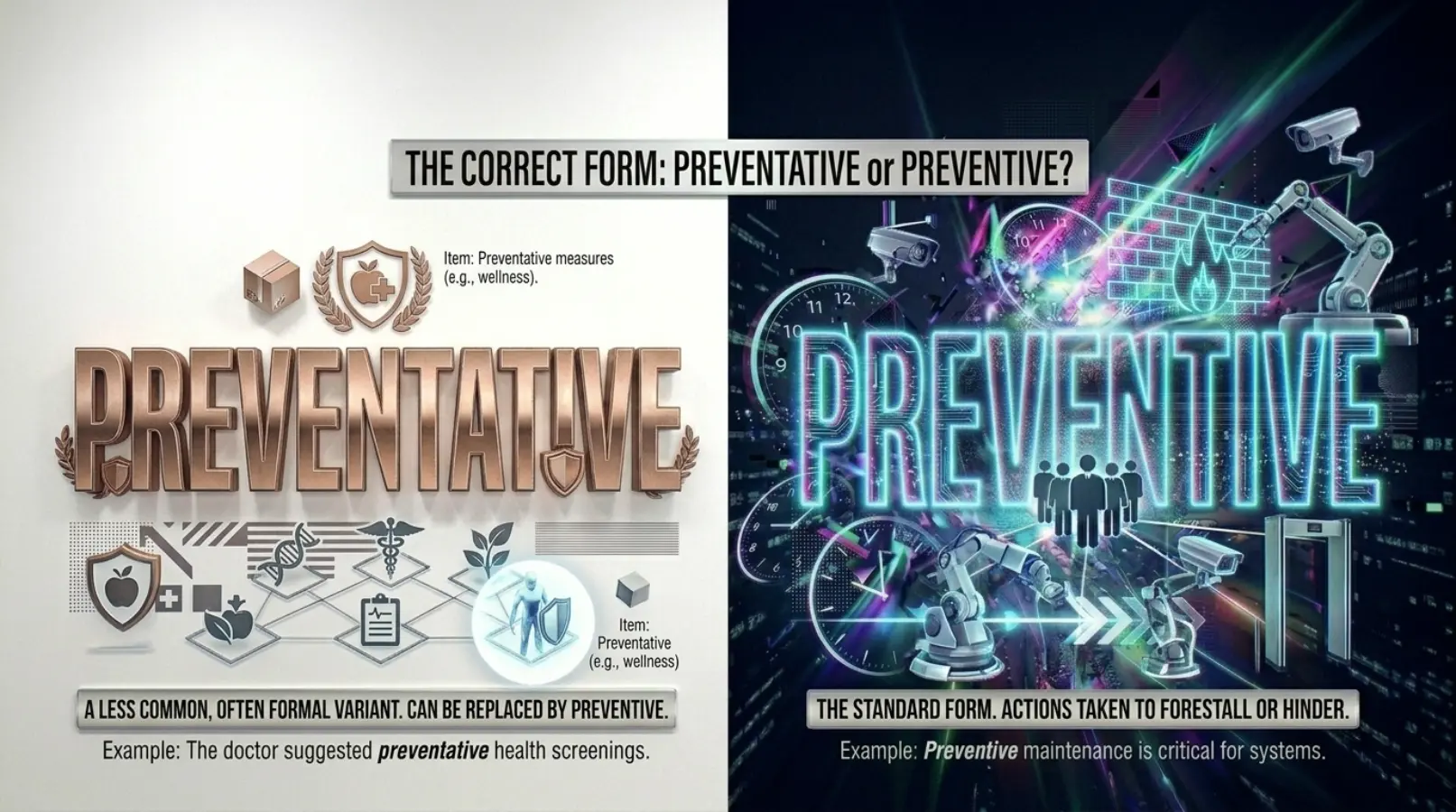
Preventative or preventive is a common grammar question. Many people wonder which word they should use. The good news is that both words are correct. However, one is more common in modern English.
The choice depends on your audience and writing style. Many dictionaries accept both spellings. Still, most editors and style guides prefer preventive because it is shorter and more common.
This guide explains the difference in simple words. You will learn when to use each term. You will also see real-life examples, common mistakes, and helpful memory tips. By the end, you will know which word fits your writing best.
Quick Summary
- Preventive and preventative are both correct adjectives.
- Both words mean designed to stop something before it happens.
- Preventive is the preferred choice in most modern writing.
- Preventative appears less often but remains correct.
- Medical, business, and academic writing usually prefer preventive.
- Everyday conversation may use either word.
What Does “Preventive” Mean?
Preventive describes something that helps stop a problem before it begins.
It focuses on avoiding illness, damage, accidents, or other unwanted events.
Examples
- Preventive healthcare saves lives.
- Regular exercise is a preventive habit.
- Preventive maintenance reduces repair costs.
- Wearing sunscreen is a preventive measure.
Simply put, preventive means acting before trouble starts.
What Does “Preventative” Mean?
Preventative has exactly the same meaning as preventive.
The only difference is its form. It is a longer variation that developed over time.
Examples
- The company adopted preventative safety rules.
- Doctors recommend preventative screenings.
- Preventative maintenance keeps machines working.
Although correct, many editors replace preventative with preventive because it sounds cleaner.
Preventative or Preventive: What’s the Difference?
The biggest difference is usage frequency, not meaning.
| Feature | Preventive | Preventative |
|---|---|---|
| Meaning | Stops problems before they happen | Same meaning |
| Correct? | ✅ Yes | ✅ Yes |
| More Common? | ✅ Yes | Less common |
| Preferred by editors | Yes | Sometimes |
| Used in healthcare | Very common | Less common |
| Formal writing | Recommended | Acceptable |
Quick Answer
If you are unsure, choose preventive.

Why Is “Preventive” More Common?
English often favors shorter words.
Because preventive is shorter, newspapers, schools, businesses, and medical organizations usually choose it.
Many major dictionaries list preventive first.
That does not make preventative wrong. It simply makes it less common.
Real-Life Examples
Here are common situations where these words appear.
Healthcare
- Preventive care lowers health risks.
- Preventive medicine focuses on stopping disease.
Workplace
- Preventive maintenance keeps equipment running.
- Preventive inspections improve safety.
Home
- Preventive cleaning stops mold growth.
- Preventive repairs save money later.
School
- Preventive education teaches healthy habits.
Business
- Preventive planning reduces future problems.
You may also hear preventative maintenance, but many companies now prefer preventive maintenance.
Preventive vs Preventative in Healthcare
Healthcare provides the best example of common usage.
Most hospitals, insurance companies, and government agencies use preventive.
Examples include:
- Preventive care
- Preventive medicine
- Preventive services
- Preventive screening
- Preventive health
Although preventative care is understandable, preventive care appears much more often.
Common Mistakes People Make
Many writers become confused because both words are correct.
Here are common mistakes.
Mistake 1
Thinking preventative is incorrect.
✅ Wrong idea
Both words are accepted.
Mistake 2
Using both forms in one article.
Choose one style and stay consistent.
Mistake 3
Using preventive as a noun.
Incorrect:
The preventive helped everyone.
Correct:
The preventive measure helped everyone.
Mistake 4
Assuming longer means more formal.
Actually, preventive appears more often in formal writing.
Easy Tips to Remember
Remember this simple trick:
Shorter wins.
If both words work, choose preventive.
Another memory tip:
- Preventive = preferred
- Preventative = possible
This makes your writing more natural.
Preventive and Preventative in Daily Life
You already use preventive actions every day.
Examples include:
- Locking your door
- Wearing a seatbelt
- Washing your hands
- Backing up computer files
- Exercising regularly
- Installing smoke alarms
These are all preventive actions because they stop problems before they happen.
Synonyms and Related Words
Using related words improves SEO and keeps your writing natural.
Synonyms
- Protective
- Precautionary
- Defensive
- Proactive
- Safety-focused
- Guarding
- Risk-reducing
Related Keywords
- preventive care
- preventive maintenance
- preventive medicine
- preventative meaning
- preventive measures
- preventive health
- preventative vs preventive
- preventive strategies
- prevention methods
- health prevention
Grammar Rules for Preventive and Preventative
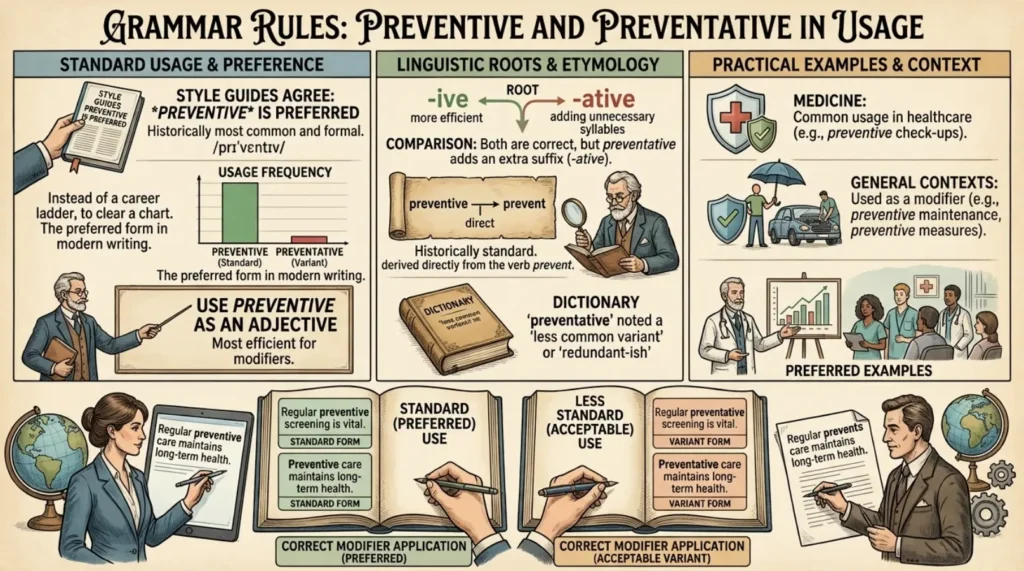
Both words function as adjectives.
They describe nouns.
Correct examples:
- preventive medicine
- preventive healthcare
- preventive maintenance
- preventative maintenance
- preventative treatment
Neither word changes meaning.
The choice mostly depends on writing style.
Expert Insight
Professional editors generally recommend preventive.
Why?
Because it is:
- Shorter
- More widely accepted
- Common in style guides
- Preferred in medical writing
- Easier to read
Consistency also matters.
If you choose preventive, use it throughout your article or document.
This improves professionalism and readability.
Featured Snippet: Preventative or Preventive
Question: Is preventive or preventative correct?
Answer: Both preventive and preventative are correct. They have the same meaning and describe something that stops a problem before it happens. However, preventive is more common and is the preferred choice in modern English, especially in healthcare, business, and formal writing.
Frequently Asked Questions
Is preventative a real word?
Yes. It is a correct English word.
Which is more common, preventive or preventative?
Preventive is much more common in modern English.
Do preventive and preventative mean the same thing?
Yes. Their meanings are identical.
Which word should I use in professional writing?
Use preventive unless your organization prefers otherwise.
Is preventative wrong?
No. It is completely correct but less common.
Why do doctors usually say preventive care?
Medical organizations generally prefer the shorter form, preventive care.
Can I use preventative maintenance?
Yes. However, preventive maintenance is more widely used.
Which spelling is better for SEO content?
Use preventive more often because it matches common search behavior. Mention preventative naturally where appropriate.
Internal Linking Suggestions
If you run a grammar or language website, consider linking this article to:
- Prevent vs Avoid
- Affect vs Effect
- Advice vs Advise
- Everyday vs Every Day
- Compliment vs Complement
- Principal vs Principle
- Ensure vs Insure vs Assure
- Practice vs Practise
Conclusion
Choosing between preventative or preventive is easier than many people think. Both words are correct and share the same meaning. They describe actions that stop problems before they happen. However, preventive is the preferred choice in modern English. It appears more often in healthcare, education, business, and professional writing. The shorter form also improves readability and matches most style guides. If you want your writing to sound clear and current, use preventive in most situations. You can still use preventative if it fits your audience or follows your organization’s style. The most important rule is to stay consistent throughout your writing.

Emma Collins is a language writer and grammar enthusiast specializing in English vocabulary, spelling comparisons, and word usage guides. She creates easy-to-understand content that helps readers improve their writing, communication, and language skills with confidence.