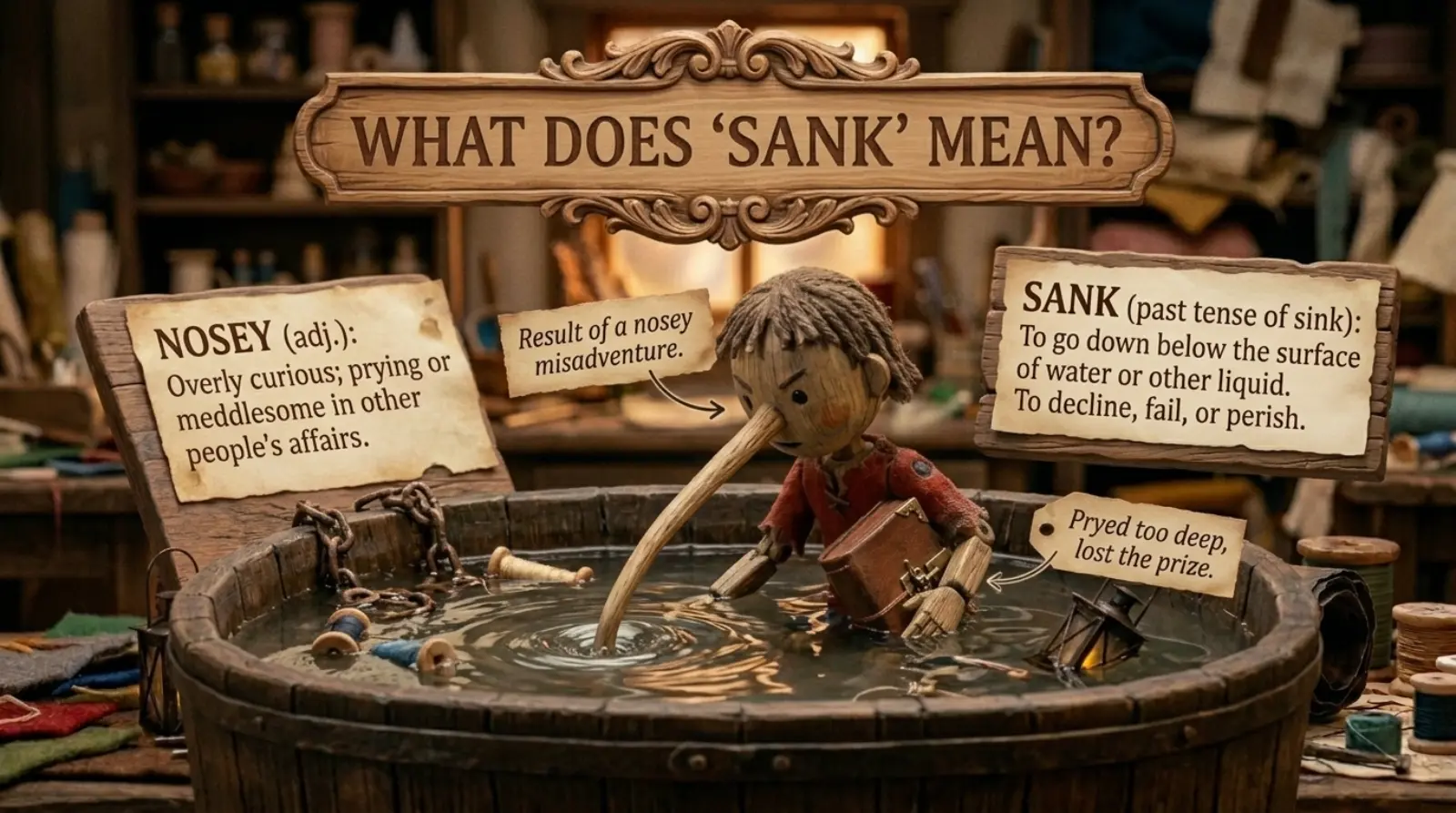
Sunk or sank is a common grammar question that confuses many English learners. Both words come from the verb sink, but they are not used the same way. Knowing the difference helps you write and speak more clearly.
Many people use sunk when they should use sank, or the other way around. Fortunately, the rule is simple once you understand it.
In this guide, you will learn the meanings of sank and sunk in easy English. You will also see comparison tables, real-life examples, common mistakes, memory tricks, and expert tips. By the end, you’ll know exactly when to use each word with confidence.
Quick Summary Box
- Sink = Present tense
- Sank = Simple past tense
- Sunk = Past participle
- Use sank without a helping verb.
- Use sunk with has, have, had, was, were, or be.
- Correct: The ship sank yesterday.
- Correct: The ship has sunk.
- Incorrect: The ship has sank.
What Do “Sank” and “Sunk” Mean?
Both sank and sunk come from the verb sink.
The verb sink means:
- To go below the surface of water
- To move downward
- To fall lower
- To fail or decline
The only difference is the verb tense.
| Verb Form | Word | Example |
|---|---|---|
| Base Verb | Sink | The boat may sink. |
| Past Tense | Sank | The boat sank yesterday. |
| Past Participle | Sunk | The boat has |
What Is “Sank”?
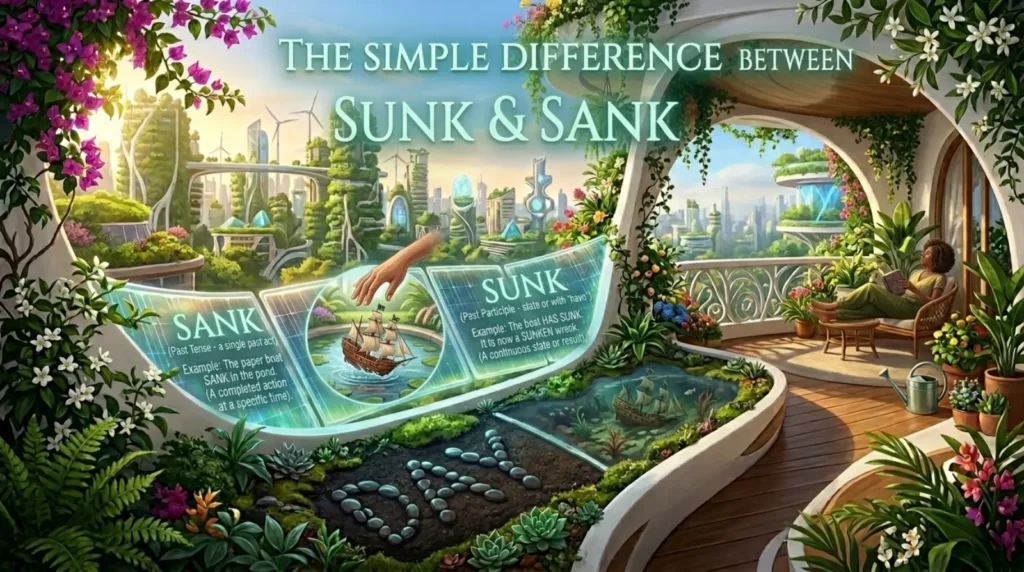
Sank is the simple past tense of sink.
Use it when talking about something that happened and finished in the past.
Examples
- The boat sank during the storm.
- My phone sank into the mud.
- The sun sank below the horizon.
- Their hopes sank after the news.
- The stone sank quickly.
Notice that these sentences do not need helping verbs.
What Is “Sunk”?
Sunk is the past participle of sink.
Use it with helping verbs like:
- has
- have
- had
- was
- were
- be
- being
Examples
- The ship has sunk.
- The treasure had sunk long ago.
- The boat was sunk during the battle.
- Many dreams have sunk because of fear.
- The costs have sunk unexpectedly.

Sunk or Sank: The Main Difference
The biggest difference is the tense.
| Feature | Sank | Sunk |
|---|---|---|
| Verb Type | Simple Past | Past Participle |
| Needs Helping Verb | No | Yes |
| Grammar Use | Completed action | Perfect or passive tense |
| Example | The ship sank. | The ship has sunk. |
Easy Rule
- Sank = happened yesterday
- Sunk = has happened
When Should You Use “Sank”?
Use sank when the action happened at a specific time in the past.
Examples
- The canoe sank last weekend.
- The market sank after bad news.
- My heart sank when I heard the result.
- The submarine sank in 1944.
- The stone sank immediately.
When Should You Use “Sunk”?
Use sunk after helping verbs.
Examples
- The boat has sunk.
- The company had sunk into debt.
- The city has sunk several inches.
- His confidence has sunk.
- The old ship was sunk in the war.
Real-Life Examples of Sank and Sunk
Here are examples you may hear every day.
Nature
- The sun sank behind the mountains.
- The sun has sunk below the horizon.
Boats
- Their fishing boat sank yesterday.
- Their fishing boat has sunk completely.
Feelings
- My heart sank after reading the email.
- Her confidence has sunk over time.
Money
- The stock price sank this morning.
- The company’s profits have sunk sharply.
Common Mistakes People Make
Many learners mix the two forms.
Incorrect
❌ The ship has sank.
Correct
✅ The ship has sunk.
Incorrect
❌ The boat sunk yesterday.
Correct
✅ The boat sank yesterday.
Incorrect
❌ The sun has sank.
Correct
✅ The sun has sunk.
Easy Trick to Remember
Use this simple memory tip.
Think of the Timeline
Present
- sink
Past
- sank
Perfect
- sunk
Or remember this sentence:
Yesterday it sank. Today it has sunk.
This trick works almost every time.
Sunk or Sank in Daily Life
You can use these words in many situations.
School
- My grades sank after I stopped studying.
- My grades have sunk this semester.
Business
- Sales sank in January.
- Sales have sunk this year.
Sports
- The team’s chances sank after the injury.
- Their hopes have sunk.
Weather
- The temperature sank overnight.
- Temperatures have sunk below freezing.
Synonyms and Related Words
Depending on the sentence, you can use similar words.
Synonyms for Sink
- fall
- drop
- descend
- lower
- plunge
- decline
- dip
- collapse
- submerge
Related Grammar Keywords
- sink past tense
- sink past participle
- sank vs sunk
- grammar difference
- English verb forms
- irregular verbs
- how to use sank
- when to use sunk
- simple past vs past participle
- English grammar rules
Expert Grammar Insights
Many English verbs have different past tense and past participle forms.
Examples include:
| Base Verb | Past | Past Participle |
|---|---|---|
| Sing | Sang | Sung |
| Drink | Drank | Drunk |
| Ring | Rang | Rung |
| Begin | Began | Begun |
| Sink | Sank | Sunk |
Learning these patterns improves both writing and speaking.
Professional writers always match the correct verb form with the correct tense.
Common Grammar Rules
Follow these simple rules.
Use “Sank”
- After yesterday
- Last week
- In 2020
- Earlier today
- Once
Use “Sunk”
After helping verbs like:
- has
- have
- had
- was
- were
- be
- been
- being
Featured Snippet: Sank vs Sunk
Sank is the simple past tense of sink and describes an action completed in the past. Sunk is the past participle of sink and must be used with helping verbs such as has, have, or had. For example, “The ship sank yesterday,” but “The ship has sunk.”
Frequently Asked Questions
Is it sank or sunk yesterday?
Use sank.
Example:
“The boat sank yesterday.”
Is it has sank or has sunk?
Use has sunk.
“Sunk” is the past participle.
Why is sunk not used alone?
Because sunk is usually a past participle.
It normally needs a helping verb.
Is “the sun sank” correct?
Yes.
“The sun sank behind the hills.”
Is “the ship sunk” correct?
Usually no.
Say:
- The ship sank.
- The ship has sunk.
Can sunk be an adjective?
Yes.
Example:
- A sunk ship.
- A sunk cost.
What is the past tense of sink?
The past tense is sank.
What is the past participle of sink?
The past participle is sunk.
Internal Linking Suggestions
To build topical authority, link this article to related grammar guides such as:
- Sink Past Tense Explained
- Irregular Verbs in English
- Began vs Begun
- Sang vs Sung
- Drank vs Drunk
- Lay vs Lie
- Rise vs Raise
- Went vs Gone
Conclusion
Understanding sunk or sank is easier than it first appears. Sank is the simple past tense, while sunk is the past participle used with helping verbs. Remember the simple rule: The ship sank yesterday, but The ship has sunk. This small grammar difference makes your English sound more natural and accurate.
Practice using both forms in everyday conversations and writing. Over time, choosing the correct word will become automatic. Whether you’re learning English, writing school assignments, or creating professional content, mastering sunk or sank will improve your grammar and communication skills.

Emma Collins is a language writer and grammar enthusiast specializing in English vocabulary, spelling comparisons, and word usage guides. She creates easy-to-understand content that helps readers improve their writing, communication, and language skills with confidence.