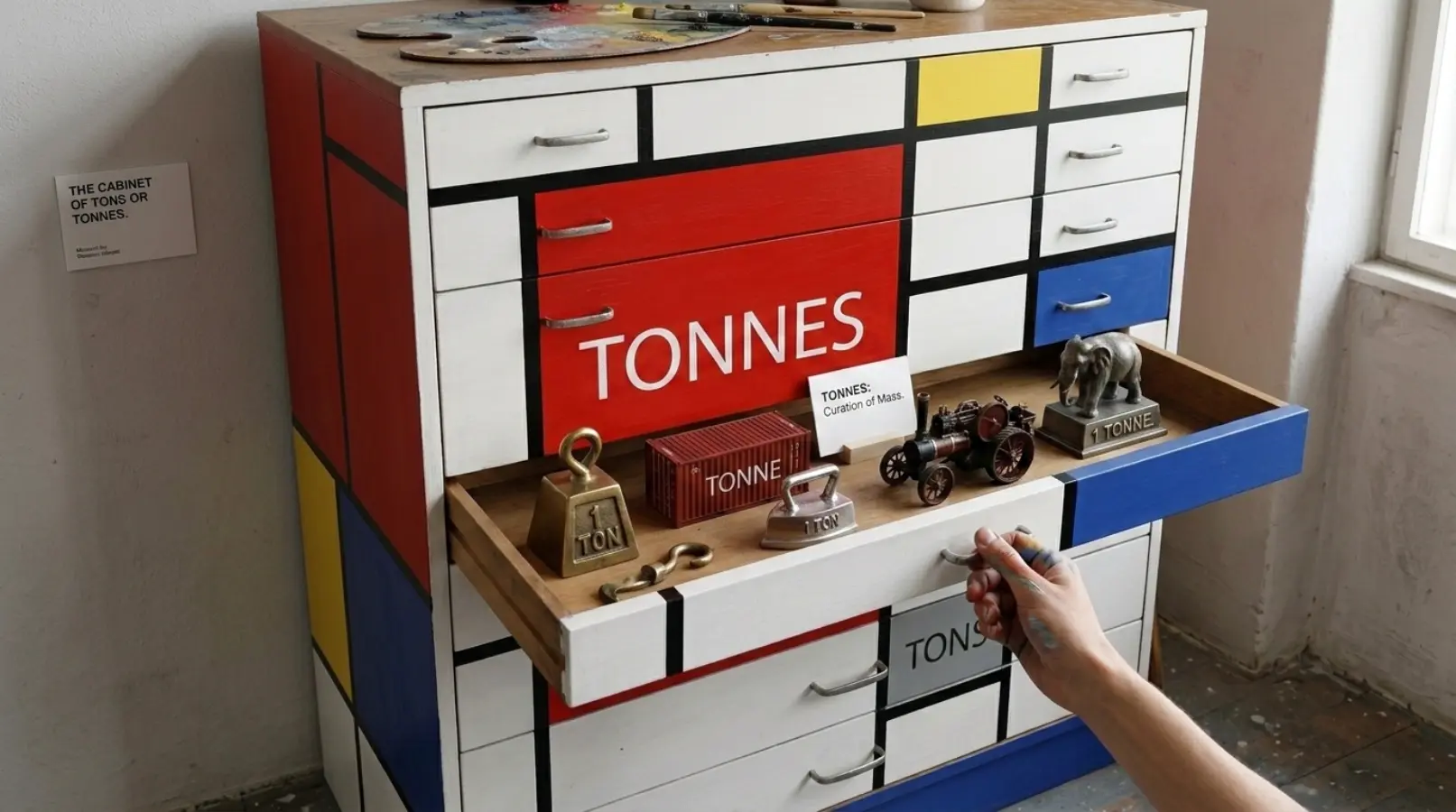
Tons or tonnes often confuse English learners, writers, and even native speakers. The words look similar, but they do not always mean the same thing. The difference depends on the measurement system you use and the country where you live.
Knowing when to use tons or tonnes helps you write clearly and avoid mistakes. It also makes your content more accurate in school, business, shipping, and daily conversations.
In this guide, you will learn the meaning of each word, how they differ, and when to use them. You will also see easy examples, a comparison table, common mistakes, expert tips, and answers to popular questions. By the end, you will know exactly which word fits your sentence.
Quick Summary Box
- Ton usually means 2,000 pounds in the United States.
- Tonne means 1,000 kilograms in the metric system.
- Ton is also called a short ton.
- Tonne is also called a metric ton.
- Use ton mainly in the United States.
- Use tonne in countries that use the metric system.
- Both words measure weight, but they are not equal.
What Does “Ton” Mean?
A ton is a unit of weight used mainly in the United States.
One short ton equals:
- 2,000 pounds
- 907.18 kilograms
Americans commonly use tons for:
- Construction materials
- Coal
- Steel
- Heavy equipment
- Freight
Examples
- The truck carried 5 tons of sand.
- The factory produces 200 tons of steel every day.
- Our shipment weighs 10 tons.
What Does “Tonne” Mean?
A tonne is the metric unit of mass.
One tonne equals:
- 1,000 kilograms
- 2,204.62 pounds
Most countries outside the United States use tonnes because they follow the metric system.
Examples
- The farm harvested 15 tonnes of wheat.
- The ship transported 800 tonnes of cargo.
- The factory recycled 50 tonnes of plastic.
Tons or Tonnes: What’s the Difference?
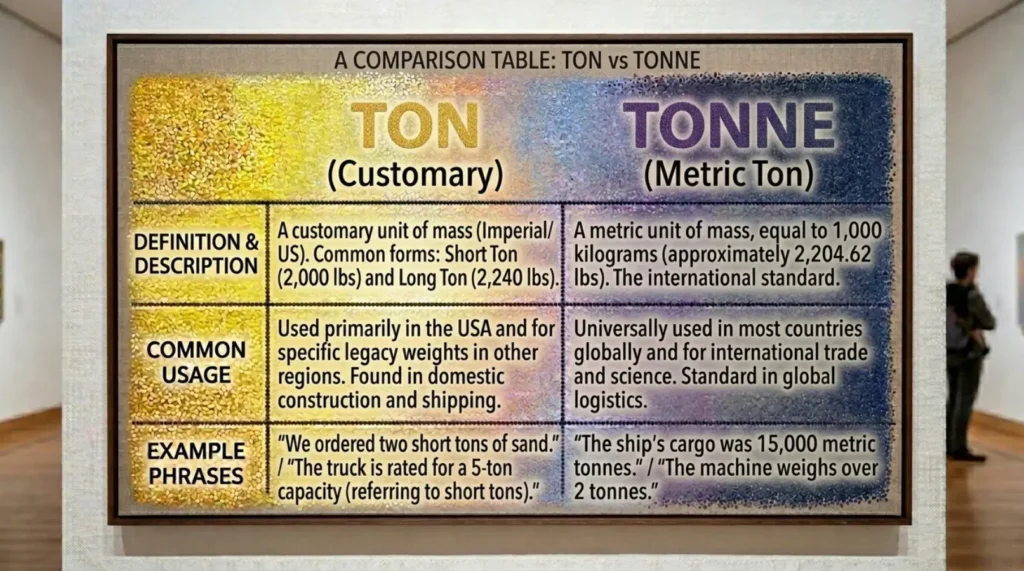
The biggest difference is the measurement system.
| Feature | Ton | Tonne |
|---|---|---|
| Measurement system | Imperial (US) | Metric |
| Weight | 2,000 pounds | 1,000 kilograms |
| Kilograms | 907.18 kg | 1,000 kg |
| Pounds | 2,000 lb | 2,204.62 lb |
| Common countries | United States | Canada, UK, Australia, Europe |
| Also called | Short ton | Metric ton |
Quick Tip:
- Ton = American measurement
- Tonne = Metric measurement
Why Are There Different Types of Tons?
History created different measurement systems.
The United States kept the short ton.
Most of the world switched to the metric tonne.
There is also another unit called the long ton, which equals 2,240 pounds. It appears mainly in older British industries.
Today, most people compare only ton and tonne.
Real-Life Examples of Tons and Tonnes
Understanding real situations makes the difference easier.
In the United States
- A mining company ships 500 tons of coal.
- A bridge needs 300 tons of steel.
- A garbage truck collects 12 tons of waste.
In Europe
- A factory produces 400 tonnes of cement.
- Farmers harvest 250 tonnes of corn.
- A cargo ship carries 15,000 tonnes of grain.
When Should You Use “Ton”?
Use ton when writing for American readers or discussing U.S. measurements.
Common situations
- Construction
- Manufacturing
- Mining
- Transportation
- Engineering in the U.S.
Examples
✅ The company ordered 20 tons of gravel.
✅ The truck can carry 15 tons.
When Should You Use “Tonne”?
Use tonne whenever you work with metric measurements.
Common situations
- International trade
- Science
- Agriculture
- Environmental reports
- Global shipping
Examples
✅ The country exported 5 million tonnes of rice.
✅ The project reduced 200 tonnes of carbon emissions.
Tons or Tonnes in Daily Life
You may see these words in many places.
Construction
Builders order tons or tonnes of concrete.
Farming
Farmers measure grain harvests in tonnes.
Shipping
Cargo companies use tonnes for international freight.
Mining
American mines often report production in tons.
Recycling
Many countries measure recycled waste in tonnes.
Common Mistakes People Make
Many writers confuse these terms.
Mistake 1
❌ One ton equals one tonne.
✅ They are different weights.
Mistake 2
❌ Using ton in international metric reports.
✅ Use tonne for metric measurements.
Mistake 3
❌ Forgetting your audience.
✅ American readers usually expect tons.
✅ International readers often expect tonnes.
Mistake 4
❌ Mixing measurement systems.
Choose one system and stay consistent.
Easy Trick to Remember the Difference
Here is a simple memory trick.
Ton
- Used mostly in the USA
- Equals 2,000 pounds
Tonne
- Has an extra “ne”
- Represents the metric system
- Equals 1,000 kilograms
Think:
Extra letters = Extra kilograms.
Synonyms and Related Terms
Here are useful related words.
Synonyms
- Metric ton
- Short ton
- Long ton
- Unit of weight
- Unit of mass
LSI Keywords
- ton vs tonne
- metric ton
- short ton
- long ton
- weight measurement
- kilograms to tons
- tonnes to pounds
- ton conversion
- metric weight
- imperial weight system
Tons vs Tonnes Conversion Table
| Measurement | Equivalent |
|---|---|
| 1 ton | 2,000 pounds |
| 1 ton | 907.18 kilograms |
| 1 tonne | 1,000 kilograms |
| 1 tonne | 2,204.62 pounds |
| 5 tons | 4,535.9 kilograms |
| 5 tonnes | 5,000 kilograms |
| 10 tons | 9,071.8 kilograms |
| 10 tonnes | 10,000 kilograms |
Tons or Tonnes in Business and Shipping
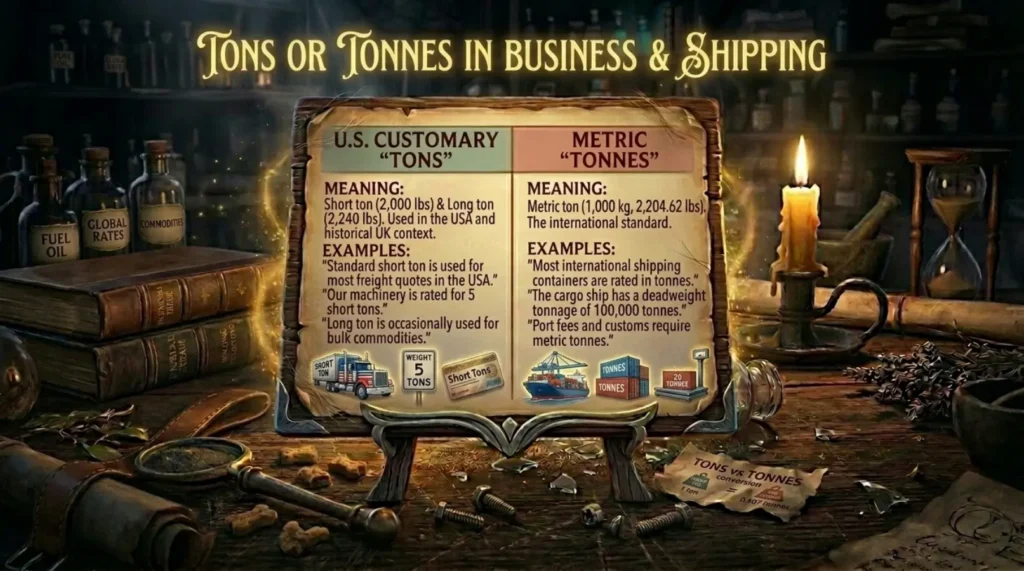
Businesses choose the correct unit based on location.
American companies often use tons.
International shipping companies usually use tonnes.
Many customs documents require metric units.
Using the correct measurement avoids confusion during trade.
Expert Insight
Professional writers should always match the measurement system to their audience.
If your readers are mostly American, use tons.
If your audience is global, use tonnes or clearly state metric tonnes.
Consistency improves trust and makes technical writing easier to understand.
Many industries also follow legal standards. Always check local guidelines before publishing reports or official documents.
FAQs
Is a ton the same as a tonne?
No.
A ton equals 2,000 pounds.
A tonne equals 1,000 kilograms.
Which is heavier, a ton or a tonne?
A tonne is heavier.
One tonne equals about 2,204.62 pounds.
Why does the UK use tonnes?
The UK mostly follows the metric system.
Therefore, tonne is the standard measurement.
Does the United States use tonnes?
Not often.
Americans usually use tons.
Some scientific industries still use metric tonnes.
What is a metric ton?
A metric ton is another name for a tonne.
It equals 1,000 kilograms.
What is a short ton?
A short ton equals 2,000 pounds.
It is the standard American ton.
What is a long ton?
A long ton equals 2,240 pounds.
It comes from the older British Imperial system.
Which word should I use in international writing?
Use tonne unless your audience specifically follows U.S. measurements.
Featured Snippet: Tons vs Tonnes
Tons and tonnes both measure weight, but they are different units. A U.S. ton equals 2,000 pounds (907.18 kg), while a tonne, also called a metric ton, equals 1,000 kilograms (2,204.62 pounds). Use “ton” mainly in the United States and “tonne” in countries that use the metric system.
Internal Linking Suggestions
Consider linking this article to related grammar and measurement guides, such as:
- Pounds vs Kilograms
- Metric vs Imperial System
- Affect or Effect
- Further or Farther
- Everyday Measurement Units
- Commonly Confused English Words
Conclusion
Understanding tons or tonnes is easier once you know which measurement system each word belongs to. A ton is the standard American unit and equals 2,000 pounds, while a tonne is the metric unit equal to 1,000 kilograms. Although the words look almost identical, they represent different weights and serve different audiences.
Always consider who will read your content before choosing between tons and tonnes. American readers usually expect tons, while international readers often use tonnes. Keeping your measurements consistent improves clarity, accuracy, and professionalism. With the tips, examples, and comparison table in this guide, you can confidently use the correct term in everyday writing, business documents, and technical reports.

James Carter is a comparison writer and research specialist with over 10 years of experience in digital publishing. With a background in business communication and consumer research, he creates detailed comparison articles, buying guides, and reviews that help readers make informed decisions with confidence. “Every comparison should help readers make better decisions. My goal is to turn complex information into clear, practical guidance that people can trust.” — James Carter