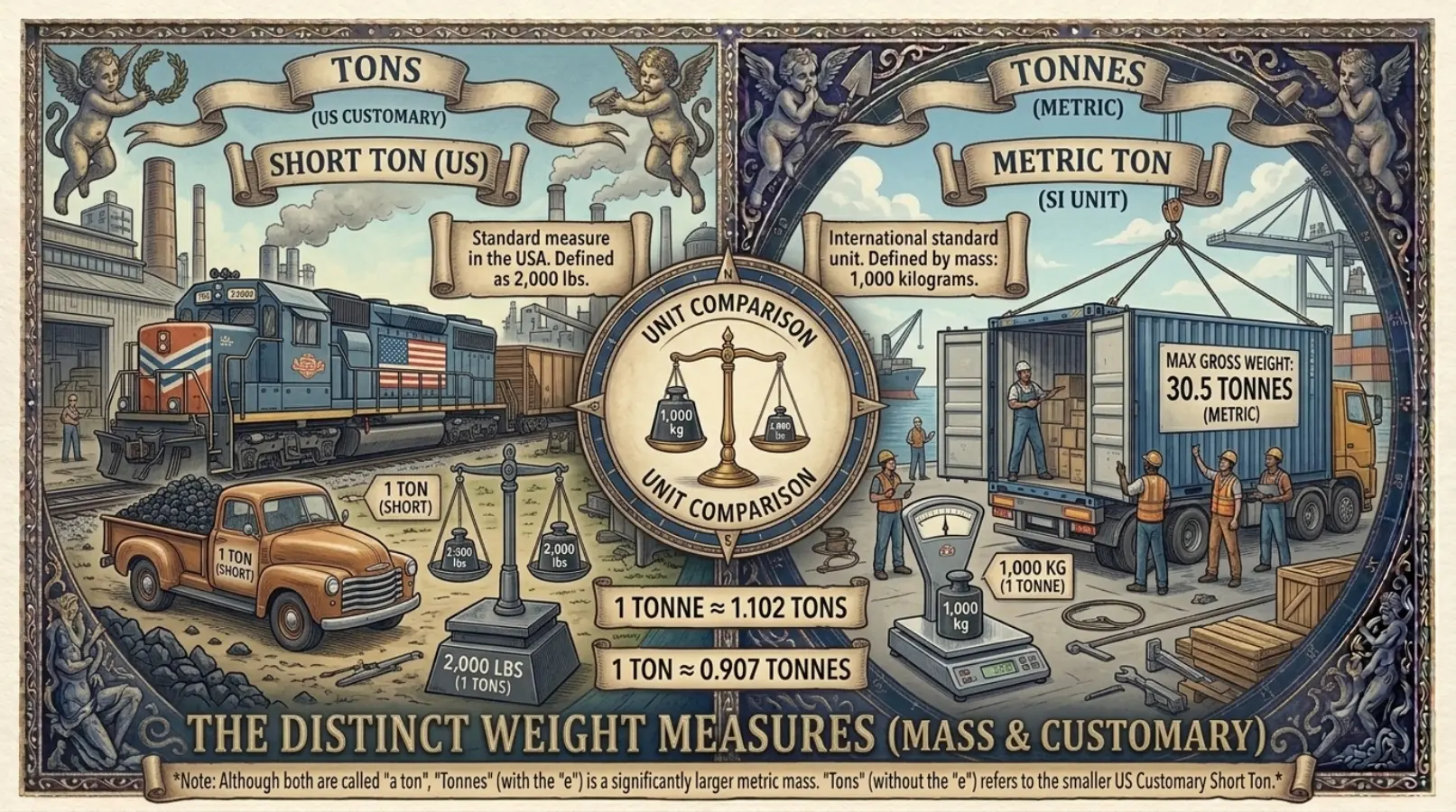
When comparing tonnes vs tons, many people think they mean the same thing. They both measure weight, but they are not equal. Different countries use different types of tons. Using the wrong one can cause confusion in shipping, construction, farming, and everyday writing.
This guide explains the difference in simple words. You will learn what each term means, where people use it, and how to remember the correct one. You’ll also see comparison tables, real-life examples, common mistakes, and expert tips.
By the end, you’ll know exactly when to use tonnes and when to use tons.
Quick Summary Box
- Tonne equals 1,000 kilograms
- Ton usually equals 2,000 pounds in the United States
- A tonne is also called a metric ton
- A US ton is different from a UK long ton
- Most countries use tonnes
- The United States mainly uses tons
- Always check which measurement system is being used
What Does “Tonnes vs Tons” Mean?
Tonnes and tons are units used to measure heavy weight.
Although they sound alike, they belong to different measurement systems.
- Tonne belongs to the metric system
- Ton usually belongs to the imperial or US customary system
Knowing the difference helps avoid costly mistakes in business, transportation, engineering, and international trade.
What Is a Tonne?
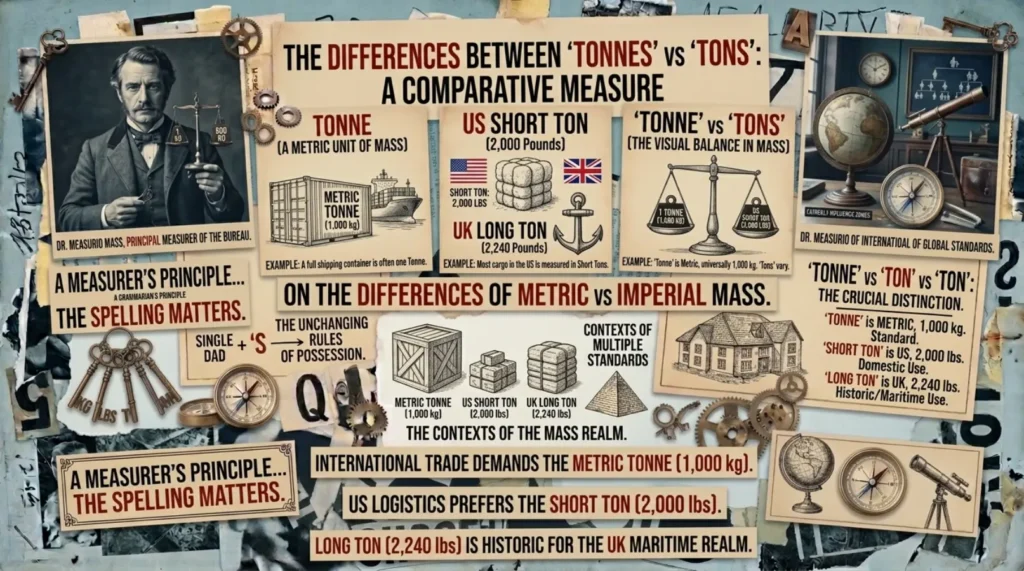
A tonne is a metric unit of mass.
One tonne equals:
- 1,000 kilograms
- 2,204.62 pounds
It is written as:
- tonne
- metric tonne
- metric ton (mainly in American writing)
Most countries use tonnes because they use the metric system.
Examples
- The truck carried 15 tonnes of sand.
- The bridge supports 200 tonnes of steel.
- The factory produces 50 tonnes of cement each day.
What Is a Ton?
A ton usually means the US short ton.
One US ton equals:
- 2,000 pounds
- 907.18 kilograms
The United States commonly uses this measurement.
Examples
- The pickup hauled 2 tons of gravel.
- The warehouse stores 500 tons of grain.
- The machine weighs 3 tons.
Tonnes vs Tons Comparison Table
| Feature | Tonne | US Ton |
|---|---|---|
| Measurement system | Metric | US customary |
| Weight | 1,000 kg | 907.18 kg |
| Pounds | 2,204.62 lb | 2,000 lb |
| Common name | Metric tonne | Short ton |
| Mainly used in | Most countries | United States |
| Symbol | t | ton |
Is There Also a UK Ton?
Yes.
The United Kingdom traditionally used the long ton.
One long ton equals:
- 2,240 pounds
- 1,016 kilograms
Today, the UK mostly uses tonnes for official measurements.
Comparison
| Type | Weight |
|---|---|
| Metric tonne | 1,000 kg |
| US short ton | 907 kg |
| UK long ton | 1,016 kg |
Tonnes vs Tons in Real Life
Here are common situations where these units appear.
Shipping
International shipping usually uses tonnes.
Example:
- A cargo ship carries 30,000 tonnes of coal.
Construction
Construction companies often use tonnes outside the US.
Example:
- The crane lifted 20 tonnes.
Farming
American farmers may use tons.
Example:
- The farm harvested 500 tons of corn.
Mining
Mining companies worldwide usually report production in tonnes.
Why the Difference Matters
Using the wrong unit can create serious problems.
Imagine ordering 100 tons instead of 100 tonnes.
The weight difference is nearly 93 metric tonnes.
That mistake could affect:
- Shipping costs
- Equipment limits
- Building safety
- International contracts
Always verify which unit is required.
Easy Trick to Remember
Use this simple memory tip.
Tonne = Metric = Most countries
Ton = United States
Another trick:
Think of the extra letters in tonne as reminding you of the metric system.
Common Mistakes People Make
Many writers confuse these terms.
Here are common errors.
Mistake 1
Using ton when writing for an international audience.
Correct:
The shipment weighs 25 tonnes.
Mistake 2
Assuming every country uses the same measurement.
Different countries follow different systems.
Mistake 3
Thinking tonne and ton weigh the same.
They do not.
A tonne is heavier than a US ton.
Mistake 4
Ignoring the type of ton.
There are:
- US short ton
- UK long ton
- Metric tonne
Always identify which one you mean.
Tonnes vs Tons in Daily Life
You may see these measurements in:
- Cargo shipping
- Truck weight limits
- Steel production
- Mining reports
- Agriculture
- Road construction
- Waste management
- International trade
- Manufacturing
Reading labels carefully helps avoid confusion.
Tonnes vs Tons Examples
Tonne Examples
- The bridge used 800 tonnes of concrete.
- Australia exported 2 million tonnes of wheat.
- The crane lifted 18 tonnes.
Ton Examples
- The truck carried 4 tons of stone.
- The warehouse stores 50 tons of feed.
- The excavator weighs 25 tons.
Tonnes vs Tons: Which One Should You Use?
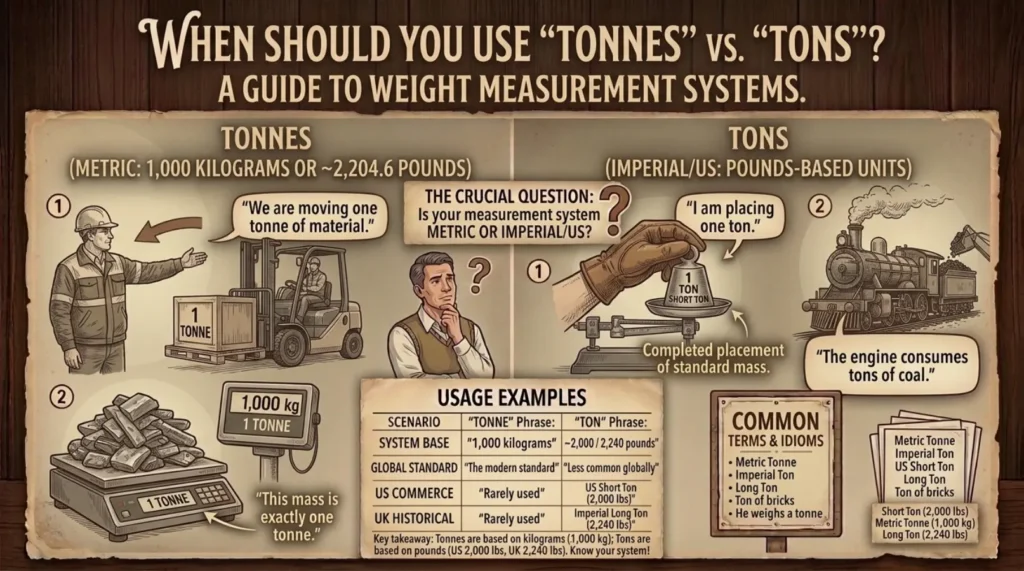
Choose based on your audience.
Use tonnes if you are writing for:
- Europe
- Canada
- Australia
- Asia
- Africa
- International businesses
Use tons if you are writing mainly for:
- United States readers
- American businesses
- US construction projects
Always match your audience’s measurement system.
Synonyms and Related Terms
Here are useful related keywords.
Synonyms
- Metric tonne
- Metric ton
- Short ton
- Long ton
- Unit of weight
- Unit of mass
- Heavy weight measurement
LSI Keywords
- metric ton vs ton
- tonne meaning
- ton meaning
- metric weight
- weight conversion
- kilograms to tons
- tonnes to pounds
- short ton vs long ton
- imperial measurements
- metric system
Expert Insights
Understanding tonnes vs tons improves accuracy.
Professionals never assume these measurements are equal.
Always check:
- Country
- Industry
- Measurement system
- Contract wording
This simple habit prevents expensive mistakes.
If you’re writing for a global audience, tonne is often the safest choice because it follows the international metric system.
FAQs:
Is a tonne the same as a ton?
No. A tonne equals 1,000 kilograms, while a US ton equals 2,000 pounds.
Which is heavier, a tonne or a ton?
A metric tonne is heavier than a US short ton.
Why are there different types of tons?
Different countries developed different measurement systems over time.
Does the UK use tons or tonnes?
Modern UK measurements mainly use tonnes, although the traditional long ton still appears in some historical or specialized contexts.
What is another name for a tonne?
It is also called a metric tonne or metric ton.
Which unit does international shipping use?
Most international shipping uses tonnes.
How many kilograms are in a US ton?
One US ton equals about 907 kilograms.
Should I use tonnes or tons in SEO content?
Use the version your target audience searches for. For global readers, explain both terms clearly.
Internal Linking Suggestions
You can strengthen your website by linking this article to related guides, such as:
- Kilograms vs Pounds
- Metric vs Imperial System
- Weight Conversion Chart
- Mass vs Weight Explained
- US vs UK English Differences
Featured Snippet Answer
What is the difference between tonnes and tons?
A tonne equals 1,000 kilograms and belongs to the metric system. A US ton equals 2,000 pounds or about 907 kilograms. Most countries use tonnes, while the United States mainly uses tons.
Conclusion
Understanding tonnes vs tons is easier than it first appears. A tonne is part of the metric system and equals 1,000 kilograms. A US ton equals 2,000 pounds, making it lighter than a metric tonne. There is also a UK long ton, which is heavier than both. Choosing the correct term depends on your audience and location. International documents, scientific work, and most countries prefer tonnes, while the United States generally uses tons. Checking the measurement system before writing or calculating helps prevent mistakes, improves communication, and ensures accuracy in trade, transportation, construction, and everyday use. Once you know the difference, selecting the right unit becomes simple and reliable.

James Carter is a comparison writer and research specialist with over 10 years of experience in digital publishing. With a background in business communication and consumer research, he creates detailed comparison articles, buying guides, and reviews that help readers make informed decisions with confidence. “Every comparison should help readers make better decisions. My goal is to turn complex information into clear, practical guidance that people can trust.” — James Carter