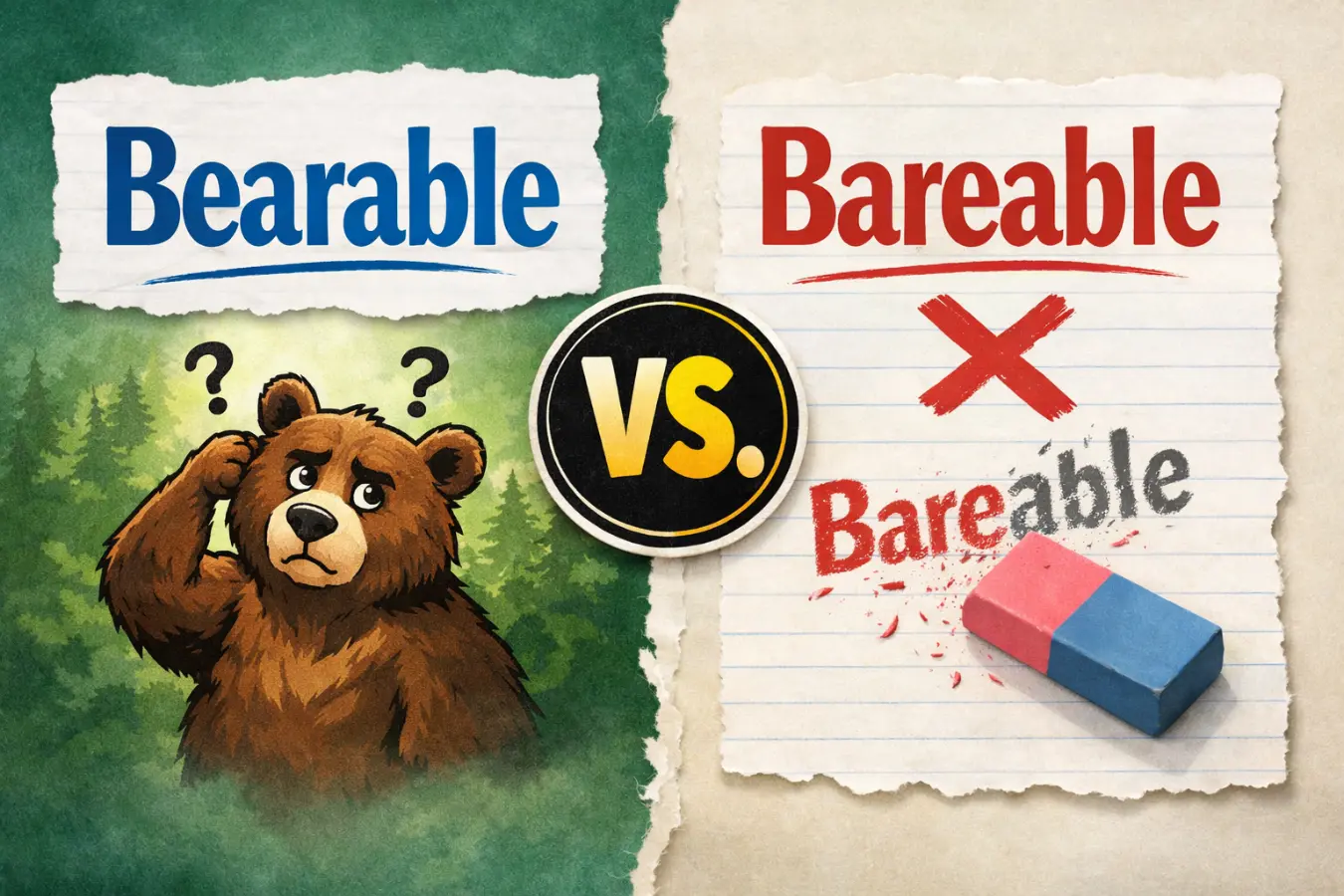
Bareable or bearable is a common spelling question that confuses many English learners and native speakers alike. These two words look similar, but only one is correct in most situations.
If you have ever written “bareable” and wondered if it was right, you are not alone. Many people make this mistake because the words sound alike.
The good news is that the difference is simple. Once you understand the meaning of each word, you can use them correctly every time.
In this guide, you will learn the meaning of bearable, why people confuse it with bareable, real-life examples, common mistakes, and easy tips to remember the correct spelling
Quick Summary Box
- Bearable is the correct word in most cases.
- Bearable means something can be tolerated or endured.
- Bareable is generally considered a misspelling.
- Use bearable when talking about pain, weather, stress, or discomfort.
- Remember: bear = endure, so bearable = able to endure.
- “The heat is bearable today” is correct.
- “The heat is bareable today” is incorrect.
What Does Bearable Mean?
Bearable means something is not too difficult, painful, or unpleasant to handle.
A situation is bearable when you can endure it without too much trouble.
Simple Definition
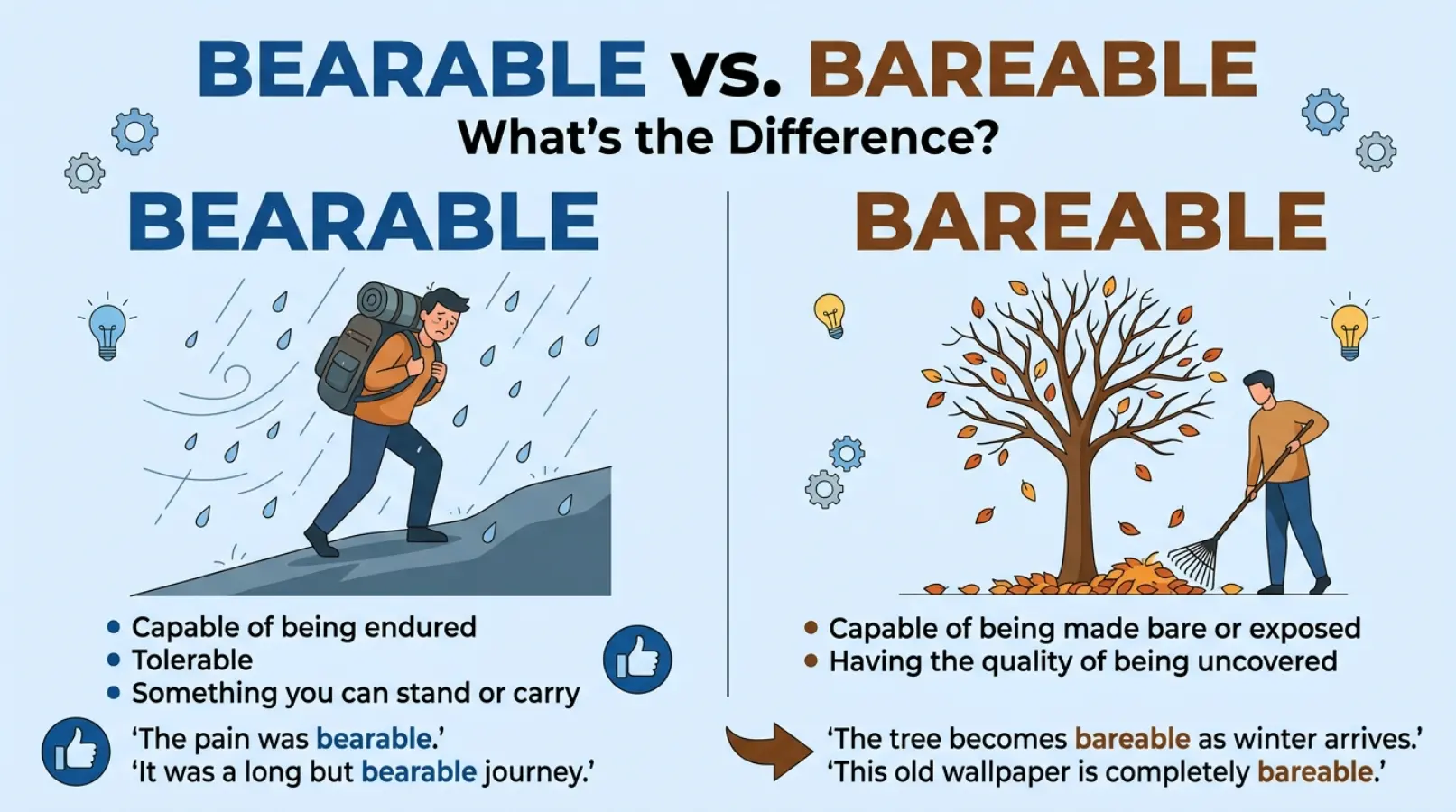
Bearable = able to be endured or tolerated.
Examples
- The weather became bearable after sunset.
- The pain was bearable after taking medicine.
- His workload is heavy but still bearable.
- The noise was annoying but bearable.
Is Bareable a Real Word?
In modern English, bareable is generally not accepted as a standard dictionary word.
Most people who write “bareable” actually mean “bearable.”
Spell-check tools often flag bareable as an error and suggest bearable instead.
Example
❌ The meeting was barely bareable.
✅ The meeting was barely bearable.
For almost every situation, bearable is the correct choice.
Bareable or Bearable: What’s the Difference?
The confusion happens because both words sound nearly identical.
However, they come from different root words.
| Word | Meaning | Correct Usage |
|---|---|---|
| Bearable | Able to be endured or tolerated | Yes |
| Bareable | Usually considered a misspelling | No |
Quick Rule
If you mean “able to tolerate,” always use bearable.
Why Do People Confuse Bareable and Bearable?
Several reasons cause this mistake.
Similar Pronunciation
Both words sound almost the same when spoken.
Similar Spelling
Only one letter differs between them.
Confusion With “Bare”
Many people connect the word with “bare,” meaning uncovered or exposed.
However, bearable comes from the verb bear, which means to endure.
The Origin of the Word Bearable
Understanding the origin helps you remember the correct spelling.
The word bearable comes from the verb bear.
Meaning of Bear
Bear can mean:
- To carry
- To support
- To endure
- To tolerate
Because bear means endure, bearable means something you can endure.
Example
- I can bear the cold weather.
- The cold weather is bearable.
Real-Life Examples of Bearable
Here are situations where people commonly use the word.
Weather
- The temperature became bearable after the rain.
- Summer feels more bearable with air conditioning.
Pain
- The headache became bearable after treatment.
- The discomfort was bearable.
Work
- The workload is bearable with good planning.
- Stress becomes bearable when you take breaks.
Travel
- The long flight was bearable because of the comfortable seats.
Common Mistakes When Using Bearable
Many writers make the same errors.
Mistake 1: Using Bareable Instead of Bearable
❌ The heat was bareable.
✅ The heat was bearable.
Mistake 2: Confusing Bear With Bare
Bear = endure
Bare = uncovered
Mistake 3: Incorrect Spellings
Avoid:
- Bareable
- Berable
- Bearible
- Bareible
Use:
- Bearable
Easy Memory Trick to Remember the Correct Spelling
A simple trick can help.
Think about this sentence:
“I can bear it.”
If you can bear it, it is bearable.
Memory Formula
Bear → Endure
Bearable → Can be endured
This connection makes the spelling easier to remember.
Bearable in Everyday Conversations
People use bearable often in daily life.
Examples
- The traffic was bearable today.
- The movie was long but bearable.
- The room temperature is finally bearable.
- The wait was bearable because I had a book.
These examples show how common the word is.
Synonyms of Bearable
Using related words improves vocabulary and SEO relevance.
Synonyms
- Tolerable
- Manageable
- Endurable
- Acceptable
- Sustainable
- Livable
- Reasonable
- Survivable
Example
“The workload is manageable.”
This sentence has a similar meaning to:
“The workload is bearable.”
Related Words and LSI Keywords
Search engines often associate these terms with bearable.
Related Search Terms
- bearable meaning
- bearable definition
- how to spell bearable
- bearable vs bareable
- is bareable a word
- correct spelling of bearable
- tolerable meaning
- bearable pronunciation
- bearable examples
- common spelling mistakes in English
Using these related terms helps readers understand the topic better.
Expert Insight: Why Correct Spelling Matters
Correct spelling improves communication.
It also creates trust with readers.
Why It Matters
- Improves writing quality
- Builds credibility
- Reduces confusion
- Helps professional communication
- Supports SEO performance
Search engines favor content that is clear and accurate.
A small spelling mistake can affect how readers view your expertise.
EEAT Perspective
Accurate spelling demonstrates:
- Experience
- Expertise
- Authority
- Trustworthiness
These signals support stronger content quality.
How Teachers and Editors View This Mistake
Teachers often mark “bareable” as incorrect.
Editors usually replace it with “bearable” during proofreading.
Because the error is common, many style guides specifically recommend checking this word.
Professional writers rarely use “bareable.”
Examples in Sentences
Correct Examples
- The weather is bearable today.
- The pain became bearable.
- The noise is annoying but bearable.
- The workload remains bearable.
- The journey was long yet bearable.
Incorrect Examples
- The weather is bareable today.
- The pain became bareable.
- The workload remains bareable.
Always replace bareable with bearable.
Frequently Asked Questions (FAQs)
Is bareable a correct word?
No. In standard English, bareable is generally considered a misspelling of bearable.
What does bearable mean?
Bearable means something can be endured, tolerated, or managed.
Why do people write bareable?
People confuse it with the word “bare” because the words sound similar.
Which spelling should I use?
Use bearable whenever you mean tolerable or manageable.
Is bearable a formal word?
Yes. It is appropriate in both formal and informal writing.
What is the opposite of bearable?
Common opposites include:
- Unbearable
- Intolerable
- Insufferable
How do I remember the spelling?
Think: “I can bear it.”
If you can bear it, it is bearable.
Is bearable commonly used?
Yes. It appears frequently in everyday speech and writing.
Internal Linking Suggestions
To strengthen SEO, link this article to related content such as:
- Common English spelling mistakes
- Homophones in English
- Bear vs bare explained
- Grammar tips for writers
- Frequently confused words in English
These related topics help readers stay on your website longer.
Conclusion
When comparing bareable or bearable, the correct word is almost always bearable. It means something can be endured, tolerated, or managed without excessive difficulty. Although many people accidentally write “bareable,” standard English dictionaries and style guides recognize bearable as the proper spelling.
The easiest way to remember it is to think of the verb bear, which means to endure. If you can bear something, it is bearable. This simple memory trick can help you avoid the mistake in future writing.
Whether you are describing weather, pain, stress, or daily challenges, using bearable correctly makes your writing clearer and more professional.

James Carter is a comparison writer and research specialist with over 10 years of experience in digital publishing. With a background in business communication and consumer research, he creates detailed comparison articles, buying guides, and reviews that help readers make informed decisions with confidence. “Every comparison should help readers make better decisions. My goal is to turn complex information into clear, practical guidance that people can trust.” — James Carter